
 1 month ago
44
1 month ago
44
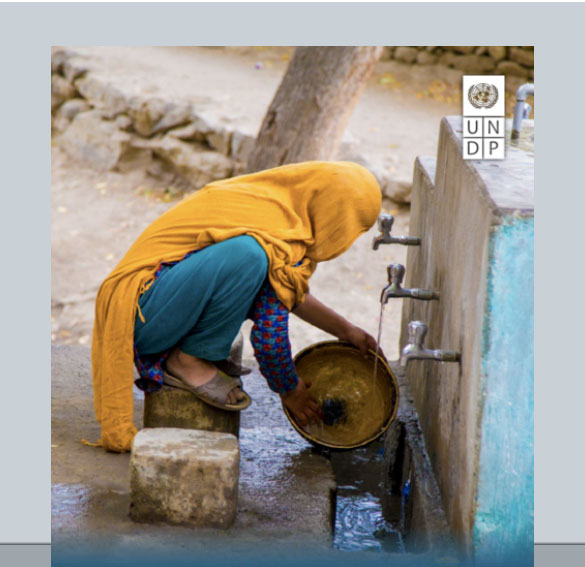 The report - Military Escalation in the Middle East: Cushioning the Global Shock – reveals that low- and middle-income countries have partially protected their populations from soaring oil prices through fossil fuel subsidies, price caps, tax rebates and demand-management measures. Credit: UNDP
NEW YORK, July 1 (IPS) - Developing countries’ efforts to tackle the ongoing effects of conflict in the Middle East carry a high price that leaves little room for critical investments in education, health and other development priorities, according to a new report by the UN Development Programme (UNDP) released today.
The report – Military Escalation in the Middle East: Cushioning the Global Shock – reveals that low- and middle-income countries have partially protected their populations from soaring oil prices through fossil fuel subsidies, price caps, tax rebates and demand-management measures.
Fossil fuel subsidies, which had been on a downward trend globally, are on track to reach US$1.1 trillion in 2026 – US$ 410 billion more than in 2025, assuming the current average oil price settles at US$88.6 per barrel.
This projection climbs to as much as US$1.43 trillion in a ‘severe’ scenario where oil prices climb to an average of US$110 per barrel.
The UNDP report warns that while fossil fuel subsidies provide temporary relief, they ultimately undermine climate and development goals, locking countries into high-carbon pathways and limiting future investment.
“The global spillover of the Middle East conflict is profound and potentially long-lasting. Developing countries, many already struggling with debt, have temporarily managed to protect people from the worst of the energy shock,” said UNDP Administrator Alexander De Croo. “These countries are doing everything they can, but there is a hidden cost. To deal with today’s crisis, governments are postponing tomorrow’s investments. Money that should be building schools, hospitals, and clean energy systems is being used simply to keep economies afloat. Without international support, these countries won’t escape the shock. They are absorbing it at the expense of future growth.”
Close to half of the world’s poorest countries are already either ‘in’ or at ‘high risk’ of debt distress, and debt continues to crowd out development spending at an increasing rate, according to the report.
This year, it is estimated that the median developing economy will spend 9.53 percent of total government revenue on interest payments alone – double the share of a decade ago and the highest level seen in 25 years.
Averaged over the three-year period 2024 to 2026, 55 developing economies are estimated to pay more than 10 percent of revenue in interest payments, compared to 32 countries a decade ago.
“No country should have to sacrifice its future development to manage a crisis it did not create,” said De Croo. “First, we must unlock multilateral liquidity in ways that are easy to access for low and middle-income countries. Second, we must accelerate investment in renewable energy. Every clean energy investment reduces exposure to future shocks. The crisis has made one thing clear: energy security and the energy transition are no longer separate agendas. They are one and the same.”
The report is being launched in the context of the Hamburg Sustainability Conference (HSC) taking place this week. The HSC is an annual high-level meeting that aims to foster new partnerships and collective action by global policymakers, private sector leaders, academia experts, and civil society representatives. The annual event is a joint initiative of the German Federal Ministry for Economic Cooperation and Development (BMZ), the United Nations Development Programme (UNDP), the Free and Hanseatic City of Hamburg and the Michael Otto Foundation.
Full report
The full report is available online at https://www.undp.org/publications/military-escalation-middle-east-cushioning-global-shock
IPS UN Bureau
© Inter Press Service (20260701184124) — All Rights Reserved. Original source: Inter Press Service






 English (US) ·