
Oil refineries set ablaze, missiles hitting pesticide factories, an oil slick in the Strait of Hormuz... In under two months, the US and Israel’s war on Iran has inflicted a heavy toll on the environment, fuelling concerns over the public health impact on local populations.
It’s too soon to evaluate the overall impact of the Middle East war on the environment, but researchers at the UK-based Conflict and Environment Observatory (CEOBS) estimate that at least five million tonnes of CO2 were emitted by oil fires and jet engines in just the first two weeks of the conflict.
The CEOBS has mapped incidents likely to have an environmental impact. Our team spoke to its director, Doug Weir, who said the fires could also affect the people living near oil refineries:
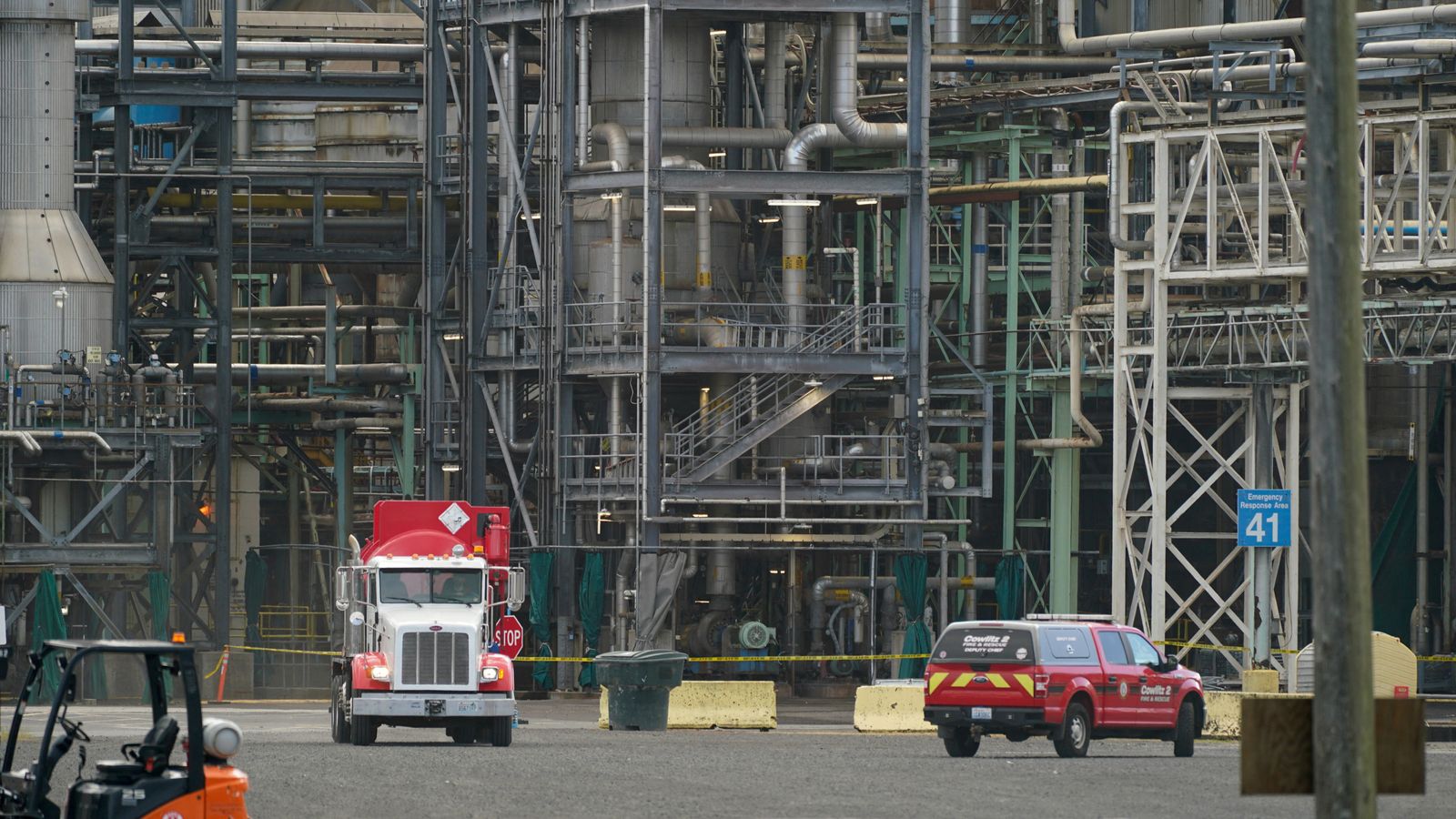
“The smoke that's created from these refinery fires is a really complex mixture of hydrocarbons and industrial materials.
It includes things like carbon monoxide, sulfur dioxide, volatile organic compounds, soot particles, particulate matter and trace metals.
Inhaling these is particularly problematic for people, particularly when you have pre-existing health problems like asthma or if you're vulnerable due to being elderly, for example.”
A refinery operated by Bahrain’s national oil company BAPCO was hit by an Iranian strike on April 5.
In Iran, oil refineries and depots near the capital, Tehran, have been hit by Israel. The resulting fires pose a risk to the city’s nine million inhabitants, as Tehran is surrounded by mountains which trap pollution. Fuel from targeted depots has also seeped into the city’s water system, triggering explosions in residential areas.

Damage at liquefied natural gas plants
Other types of infrastructure have been hit, including liquefied natural gas plants in Qatar. Weir told our team:
“When these facilities are damaged, it releases methane, which doesn't burn.
And methane is 20 times more damaging for the atmosphere, for the climate, than carbon dioxide is.
It's quite difficult to determine the environmental risks from these sites because often these facilities are enormous. They contain many different industrial processes and facilities.”
20-kilometre oil slick
There has also been an impact on the Strait of Hormuz, although Weir said that “the situation could have been worse”.
On March 6, the US struck an Iranian drone-launching ship, the Shahid Bagheri, off the coast of the Iranian port of Bandar Abbas.
The attack caused an oil slick more than 20km long, threatening mangroves and other protected nature sites on Iran’s coastline. In early April, the Shahid Bagheri had not entirely sunk, and traces of oil were visible near the wreck.







 English (US) ·