
The threat of direct conflict between Israel and Iran had been brewing for 20 years.
Throughout his long political career, Israeli Prime Minister Benjamin Netanyahu had repeatedly singled out the Iranian Republic as Israel’s number one enemy, saying its nuclear program had one goal: the destruction of the Jewish state.
Meanwhile Iran had long called for Israel’s destruction and provided arms for its opponents in Gaza and Lebanon.
What was unclear was how a conflict between the two adversaries – both of which have considerable military might – could play out.
The question was answered in the early hours of June 13, 2025, as explosions were heard in the Iranian capital Tehran and Netanyahu announced that operation “Rising Lion” had begun.
The armed conflict between the two arch enemies drew in neighbouring countries Jordan and Qatar as well as the US, whose President Donald Trump dubbed it the “12-day war”.
Israel: Striking the heart of Iran’s regime and its nuclear program
Throughout 2024, Iran and Israel had been launching small-scale attacks on each other, with Tehran firing missiles and drones at Israel while Tel Aviv’s fighter jets targeted Iran’s missile launchers and aerial defences.
But the tit-for-tat skirmishes paled in comparison to Israel’s surprise operation launched on June 13. Overnight, 200 planes targeted military sites throughout Iran and the regime’s major nuclear sites at Natanz, Fordo and Isfahan.
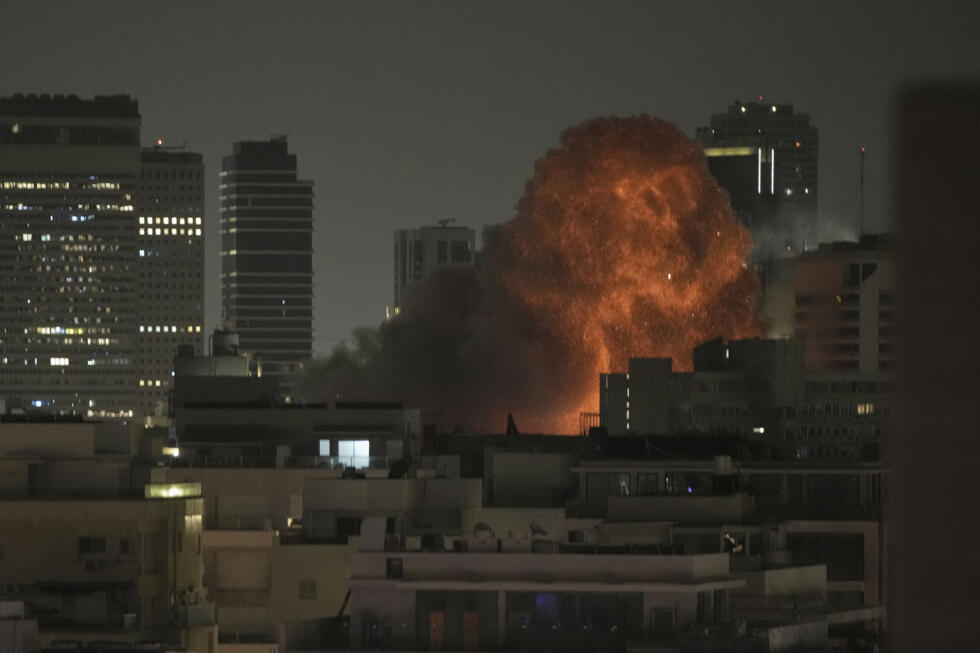 An explosion is seen during a missile attack in Tel Aviv, Israel, Sunday, June 15, 2025. © Leo Correa, AP
Within a few hours, Israel had seized control of Iranian airspace, and in the 12 days that followed, its air force carried out operations across Iran’s territory.
Israel launched 360 attacks in 27 Iranian provinces throughout the 12-day war, with a third striking Tehran, according to US-based monitor ACLED.
Part of the success of operation “Rising Lion” came down to Israel’s use of of First Person View (FPV) drones, which can be operated remotely using an onboard camera. They were flown by Mossad agents working undercover inside Iran to target sensitive infrastructure and high-profile members of the regime from the conflict's first hours.
By the evening of June 13, Israel had overwhelmed Iran’s air defence system, carried out strikes on several Iranian cities and eliminated at least twenty of the regime’s senior officers.
To display this content from YouTube, you must enable advertisement tracking and audience measurement.
One of your browser extensions seems to be blocking the video player from loading. To watch this content, you may need to disable it on this site.
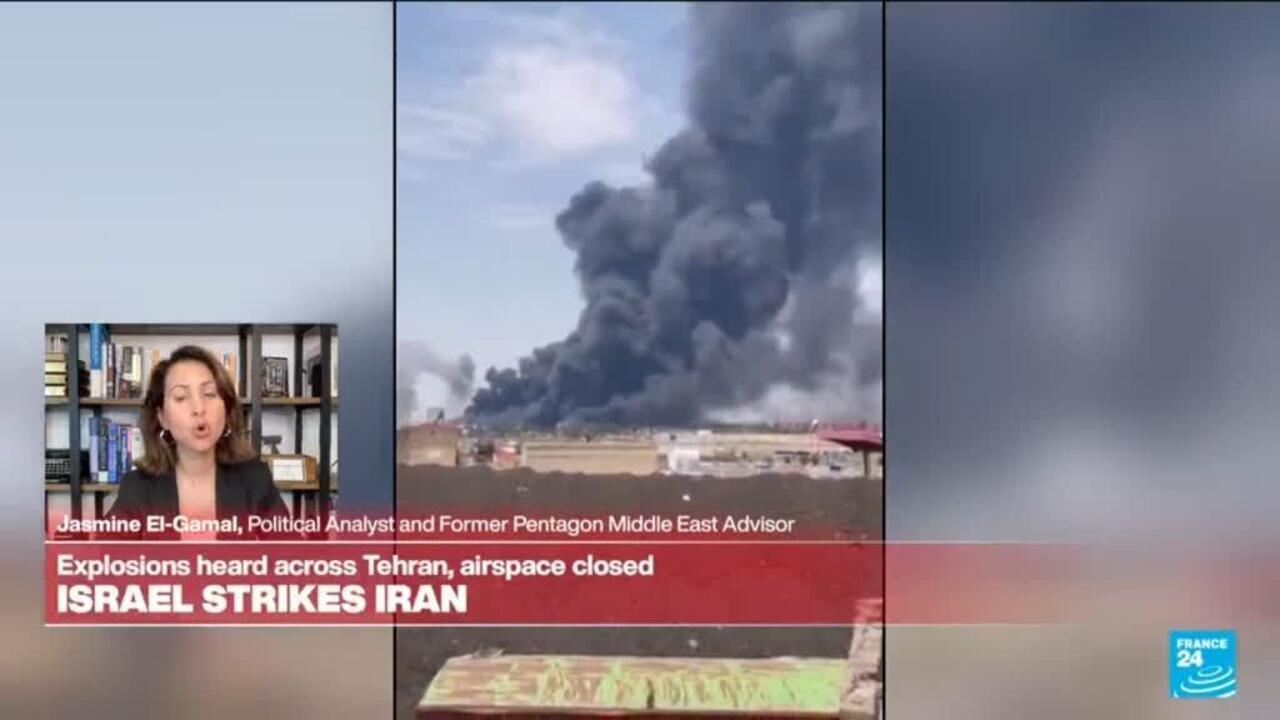 © France 24
04:22
These included Iran’s highest-ranking military officer, Mohammad Bagher, and Revolutionary Guards commander-in-chief Hossein Salami.
Nine of Iran’s top scientists were killed by targeted strikes in what French newspaper Le Monde described as a “decisive blow” to Tehran’s nuclear program.
Over the next 12 days, a total of 16 scientists would be killed by Israel.
Read moreWhy did Israel attack Iran in the middle of US-Iran nuclear talks?
Days after first launching the attack, Netanyahu confirmed that Israel was trying to eliminate Iran’s supreme leader, Ayatollah Ali Khamenei.
Trump said on June 17 that the US forces knew “exactly” where Khamenei was hiding but would not try to eliminate him – “at least not for now”.
Ultimately, Israel did not topple Iran’s longtime leader, but its 12-day assault on Iran did considerably weaken the regime’s military might.
Read moreAli Khamenei: Backed into a corner, Iran’s ruthless leader faces fight for survival
“We have set Iran's nuclear project back by years, and the same goes for its missile program,” said Israeli army chief of staff Eyal Zamir on June 25.
Iran's stockpile of 2,500 ballistic missiles was reduced to a maximum of 1,500, and two-thirds of its missile launchers were destroyed, according to figures from the Israeli army.
In the Iranian capital, strikes targeted government buildings, state media outlets, universities and the infamous Evin prison.
They also hit civilians. Iran’s health ministry said that 610 civilians were killed and 4,700 wounded during the 12-day conflict. It did not say how many members of the military had been killed or wounded.
Read more‘It's the civilians who will pay the price’: Iranians prepare for the worst after Israeli strikes
Iran: An assault on Israeli cities
As Israel launched its attack on Iran, Tehran was quick to respond.
Khamenei issued a statement on June 13 assuring Iranians that Israel would “not remain unscathed from the consequences” of its attack and that the Iranian response would “not be half-measured”.
By the evening of June 13, Iran launched Operation Honest Promise 3, firing Shahed drones and hypersonic missiles towards Israel.
Air raid sirens sounded across the country as missiles flew across the sky above Jerusalem and strikes caused fires in buildings in Tel Aviv.
Iran fired least 150 missiles overnight, according to estimates from the Israeli army, most of which were intercepted with help from the United States and Jordan.
Major targets included Israel's “Pentagon”, the Kirya, and the country’s nuclear facilities. At least two people were killed and around 60 wounded, according to emergency services.
Over the coming days, the Israeli army banned the sharing of videos or photos on social media showing the damage caused by Iranian bombing,
Read moreTwelve-day war: Impact of Iran’s strikes censored by Israel
But missile salvos caused significant damage in Israeli towns and cities, an oil refinery in Haifa, power plants, water treatment plants, Soroka Hospital in Beer-Sheva and the research centre at the Weizmann Institute of Science in Rehovot.
Iran fired some 550 missiles and 1,000 drones, 90 percent of which were intercepted by Israel and its allies, according to the Israeli army.
Some 36 direct hits on populated areas killed at least 28 civilians and injured 3,000, according to ACLED.
Israeli daily newspaper Haaretz mapped the damage caused by Iranian missiles in urban centres, finding that 480 buildings were damaged in Tel Aviv across five separate sites, “obliterating” some neighbourhoods.
In the Tel Aviv suburb of Ramat Gan, 237 buildings were damaged across three sites, with around ten being severely damaged.
In Bat Yam, another Tel Aviv suburb, 78 buildings were damaged by a single strike, with 22 of them subsequently condemned for demolition.
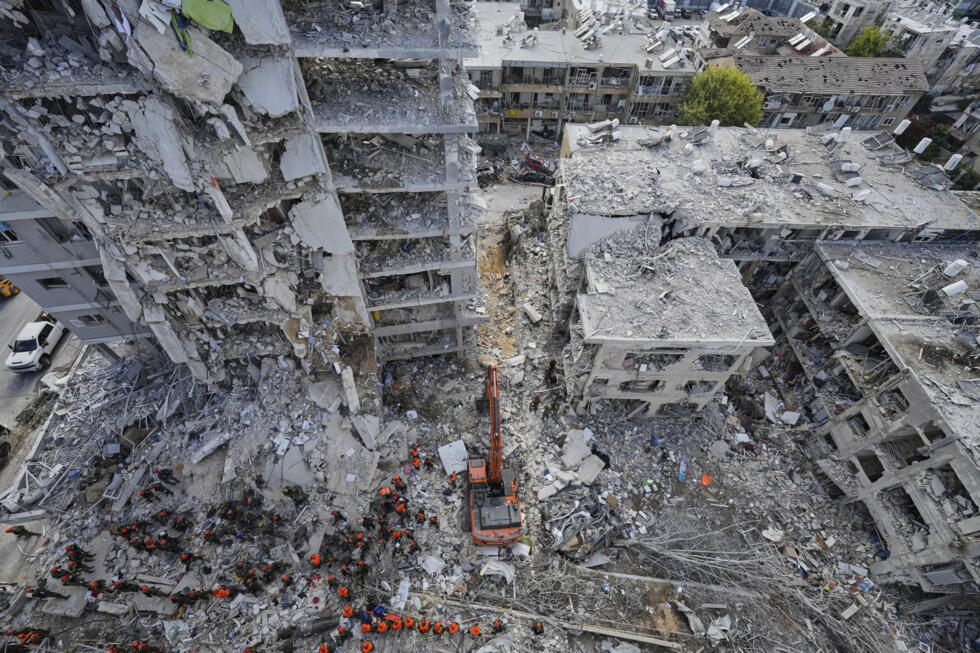 Israeli soldiers search through the rubble of residential buildings destroyed by an Iranian missile strike in Bat Yam, central Israel, on Sunday, June 15, 2025. © Baz Ratner, AP
Israelis submitted 40,000 compensation claims to the authorities for damage caused by Iran’s attacks, but the population as a whole were overwhelmingly supportive of their prime minister's decision to attack Iran.
The US: ‘Bunker buster’ bombs and a ceasefire
As Israel and Iran traded strikes, the US delayed joining the war alongside Tel Aviv. “I may do it, I may not do it,”Trump said on June 18 – day five of the conflict. “Nobody knows what I'm going to do.”
In previous months Trump had urged Netanyahu not to attack Iran as he sought to reach a nuclear deal with Tehran, but was quick to praise Israel’s strikes on the first day of the war as “excellent” and “very successful”.
Meanwhile, Israel was pressing Trump to provide it with “bunker buster” bombs to deliver a fatal blow to Iran's nuclear programme.
The US finally deployed its GBU-57 bombs – 13-ton laser-guided munitions designed to destroy underground bunkers – overnight on June 21 as part of operation "Midnight Hammer".
Seven B2 stealth bombers carrying the munitions took off from the US state of Missouri and entered Iranian airspace, where they targeted the two main sites for the production and storage of enriched uranium buried dozens of metres underground at the Fordo and Natanz sites.
Hidden in desert areas in central Iran, defences at the two sites had already been weakened by Israel's air strikes.
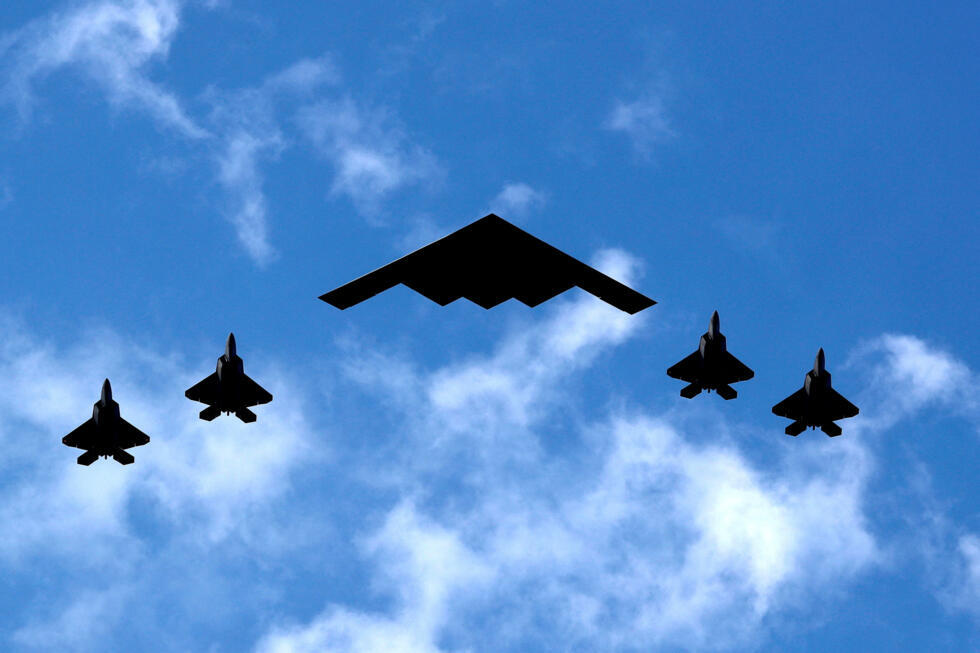 File photo: US fighter jets fly over New York City on July 4, 2020. © Mike Segar, Reuters
At Fordo, 12 bunker-buster bombs were dropped successively on two ventilation shafts, according to the US military. Two other bombs were dropped on the Natanz site, while US Navy submarines fired two dozen Tomahawk cruise missiles at the Nuclear Technology Center in Isfahan.
Trump announced that Iran's main nuclear sites had been “completely and totally destroyed” by the strikes, although US intelligence later contradicted this claim.
Two days later, Iran retaliated by bombing the largest US base in the Middle East, Al-Udeid in Qatar.
But Tehran had warned Washington in advance of the strikes, and the dozen missiles caused no American casualties.
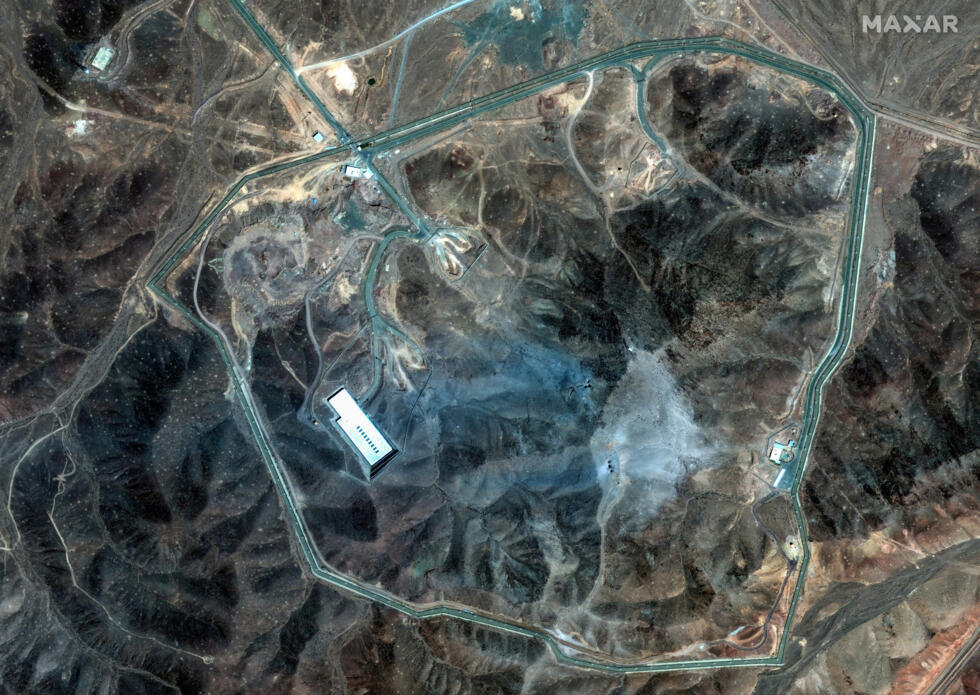 A satellite view of the Fordo underground complex after the US struck the underground nuclear facility near Qom, Iran, on June 22, 2025. © Maxar Technologies via Reuters
Claiming the US had achieved its objectives by preventing Iran from getting a nuclear weapon, Trump took to his social media network on June 24 to declare an end to the war.
“It has been fully agreed by and between Israel and Iran that there will be a Complete and Total CEASEFIRE… an Official END to THE 12 DAY WAR will be saluted by the World,” he wrote on Truth Social.
Israel and Iran continued to launch attacks on each other for a few hours, with final strikes targeting the Iranian capital and Beer-Sheva in southern Israel, before fighting stopped – and both sides claimed victory.
Netanyahu claimed a "historic" triumph for his country and warned that Israel would “thwart” any future attempts by Iran to revive its nuclear program.
Iran's top security body, meanwhile, said the Islamic Republic's forces had "compelled" Israel to "unilaterally" stand down.
This article was adapted from the original in French by Joanna York.






 English (US) ·