
 1 month ago
33
1 month ago
33
President Donald Trump said nations that are struggling to get jet fuel due to Iran’s chokehold of the Strait of Hormuz should go to the vital waterway and “take” the oil.
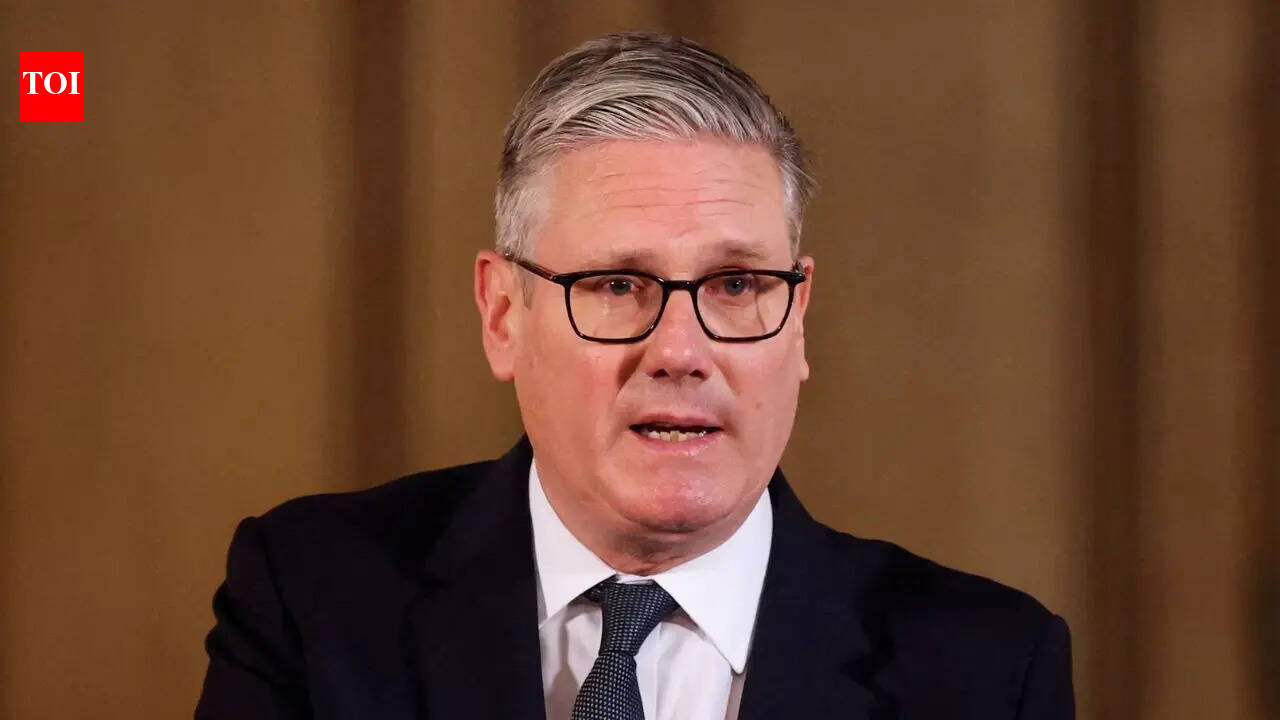
“All of those countries that can’t get jet fuel because of the Strait of Hormuz, like the United Kingdom, which refused to get involved in the decapitation of Iran, I have a suggestion for you: Number 1, buy from the U.S., we have plenty, and Number 2, build up some delayed courage, go to the Strait, and just take it,” he said Tuesday morning.
Continuing his message to nations who refused, beyond defensive measures, to actively get involved with the Iran war, Trump warned: “You’ll have to start learning how to fight for yourself, the U.S.A. won’t be there to help you anymore, just like you weren’t there for us.”
Trump went on to claim that Iran has “been, essentially, decimated” and that the “hard part” has been done by the U.S.
“Go get your own oil,” he concluded.
Secretary of Defense Pete Hegseth echoed the President's sentiment during a Pentagon press briefing Monday morning, insisting that other nations should take greater responsibility for securing the Strait.
“There are countries around the world who ought to be prepared to step up on this critical waterway as well. It's not just the United States Navy,” he argued.
Taking aim at the U.K. efforts, in particular, he added: “Last time I checked, there was supposed to be a big, bad Royal Navy that could be prepared to do things like that as well.”
Hegseth said Trump is merely "pointing out this is an international waterway that we use less than most. In fact, dramatically less than most. So the world ought to pay attention to be prepared to stand up."
Soaring oil prices take a toll worldwide amid Iran war
The Trump Administration's messaging comes as high fuel prices and stockpile concerns are taking a toll worldwide.
The U.K. is reportedly set to receive its last tanker of jet fuel from the Middle East this week, according to the Financial Times.
Korean Air is transitioning to emergency management mode in an effort to mitigate the impact of soaring jet fuel costs.
And consumers in the U.S. are also feeling the financial implications of the war, which is in its 32nd day.
According to price-tracking service GasBuddy and the American Automobile Association, for the first time since 2022, the national average retail price of gasoline crossed $4 per gallon. This marks an increase of more than $1 from before the Iran war began on Feb. 28.
Strikes rage on as Iran targets oil tanker after Trump's grave threat
U.S. and Iranian officials are in talks about potentially bringing an end to the war, yet strikes are continuing.
A Kuwait-flagged oil tanker anchored off the coast of Dubai was struck by Iranian missiles in the early hours of Tuesday.
According to local media, the Kuwait Petroleum Corporation said that the “Al-Salmi,” a large crude carrier, was “directly attacked by Iranian forces while positioned in the anchorage area of Dubai Port in the UAE.”
The United Kingdom Maritime Trade Operations center, run by the British military, also reported the strike, saying the vessel was 31 nautical miles (57 kilometers) northwest of Dubai.
The tanker was en route to Qingdao, China, according to MarineTraffic.com.
Maritime intelligence firm TankerTrackers.com said the ship was carrying around 1.2 million barrels of Saudi crude and 800,000 barrels of Kuwaiti crude, and had completed loading last month.
Iran’s military has not confirmed responsibility for the attack.
The attack came after Trump delivered a threat to Iran’s energy infrastructure and Kharg Island on Monday.
“Great progress” has been made in talks to end the war, Trump said, but he warned of grave action ahead if a “deal is not shortly reached” and if the vital Strait of Hormuz waterway “is not immediately open for business.”
Trump said the U.S. military action, if carried out, would be “in retribution for our many soldiers, and others, that Iran has butchered and killed over the old regime’s 47-year reign of terror.”
Is the reopening of the Strait of Hormuz integral to a U.S.-Iran cease-fire deal?
Press secretary Karoline Leavitt told reporters that ensuring safe passage for oil tankers is not one of the Administration’s “core objectives.”
“The full reopening of the Strait is something the Administration is working towards, but the core objectives of the operation have been clearly defined for the American people by the Commander in Chief,” Leavitt said.
Secretary of State Marco Rubio, meanwhile, has said the Strait will “reopen one way or another” after the military operation concludes.







 English (US) ·