
 4 weeks ago
20
4 weeks ago
20
The Iran "deal" is a tacit admission of strategic defeat by the Trump administration and of a failure to achieve nearly all of his war aims.
The US and Iran have agreed to stop fighting and to open the Strait of Hormuz. Everything else is being kicked down the road over 60 days of ceasefire and beyond.
Given that the Strait was open before the conflict was started by Donald Trump and Benjamin Netanyahu, reopening it is no great achievement. It simply restores the status quo ante bellum.
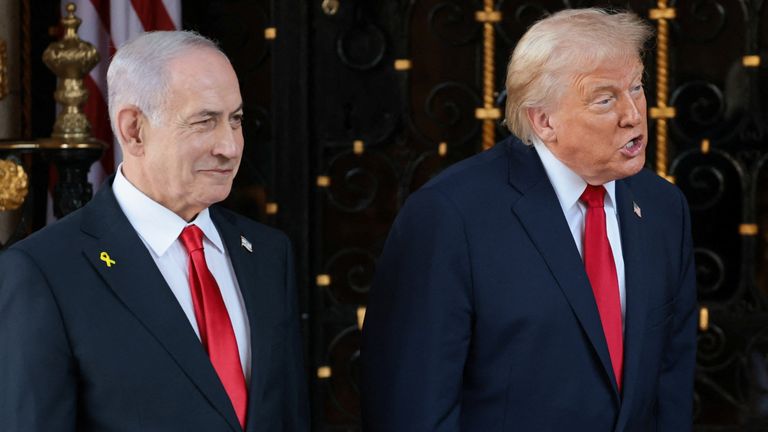
After a war that has cost an estimated $30bn, killed thousands and destroyed hundreds of millions of dollars worth of US military hardware, have any of Trump's declared objectives been fulfilled?
Five big nos
• No on Iran's nuclear programme: both the fate of Iran's highly enriched uranium stockpile and its enrichment project are to be discussed over the coming weeks. It remains far from obliterated.
• No to changing the regime: Ayatollah Khamenei and a slew of top-ranking commanders have been killed but have been replaced by even more hardline figures, apparently in no mood to compromise.
• No to helping the Iranian people who rose up against their government. If anything, the war has strengthened Iran's leadership, particularly if it benefits from sanctions relief as part of this deal, which seems more than likely.
• No to destroying Iran's ballistic missile arsenal. America's self-styled bombastic 'Secretary of War' had claimed it had largely been neutralised; US intelligence estimates 70% of Iran's missiles remain serviceable.
• No to reining in Iran's proxies. These are not part of any deal, it seems, for now at least.
A pretty messy attempt to get out of an unpopular war
Trump's supporters will point out that Iran's military has been massively degraded.
His lieutenants are fond of saying most of its navy is at the bottom of the sea. But not where it counts. Iran's naval potency has remained intact in the Strait of Hormuz, giving the Iranians leverage they could only have dreamt of before.
Iran's air force has been destroyed, but it was largely obsolescent anyway.
A huge number of Iran's IRGC and military bases have also been taken out, but their occupants have survived and remain firmly in control of the country.
Inside Iran in May: Sky News investigates school bombing in Iran
A deal that achieves nothing new
In short, Iran priced in the beating its conventional military would take and has prevailed where it's mattered most.
As things stand, the deal achieves none of what Barack Obama's 2015 nuclear deal did. So far, the highly enriched uranium stays in Iran, the enrichment programme can be reassembled, and there is no moratorium yet on enriching more.
Trump accused Obama of handing the Iranians billions. Negotiations following this memorandum of understanding are likely one way or another to do the same.
Trump at the G7
The US president arrived in Evian-les-Bains, an upmarket French resort town on the shores of Lake Geneva, on Monday.
Upon arrival, he said he was "very happy" with the deal he's agreed to with Iran. It will be signed in Switzerland on Friday, with JD Vance set to attend on behalf of the US.
For Trump, attention apparently now switches back toward Ukraine and Russia – which will be a focus of other leaders at this week's summit, including Britain's Sir Keir Starmer, who will announce a new sanctions package targeting Moscow.
Trump – as he has said many times to no avail – believes the end of the war is in sight.
Speaking to the media alongside Emmanuel Macron on Monday, he said: "We had a very good conversation yesterday with President Zelenskiy and President Putin, and I think maybe we can do something there. I really do. I think they're both open to it."
Watch a preview of what's to come from the rest of the summit from Sky's Alistair Bunkall below.
A G7 summit designed to appeal to Trump – but there are two main talking points
Trump has found his off-ramp to this war. He has a better chance now of averting global economic meltdown. He hopes to move on and salvage his party's political chances in America's forthcoming midterm elections.
There is a huge amount at stake in the diplomacy that now follows, which will be fiendishly difficult.
Iran has acquired leverage through this war that it never enjoyed before. Its control of the Strait of Hormuz gave it a grip on a fifth of the world's oil supply. It can wield that power at will in the future.
It is likely, therefore, to be even less accommodating in these negotiations.
Read more from Sky News:
Sentence for Nowak murderer referred
Drone strikes killed 1,000 people in five months
Attacking Iran turned out to be a massive miscalculation for Donald Trump.
It has cost America's standing in the world dearly and left Iran potentially stronger.
It will go down as one of the greatest strategic blunders in US history.






 English (US) ·