
The World Economic Forum says global economies are “balancing on a precipice,” as multiple risks are set to be discussed at the annual meeting of world leaders in Davos, Switzerland this week.

“Geoeconomic confrontation” was cited as the top risk this year and in the next two years, according to respondents in a WEF survey, catapulting several spots in the rankings from a year earlier.
“As we enter 2026, the world is balancing on a precipice. The turmoil caused by kinetic wars alongside deployment of economic weapons for strategic advantage is continuing to fragment societies,” the WEF said in its Global Risks 2026 report.
“Rules and institutions that have long underpinned stability are under siege in a new era in which trade, finance and technology are wielded as weapons of influence.”
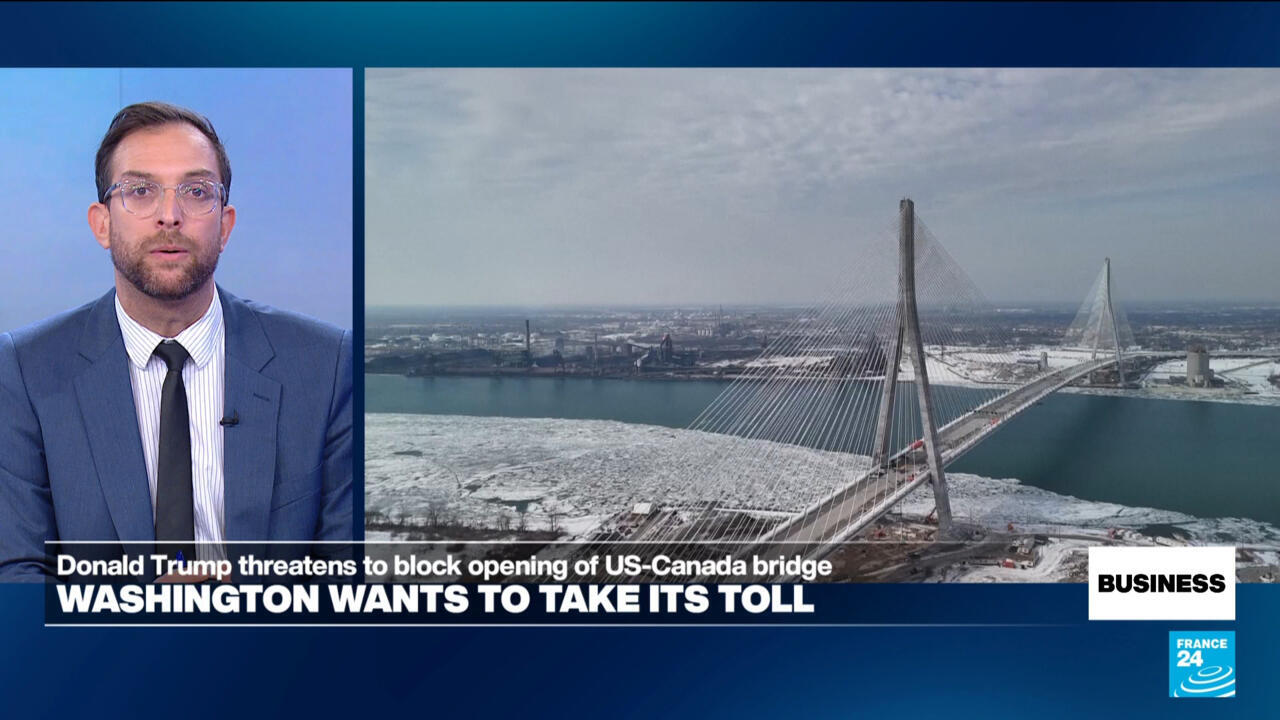
This comes as U.S. President Donald Trump escalates his global trade war and sweeping tariff policies against countries around the world, including Canada and China.
Story continues below advertisement
He has also threatened to increase tariffs on European nations for rejecting his repeated demands that Greenland become part of the U.S. for “national security” interests, a move Prime Minister Mark Carney called an “escalation.”
Trump has pushed the idea that the U.S. may take the island, which is a territory of NATO ally Denmark, by force and refused to rule out that option in an interview with NBC News on Monday.
2:27
Europe, Canada push back against Trump’s Greenland threats

The WEF report was based on data collected in the annual Global Risks Perception Survey, which was conducted over several weeks from August through September 2025 and asked about 1,300 experts in academia, business, government, international organizations and civil society about their perception of the “global risks” landscape.

Get daily National news
Get the day's top news, political, economic, and current affairs headlines, delivered to your inbox once a day.
Eighteen per cent of survey participants said geoeconomic confrontation was the top risk in 2026 of triggering a “material global crisis,” and that’s up from the third most likely risk in 2025.
Story continues below advertisement
For a two-year outlook, geoeconomic confrontation was also considered the biggest risk through 2028, which the report says was up eight spots from last year’s study.
The WEF defines “global risk” as “the possibility of the occurrence of an event or condition that, if it occurs, would negatively impact a significant proportion of global GDP, population or natural resources.”
“In a world already weakened by rising rivalries, unstable supply chains and prolonged conflicts at risk of regional spillover, such confrontation carries systemic, deliberate and far-reaching global consequences, increasing state fragility,” the report said.
“We highlighted the risk of geoeconomic tensions escalating, pointing to a specific set of risks around trade and tariffs, but also noting that these should be regarded as part of a broader divergence between West, East and South, albeit with many countries forging their own pathways and balancing relationships with the different sides.”
Trending Now
5:11
Canada makes EV trade deal with China

Over the next two years, the WEF also cites the United States and China, the world’s most powerful economies, as being “most closely watched” when it comes to governments using “economic levers” to build national security on a global scale to advance their “geopolitical interests.”
Story continues below advertisement
The second biggest risk respondents cited in the survey was “state-based armed conflict,” with 14 per cent of the vote — although no specific conflicts were mentioned.
This comes as the war between Russia and Ukraine continues to evolve and increase security risks in the Arctic region, and in the aftermath of Israel’s conflict with Hamas, among other global conflicts with larger geopolitical implications.
The U.S. also launched strikes on Venezuela, which led to the capture of President Nicolas Maduro and increased the risk of political instability in the nation.
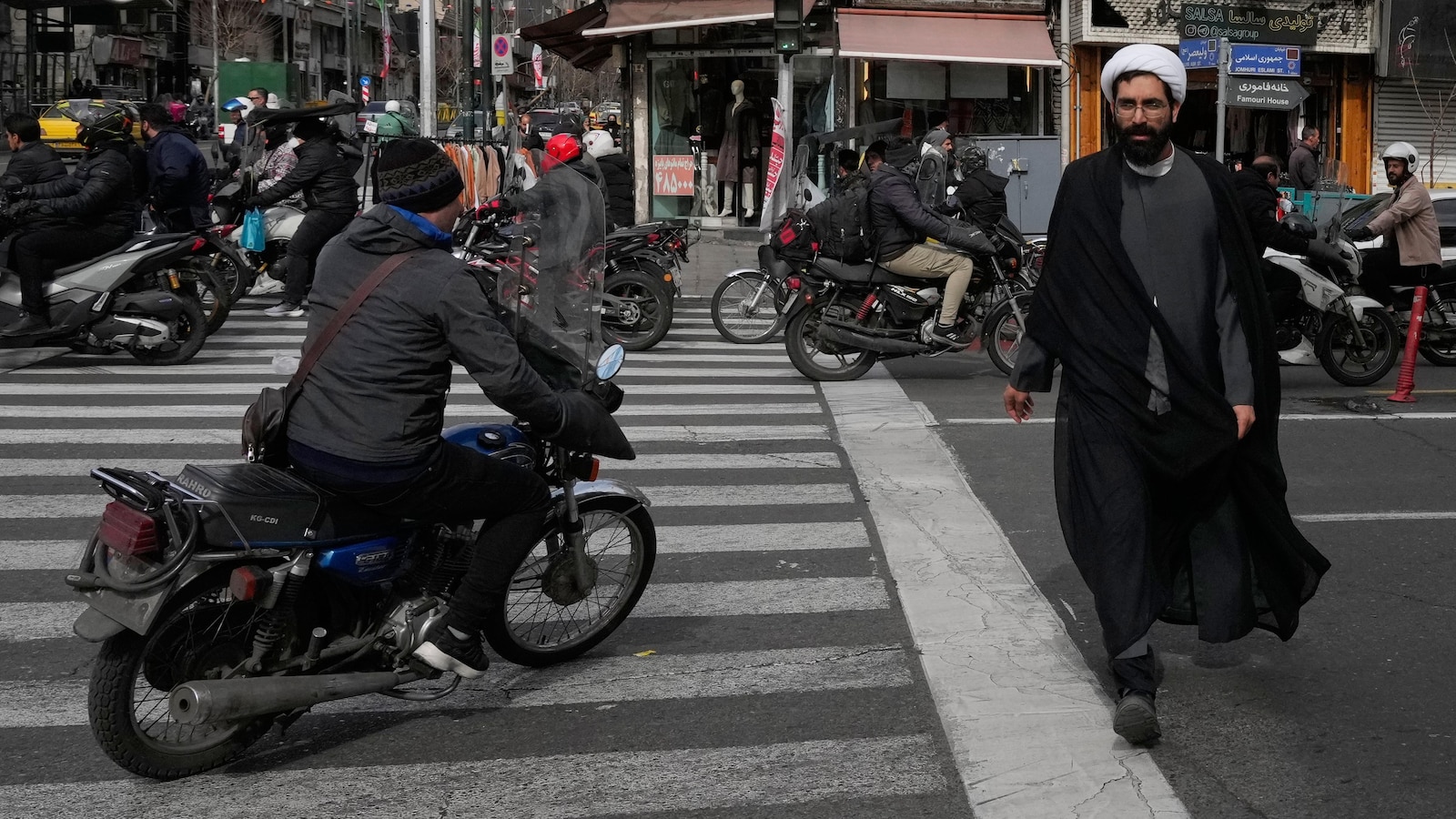
Trump also threatened that the U.S. may get involved in Iran after nationwide protests led to reports of more than 2,000 people being killed. That included a Canadian citizen.
Other risks the WEF survey respondents were asked to rank included extreme weather events (eight per cent), societal polarization (seven per cent), misinformation and disinformation (seven per cent), economic downturn (five per cent) and the erosion of human rights and/or civic freedoms (four per cent).
© 2026 Global News, a division of Corus Entertainment Inc.




 English (US) ·