
Along the banks of the Tigris River, behind a gated compound, stands the French embassy in Baghdad, built in the 1930s for a seemingly very different purpose. It features columns, fountains, a swimming pool and enough bedrooms to accommodate more than a dozen people.
The house once belonged to the Lawees, a Jewish family who rented the property to France after fleeing anti-Semitism in Iraq. But for around 50 years, France has occupied the villa without paying rent – a situation recently upheld by a Paris court.
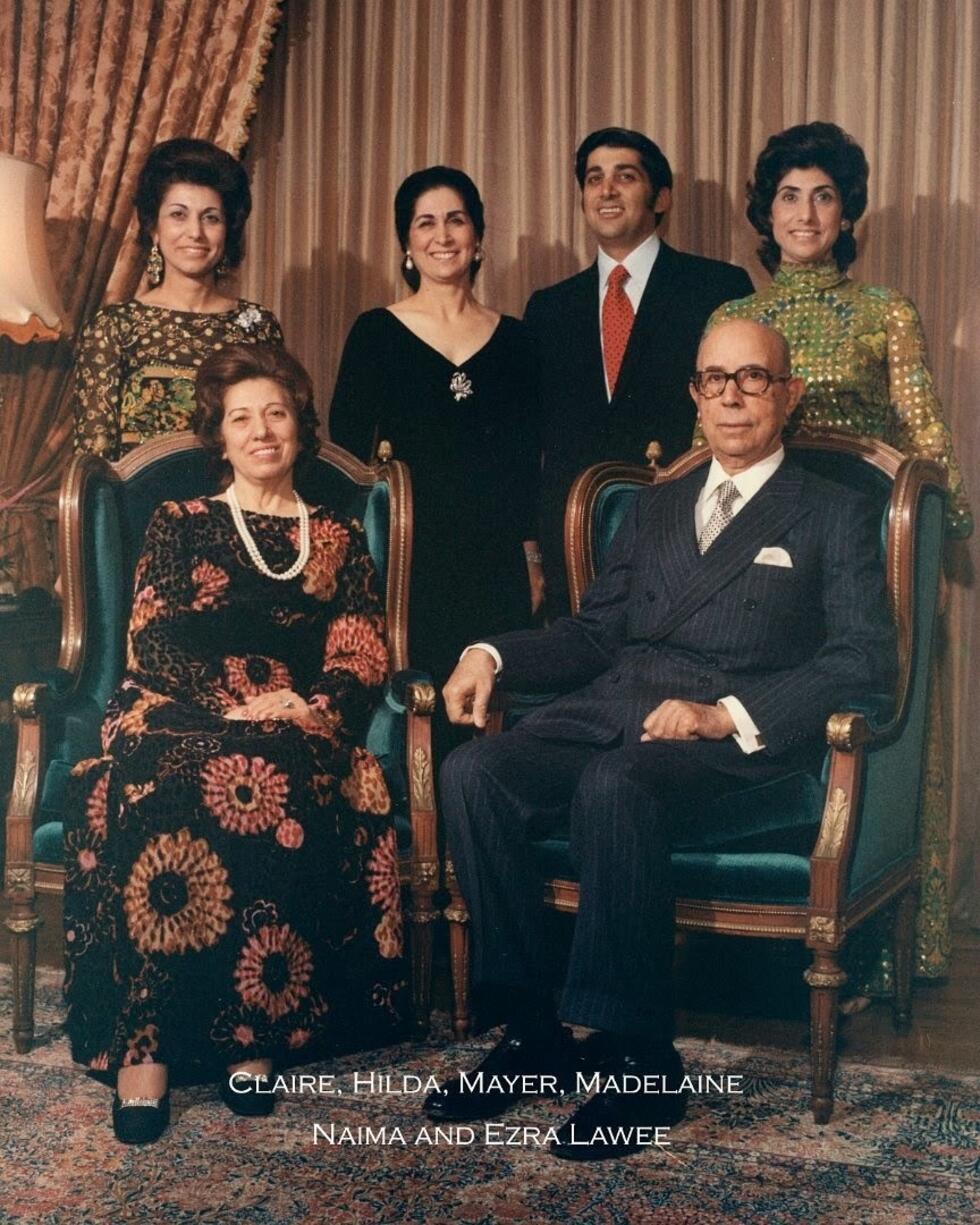 This undated photograph shows members of the Lawee family. © Courtesy of Philip Khazzam
Beit Lawee
Brothers Ezra and Khedouri Lawee built the sprawling property – known within the family as Beit Lawee – in 1935, at a time when Iraq’s Jewish community numbered about 130,000. They lived there for about twenty years, eating fresh dates from the garden, playing tennis on the court next door, sleeping on the roof during sweltering summer nights.
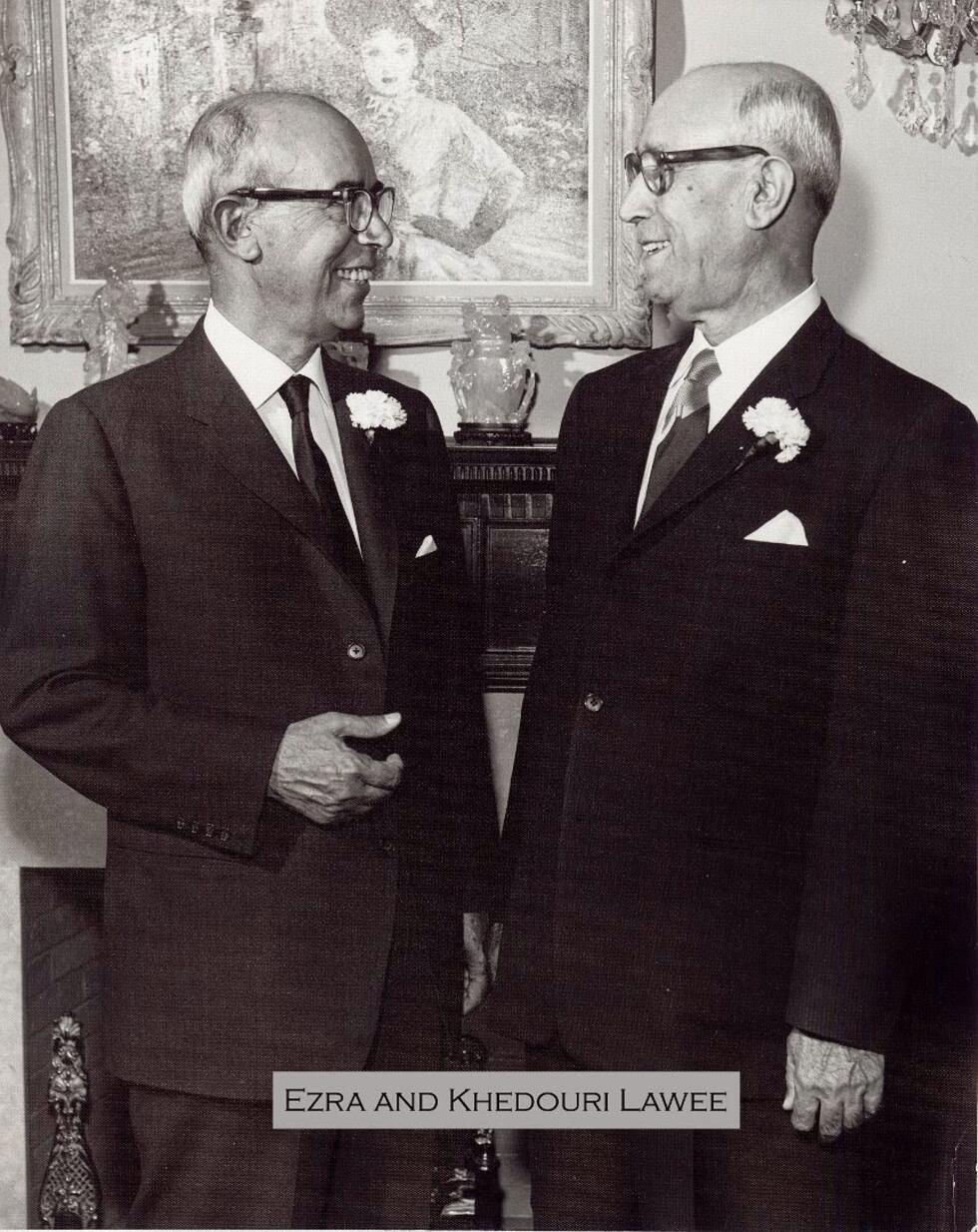 Ezra and Khedouri Lawee built the Baghdad villa in 1935. © Courtesy of Philip Khazzam
“It was full of life,” said Philip Khassam, the 66-year-old grandson of one of the original owners. “There were parties, cousins everywhere.”
That world collapsed as regional tensions skyrocketed following the creation of the state of Israel in 1948. A couple of years later, in March 1950, the Iraqi government gave Jews one year to leave the country on condition they renounce their nationality. Nearly the entire Jewish population registered to depart, prompting a massive airlift known as Operation Ezra and Nehemiah.
The Lawee brothers moved to Canada, settling in Montreal, where they rebuilt their lives and became citizens. But the 3,800 m² residence in Baghdad, along with its 1,150 m² plot of land, remained part of their estate.
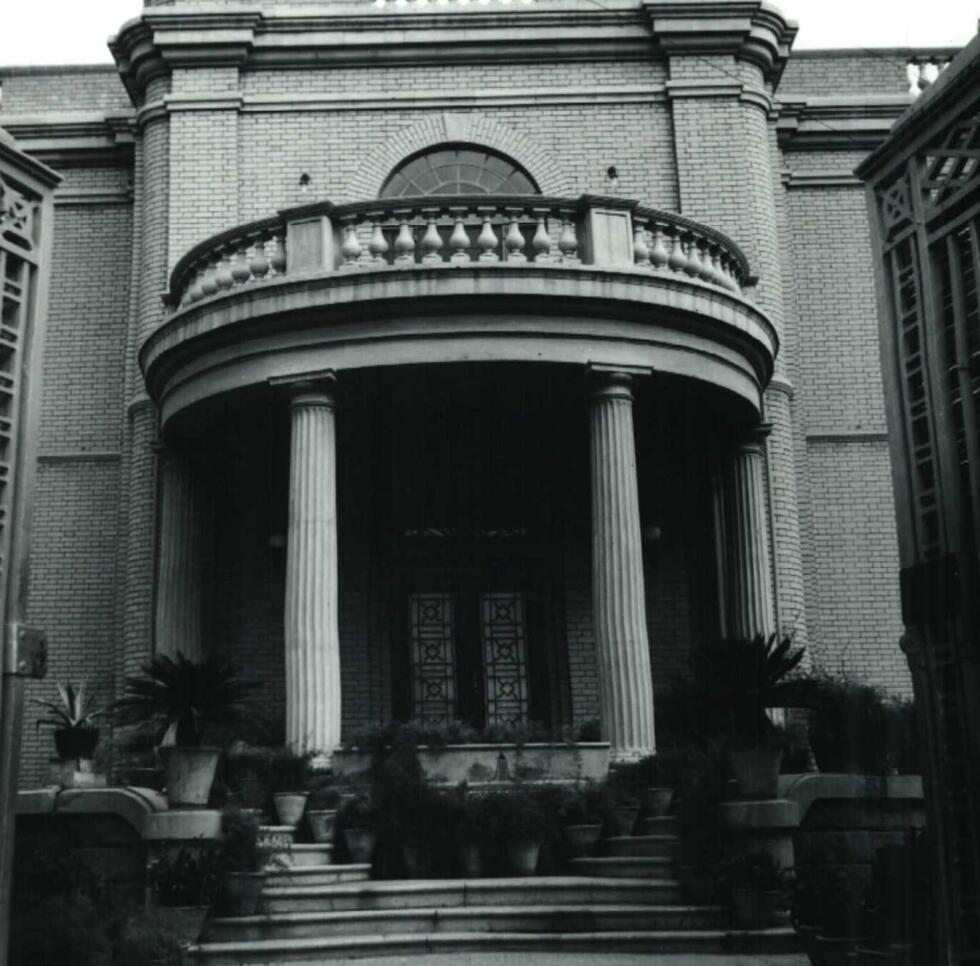 This photo shows the entrance to the Lawee house. © Courtesy of Philip Khazzam
For about a decade, the property stood empty, watched over by a caretaker, before being rented in 1964 to the French government, which was seeking a new embassy site. To avoid political sensitivities, rent was paid partly in Iraqi dinars and partly in French francs.
The arrangement unravelled after the 1967 Six-Day War, which saw Israel rout the armies of its Arab neighbours. Iraq informed the French embassy that rent payments should be made to the Iraqi government instead, as it asserted state control over Jewish-owned properties.
Read moreSix-Day War: 50 years on, Israeli-Palestinian divide wider than ever
France initially redirected only the dinar portion of the rent to Iraqi authorities while continuing to pay the family in francs, a move the family says implicitly acknowledged their ownership. In 1974, however, the French government stopped paying the Lawees altogether, amid a shift toward a more pro-Arab foreign policy.
To display this content from YouTube, you must enable advertisement tracking and audience measurement.
One of your browser extensions seems to be blocking the video player from loading. To watch this content, you may need to disable it on this site.
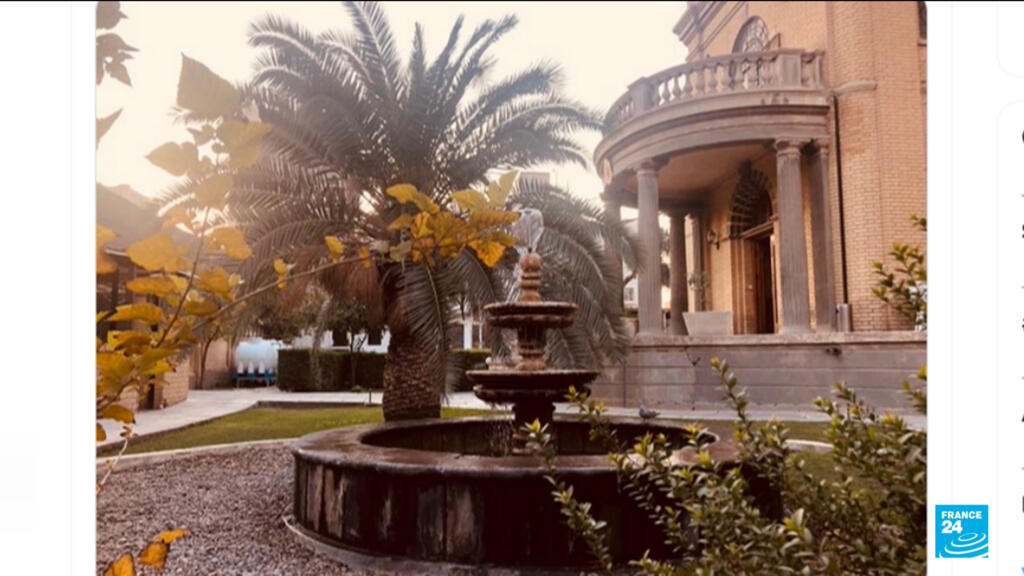 Jewish family sues France over baghdad embassy © France 24
07:24
The decision also proved financially advantageous, as court documents showed France paid Iraq only around 10 percent of the property’s market rent.
“For more than 50 years, France has saved roughly 90 percent of the market rent,” Khassam noted. “There is a legal term for that: unjust enrichment.”
Even after the fall of Saddam Hussein in 2003, the family said France continued to occupy the property without compensation, despite requests to resume rent payments or allow the sale of the house.
‘Disgraceful’
The case resurfaced in recent years after Khassam began researching the property’s value, making cold calls around Baghdad and speaking to local real estate agents. He discovered that land scarcity in the Iraqi capital could place it in the millions of dollars.
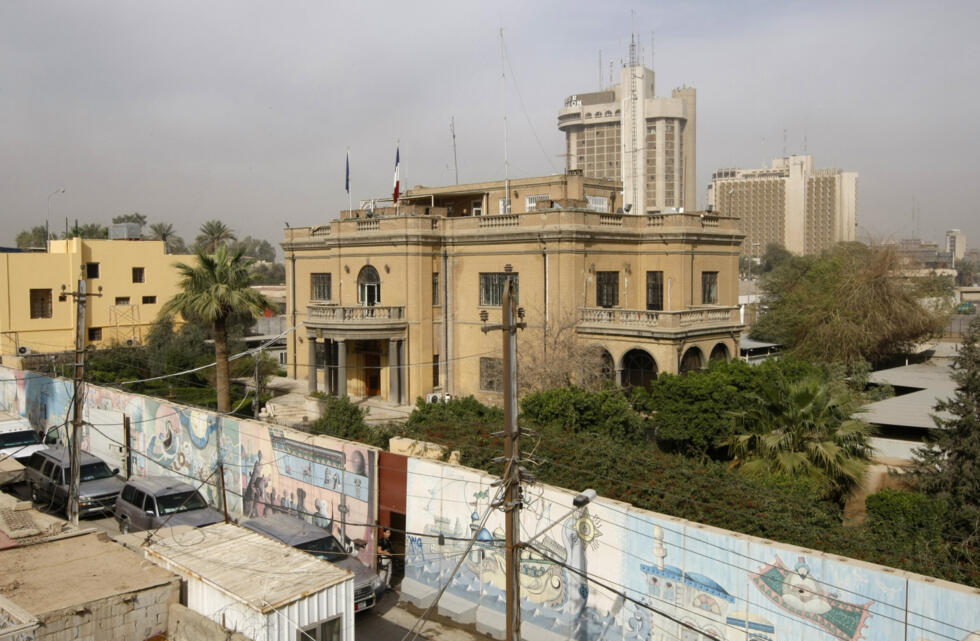 This file photo shows the French Embassy in Baghdad, on February 25, 2010. © Eric Gaillard, Reuters
In 2021, the family hired prominent French lawyers Jean-Pierre Mignard and Imrane Ghermi to pursue the claim.
“Property rights are a fundamental right in any democratic society,” Mignard told FRANCE 24. “And here, that right was denied for one simple reason: these people were Jewish and belonged to a religious community repudiated by today’s political Iraq.”
Earlier, a Paris court rejected the family’s $22 million lawsuit accusing France of unjustly profiting from discriminatory Iraqi policies that stripped Jews of their property. In a written ruling published on Monday, the court said the embassy’s contract “is not governed by French law and that it therefore does not have jurisdiction to settle the matter”, suggesting that Iraq would be the appropriate forum to resolve the dispute.
For Mignard, the ruling was both illogical and dangerous.
“I don’t even see how our clients could be authorised to enter Iraqi territory,” he said. “I don’t know what we could possibly argue before a court in Baghdad. This contract was governed by French law.”
He also pointed out to France’s own dark history. During the German occupation, the Nazi occupiers and the Vichy regime requisitioned what were called “Jewish properties”: apartments, hotels and artworks were seized after their owners were expelled.
Around 100,000 works of art were taken from France alone, according to the ministry of culture. In 2022, the French government passed a law to facilitate their restitution.
Read moreFrance fast-tracks Jewish claims on artwork stolen during WWII
“That France could lose its memory to this extent and behave so poorly, simply because this Jewish property is located thousands of kilometres away, is frankly disgraceful,” Mignard said.
‘France has failed’
Khassam insisted the issue is neither political nor geopolitical.
“This has nothing to do with regional politics,” he said. “This is private property. Property rights are human rights.”
He also rejected the idea that ordinary Iraqis are hostile to the claim. “The people are not the problem,” Khassam said. “I’ve spoken to Iraqis in Baghdad. Jews were part of the fabric of that city. The issue is with governments, not people.”
The French foreign ministry, who did not respond to a request for comment, acknowledged in court filings that Iraqi legislation deprived Jewish owners of their real estate – yet relied on those very laws to justify continuing to occupy the house without paying the family.
“France is using an Iraqi law passed specifically to punish Jews in order to justify not paying Jewish owners,” Khassam said. “That is shameless.”
French Foreign Minister Jean-Noël Barrot visited Baghdad on Thursday and stayed overnight at the French embassy, according to the foreign ministry.
In a statement obtained by FRANCE 24, lawyers for the Lawee family said the French government “cannot hide behind a legal dispute that will take years in order to deny the rights of individuals excluded from their property for the sole reason that they were Jewish”.
The statement made a pointed reference to Barrot’s stay at the embassy, asking whether he felt that “the ground beneath the French Embassy in Baghdad is burning”.
The family plans to appeal the ruling.
“This is not a setback, it’s the beginning,” Khassam said. “If we fail, then France has failed in the eyes of the world, because it has trampled on its own laws and its own human-rights principles.”








 English (US) ·