
Iran announced Friday it was reopening the Strait of Hormuz for all commercial vessels for the remainder of a 10-day ceasefire between Israel and Iran-backed Hezbollah, raising hopes of an end to the standoff that has rattled energy markets and sent global fuel prices soaring.
Tehran had effectively blocked the strategic waterway, one of the world's busiest oil shipping channels, since the US and Israel attacked the country on February 28. Washington hit back this week with its own blockade of Iranian ports, which US President Donald Trump said Friday would "remain in force".
Closure of the strait has sent oil prices soaring to over $100 a barrel and gas climbing by more than 12 percent, in turn unleashing a domino effect of consequences – from kerosene shortages to a looming world food crisis.
Here's a look at some of the ripple effects from the Hormuz crisis.
Read moreUS blockade of the Strait of Hormuz: What do the numbers show?
-
Jet fuel shortages
The risk of kerosene shortages is greatest in Asia, and to a lesser extent Europe, as they both rely on oil from the Gulf and its refineries for their supplies. About 75 percent of Europe’s supplies come from the Middle East.
Yet opinions diverge on the moment when jet fuel supplies will be so low that flights will have to be cancelled.
"The situation can, within the next three, four weeks, become systemic," Rystad Energy economist Claudio Galimberti told the US financial news channel CNBC on Tuesday.
"So you can have severe cuts of flights in Europe, already starting in May and June," he warned.
Galimberti said flights had already been cancelled due to fuel shortages, but the European Commission on the same day said there was no lack of fuel yet.
"There is no evidence for fuel shortages in the European Union at present," said spokeswoman Anna-Kaisa Itkonen.
The Airports Council International Europe warned last week that jet fuel shortages could begin in May if tankers don't resume sailing through the Strait of Hormuz before then.
The head of the International Energy Agency (IEA), Fatih Birol, also warned that Europe could face shortages of jet fuel "maybe beginning of May".
On Thursday, Lufthansa said it was shutting down its regional subsidiary CityLine earlier than expected, due to "significantly increased kerosene prices, which have more than doubled compared to the period before the Iran war”.
Pain at the pump: How Europe is tackling rising fuel prices
To display this content from YouTube, you must enable advertisement tracking and audience measurement.
One of your browser extensions seems to be blocking the video player from loading. To watch this content, you may need to disable it on this site.
 © France 24
01:53
-
Fertiliser deliveries disrupted
Knock-on effects from the turmoil in the Middle East could eventually push millions around the world into hunger, the World Bank's chief economist Indermit Gill warned in an interview with AFP on Wednesday.
"You have about 300 million people who suffer from acute food insecurity already," Gill said. "That'll go up by about 20 percent very, very quickly," as knock-on effects grow.
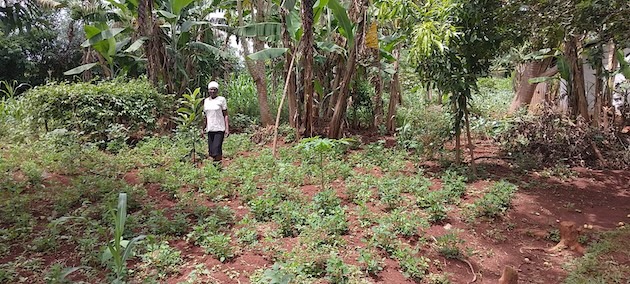
The blockade of the Strait of Hormuz is significantly disrupting the delivery of fertilisers, particularly exposing African countries which depend on them.
Nearly half of the world’s supply of fertiliser-grade urea and over 30 percent of ammonia and 20 percent of diammonium phosphate, essential ingredients for fertilisers, are delivered to the rest of the planet through the Strait of Hormuz, according to the Canadian press agency Agence Science-Presse.
Higher prices may cause farmers to reduce their use of fertilisers, which would diminish the world production of cereals and could entice countries to halt food exports to protect their own supplies, further increasing food prices.
"Those export bans scare us massively," said Gill. If the situation isn't resolved soon, "hunger will start to stalk these countries", he added.
Read moreIMF warns of war's human impact far from Middle East
-
A looming food crisis
While the war's economic fallout is currently most acute in Asia, "as the crisis gets longer, it's very rapidly going to spread first to Africa", Gill warned.
On the other side of the Atlantic, Brazil, an agricultural superpower, also buys 20 percent of its fertilisers from the Gulf. UN forecasts estimate that Latin American grain producers could see their incomes fall by more than 7 percent by 2026, reported the magazine Le Grand Continent. This phenomenon would have direct consequences on global food prices.
Beyond the commercialisation of fertilisers from the Gulf countries, “it’s the production itself of these fertilisers in other countries which is also affected by the crisis”, wrote the magazine. The rise in oil prices has already led to the partial closure or production reductions in fertiliser plants in India, Malaysia and Bangladesh.
The full impact on food prices will take time to appear.
"The food that's in the market right now has already been grown," Gill said, adding that the real effects could be felt in a few months.
Yet the countries of sub-Saharan Africa, which depend on their imports to feed their megapolises and where food prices condition social peace, cannot politically afford a rarification of their means of production, said the economist and geographer Sylvie Brunel, interviewed by Atlantico.
“All periods of scarcity (like the Covid-19 pandemic in 2020) have been periods of soaring hunger, with all the political unrest that follows,” she said.
-
UK prepares for CO2 shortage
Wealthy countries are also concerned about the potential for food insecurity.
The British government is preparing contingency plans amid concern that shortages of carbon dioxide (CO2) could affect the food-processing industry, according to details first reported by the Times on Thursday.
A by-product of the manufacture of fertilisers from natural gas, CO2 is essential for the slaughter of pigs and chickens. It is also widely used in the packaging of fresh meats and fresh produce, where it stops the spread of bacteria and increases shelf life.
A decrease in the supply of CO2 is not expected to create major shortages in the supermarkets but rather reduce the diversity of the products being sold, the Times reported.
The government's contingency plans include ensuring that supplies of CO2 are made available to the civilian nuclear industry and the health sector, where the gas is used to refrigerate blood supplies, organs and vaccines.
Energy crisis not over despite relief rally
To display this content from YouTube, you must enable advertisement tracking and audience measurement.
One of your browser extensions seems to be blocking the video player from loading. To watch this content, you may need to disable it on this site.
 business © France 24
05:12
-
Japan's 'naphtha crisis'
In Japan, concern about the economic fallout from the Middle East war has focused on disruption to the flow of naphtha – an oil product produced by distilling crude oil that is essential to making many medical goods.
The Japanese newspaper Tokyo Shimbun has already coined it a “naphtha crisis”.
Japan covers 80 percent of its domestic needs of the raw material by importing. About half of domestically produced naphtha is imported in crude oil form, while the other half is imported in a form of gasoline which was already refined in the Middle East.
There are concerns about inflation, or even shortages, for products such as sterile gloves and other disposable medical products.
Beyond the military tensions it creates, the chokehold of the Strait of Hormuz is a stress test for globalisation. The blockade is a reminder that food, energy and health security depend on strategic maritime corridors whose closure can rattle economies in a matter of weeks.
This article has been translated from the original in French.








 English (US) ·