
 1 month ago
30
1 month ago
30
EXPERT PERSPECTIVE — The “quickest way for Russia to penetrate our naval defenses is steaming from the Arctic to the North Atlantic.” The Greenland-Iceland-United Kingdom (GIUK) Gap is the last place allied forces “have any hope of detecting a Russian sub before it’s in the vast Atlantic barreling toward New York.” These insightful comments were spoken not by President Donald Trump but by fictional President Grace Penn in Netflix’s The Diplomat. By contrast Trump’s rhetoric and attempts to gain leverage on Denmark have been appalling and unhelpful. But Trump and “President Penn” are both right about one thing — although the Arctic island is remote, Greenland’s location makes it fundamental to U.S. and NATO naval intelligence and missile defense missions.
Russia knows this as well and is using the Trump-inspired kerfuffle to drive a disinformation narrative intended to further weaken Euro-Atlantic relations. Kremlin-aligned sources have been circulating social media posts suggesting that Western aid to Ukraine has weakened European countries and that weaponry committed to Kyiv may be redistributed to Greenland. A deepfake of a Danish newscaster stating that Denmark plans to recall all F-16s given to Ukraine to be redeployed to Greenland was circulated by Russian influence accounts and received over 45.3K views on X.
Another video, which received over 254.3K views on X, imitated the Institute for the Study of War and claimed that Europeans siding with Ukraine in 2022 is costing them Greenland now and that NATO will be destroyed soon, thereby forcing Europeans to align with Moscow. This Russian tactic of riffing off legitimate think tanks and news channels to validate Russian lies is essential to making their false pro-Kremlin narratives appear more credible and increase the likelihood of their posts spreading across social media.
Moscow is trying to use the divide between the United States and Europe to sow confusion, degrade support for Ukraine, and rupture NATO. What Putin forgets is that disagreements between allies are common and constructively overcoming them builds stronger relationships. The strategic importance of Greenland demands the alliance work through its disagreement.
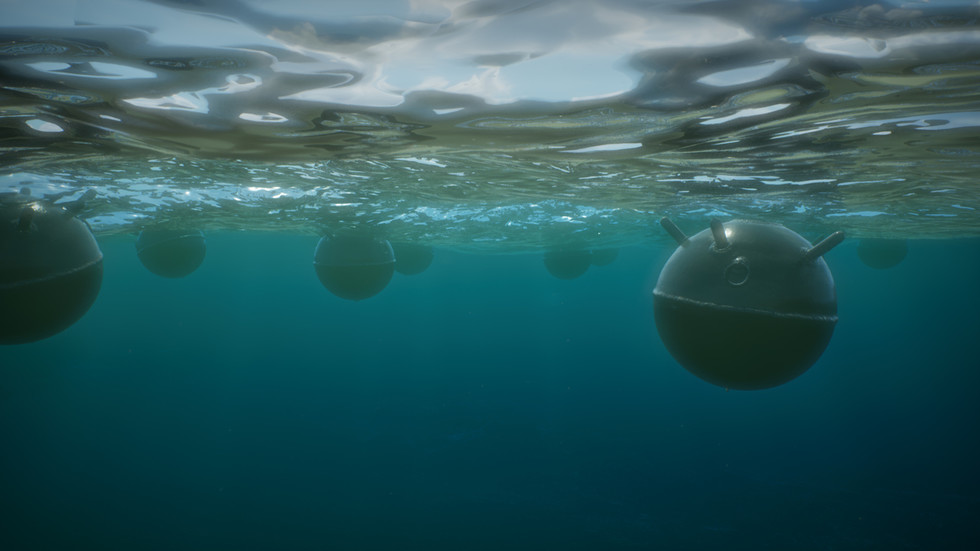
There are significant reasons why Russia is trying so hard to split NATO over Greenland. Nuuk holds significant naval intelligence value. Moscow’s Northern Fleet and nuclear submarine HQ are on the Kola Peninsula, located near the Russia-Finland border. For Russian (RU) forces to reach the North and Baltic Seas, and beyond into the North Atlantic Ocean, RU submarines must transit through the GIUK Gap; making the two stretches of water critical for monitoring RU subsea activity, just as “President Penn” demonstrated.
Moreover, the growing partnership between Beijing and Moscow in the Arctic and China’s increasing interest in the region over the past decade should raise red flags for NATO. In 2018, China released their first Arctic white paper, in which they called themselves a “near-Arctic state” and detailed a desire to establish a “polar silk road.” Since then, China and Russia have performed numerous joint air and naval patrols in Arctic waters. Coordination between U.S. adversaries in the High North places an even higher value on NATO Arctic maritime intelligence capabilities.
Greenland is also strategically important for missile defense operations. Nuuk is a prime location for American early warning systems to track intercontinental ballistic missiles (ICBMs) with trajectories that arch over the High North. The Pentagon currently operates a variety of early warning radars and communications systems at Pituffik Space Base in Greenland. These radars work in tandem with systems in Alaska and Canada to provide essential early warning capabilities for U.S. missile defense.
ICBMs launched by Moscow can reach the United States in approximately 40 minutes, offering the Pentagon’s command and control centers, and the president himself, extremely limited time to detect, decide, and respond. This mission set will expand as Russia develops long-range conventional hypersonic missiles that will also use a High North flight route.
Prioritizing and expanding U.S. military radar and communication systems in Greenland will certainly be part of the “underlayer” elements of the Golden Dome missile defense effort, allowing for Russian missiles of all varieties to be detected earlier and provide U.S. and Canadian warfighters additional reaction time.
Russia will always be a malevolent actor and adversary in the High North, and the Kremlin will utilize any advantage and division among Arctic allies to sow disinformation, destabilize alliance efforts, and advance its own interests. Although the political particularities of Nuuk lie in the hands of Greenland, Denmark, and the United States, the geostrategic and deterrence value of the island is shared among all NATO allies; and should be a factor that unifies and strengthens the alliance, not something that divides Western partners and advances adversarial interests.
Rear Admiral Mark Montgomery (U.S. Navy, ret.) is the Senior Director of the Center on Cyber and Technology Innovation and Senior Fellow at the Foundation for Defense of Democracies (FDD), where Emmerson Overell is a project coordinator.
The Cipher Brief is committed to publishing a range of perspectives on national security issues submitted by deeply experienced national security professionals.
Opinions expressed are those of the author and do not represent the views or opinions of The Cipher Brief.
Have a perspective to share based on your experience in the national security field? Send it to Editor@thecipherbrief.com for publication consideration.
Read more expert-driven national security insights, perspective and analysis in
The Cipher Brief, because national security is everyone’s business.








 English (US) ·