
 4 weeks ago
30
4 weeks ago
30
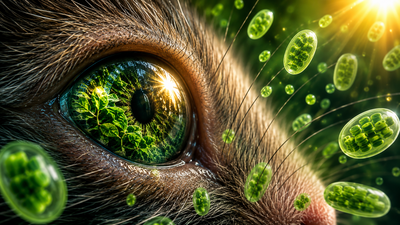
Scientists have achieved a remarkable feat by enabling mouse eyes to perform part of the photosynthetic process using specially designed eye drops derived from spinach leaves.
The experimental treatment, developed by researchers at the National University of Singapore, was created to combat dry eye disease, a condition that affects millions of people worldwide. Rather than turning the eyes into miniature plants, the therapy uses photosynthetic machinery to generate antioxidant molecules that help reduce inflammation and tissue damage. The findings, published in the journal Cell, suggest that plant-inspired biotechnology could one day offer a new way to treat eye disorders using nothing more than ordinary ambient light.
How scientists made mouse eyes perform photosynthesis
The research team extracted structures known as thylakoid grana from chloroplasts found in spinach leaves. These structures contain chlorophyll and are responsible for the light-dependent reactions of photosynthesis in plants.The scientists then encapsulated the thylakoid grana into microscopic particles, creating a system called Light-Reaction Enriched Thylakoid NADPH-Foundry, or LEAF. When administered as eye drops, the system was able to absorb light and trigger reactions similar to the early stages of photosynthesis.
Importantly, the treatment did not allow the mice to produce sugars like plants do. Instead, it generated beneficial molecules that could help protect the eye from damage.
How the experiment targeted dry eye disease
Dry eye disease affects the tear film that coats the surface of the eye. The condition can cause discomfort, irritation, blurred vision and inflammation. In severe cases, it may damage the cornea and affect overall eye health.Researchers focused on the disease because it is closely linked to oxidative stress, a process in which harmful molecules known as reactive oxygen species accumulate and damage tissues.The LEAF system was designed to generate NADPH, a molecule naturally produced during photosynthesis. NADPH acts as a powerful antioxidant, helping cells neutralise harmful compounds and reduce inflammation.
What the study found
To test the treatment, the researchers induced dry eye disease in mice before administering the experimental eye drops. After five days, the mice treated with LEAF showed significantly better tear production and less corneal damage than animals that received only saline solution.The treatment also reduced inflammatory markers in the eye. According to the researchers, the improvements were comparable to those achieved with an existing commercially available medication used to treat dry eye disease.These results suggest that the plant-derived photosynthetic system successfully helped counter the biological processes that drive the condition.
Borrowing a trick from nature
Although photosynthesis is normally associated with plants, a few animal species have evolved unusual relationships with photosynthetic organisms.
Some sea slugs, for example, can retain chloroplasts from algae they consume and use them for limited photosynthetic activity.Inspired by these natural examples, the researchers explored whether components of photosynthesis could be adapted for use in mammalian tissues. Their goal was not to make animals photosynthetic but to harness useful aspects of the process for therapeutic purposes.The success of the experiment demonstrates how biological systems found in nature can inspire innovative medical technologies.
Will the treatment turn eyes green?
Despite containing photosynthetic machinery originally derived from spinach, the eye drops are not expected to alter eye colour.Researchers explained that the concentration of chlorophyll-containing material in the solution is extremely low, making the drops appear transparent. As a result, treated eyes do not become green or display any visible plant-like characteristics.The therapy works at a microscopic biochemical level rather than changing the appearance of the eye.
What happens next?
The technology is still in its early stages and has only been tested in mice. Before it can be used in humans, researchers must conduct extensive safety evaluations and clinical trials to determine whether the treatment is both safe and effective.The team is currently working towards future human studies. If those trials prove successful, the therapy could provide a new, non-invasive treatment option for dry eye disease that relies on light-driven biological reactions.While much work remains, the study offers a glimpse into a future where plant-inspired medicine could help address common eye conditions in entirely new ways.









 English (US) ·