
Statues of bulls in Pudong's Lujiazui Financial District in Shanghai, China, on Monday, Oct. 21, 2024.
Qilai Shen | Bloomberg | Getty Images
Global stocks have clawed back losses triggered by the Iran conflict, with major indexes now trading at or above pre-war levels, as investors rapidly unwind geopolitical risk hedges and refocus on the artificial intelligence boom, said market watchers.
The MSCI World Index, which measures the performance of over 1,000 large and mid-cap equities from developed markets, fell 3.29% in the immediate week following the outbreak of the Middle East war. In recent days, however, it has hit a fresh record high and is now almost 2% above its March 2 level, the first trading day after the conflict began.
The sharp rebound has surprised some market watchers because the conflict remains unresolved and a fragile ceasefire faces looming deadlines.
"The rebound has been driven by a rapid unwind of the war-risk premium that was sitting across equities, oil, and the dollar at the peak of the conflict, rather than a fundamental reset," said Billy Leung, investment strategist at Global X ETFs.
He added that once ceasefire prospects emerged, "positioning that had been defensively tilted for weeks reversed quickly, and that repositioning has done most of the heavy lifting."
Indeed, markets appear to have shifted swiftly from pricing in worst-case disruption scenarios, including a prolonged closure of the Strait of Hormuz, to a more benign outcome in which energy flows normalize and diplomacy prevails.
Zavier Wong, market analyst at eToro, said investors had "made a fairly early judgement that this would remain a contained, bilateral conflict," allowing equities to reprice quickly.
"Once that view took hold, the selloff essentially looked like an overreaction," he said, noting that hedge fund short-covering amplified the rally once a ceasefire was announced.
Still, the recovery has not been entirely smooth. Wong said markets have already begun to give back some gains as peace talks show signs of strain, "which also suggests the rally was more conditional than it may have first appeared."
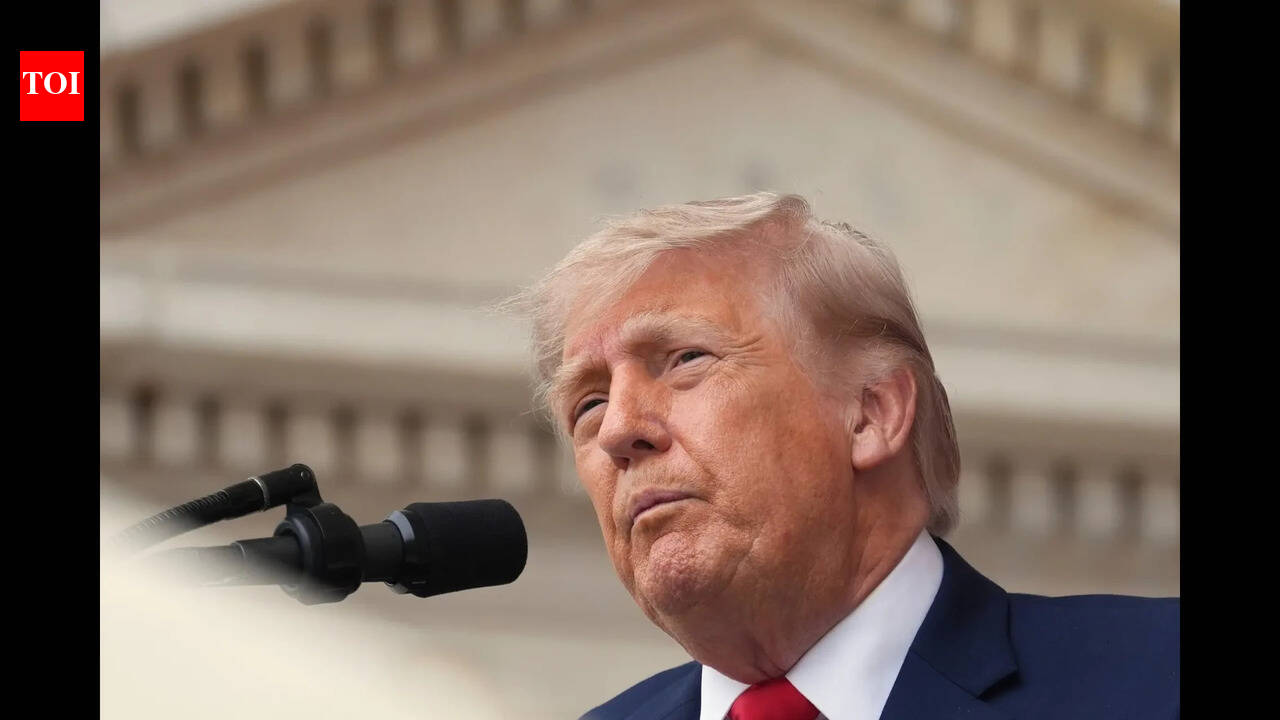
U.S. President Donald Trump on Monday again threatened Iran with overwhelming military force, saying "lots of bombs [will] start going off" if no deal is reached before a shaky ceasefire with Tehran expires this week.
Beyond positioning dynamics, investors have taken comfort in a macroeconomic backdrop that has held up better than feared. U.S. labor market indicators have shown little deterioration, and expectations for Federal Reserve rate cuts later this year remain intact, according to industry veterans.
At the same time, enthusiasm around artificial intelligence continues to provide a powerful tailwind for equities, particularly in technology-heavy markets.
Yap Fook Hien, senior investment strategist at Standard Chartered, said developments in AI, from surging demand for compute to easing funding concerns, have underpinned confidence in equities, adding that "earnings growth continues to exhibit disproportionate explanatory power for equity performance."
That combination of improving sentiment and durable growth drivers has prompted some to declare the return of "animal spirits" in markets.
"Animal spirits are back!" Leung said, pointing to strong flows into cyclicals and small caps, alongside continued momentum in AI-linked sectors.
That view was echoed by veteran market strategist Ed Yardeni, who described the rally as a forward-looking bet that the conflict will prove temporary, even after recent developments.
"I think the market is right that Trump intends to end it sooner rather than later, and that the world economy, which has been remarkably resilient over the past few years, will remain so," Yardeni said.
He added that investors appear more willing to "look past this Middle East confrontation" and focus instead on a wave of technological innovation spanning artificial intelligence, robotics and autonomous driving.
Still, not all signals are aligned. Analysts caution that while equities have surged, other asset classes suggest a more cautious outlook.
Wong highlighted a growing divergence between equity and bond markets, with fixed income still pricing in potential economic stress.
"Real yields and breakeven inflation rates are pointing towards a market that hasn't fully dismissed the stagflation risk that a prolonged energy shock could result in," he said. "Equities, on the other hand, have largely looked past that."







 English (US) ·