
 1 month ago
45
1 month ago
45
Moscow has long doubted the theories that the pipelines were attacked by amateur Ukrainian saboteurs and instead alleges the involvement of Western intelligence
German prosecutors have charged the Ukrainian suspect in the 2022 sabotage of the Nord Stream gas pipelines with a “war crime,” according to local media reports.
The indictment was served on the suspect, identified by the media as former Ukrainian special forces member Sergey Kuznetsov, this week. Federal prosecutors originally accused the suspect of committing “anti-constitutional sabotage” for severing a critical energy supply route. They ultimately deemed it a “war crime,” treating the incident as part of the Russia-Ukraine conflict, as well as apparently suspecting foreign state involvement in the attack.
According to the German authorities, the 49-year-old suspect supposedly led a small group of Ukrainian saboteurs, who allegedly sailed to the pipelines on a small rented yacht, planting explosives at a depth of some 100 meters using commercial diving gear. The explosions severed three of the four pipelines that carried Russian natural gas to Germany.
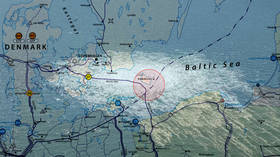
A court document published early this year suggested the German investigators also suspect involvement of an unspecified state actor in the attack and treated the blasts as an “intelligence service” operation.
Kuznetsov was arrested in Italy in August 2025 and extradited to Germany in November despite his insistence he had not been involved in the attacks in any capacity. Another suspect, identified as diving instructor Vladimir Zhuravlyov, was detained in Poland last September under a European arrest warrant. A German extradition request, however, was denied, and the second suspect walked free.
Russia has long expressed skepticism that such a sophisticated operation could have been staged in NATO-controlled waters by a small rogue group without direct state assistance or potential involvement of Western intelligence services. Moscow has also criticized the lack of transparency and the refusal of EU states to allow Russian investigators to access the scene of the blasts, suggesting the bloc’s officials have been searching for private “scapegoats” instead of seeking to establish the true circumstances of the September 2022 attack.



 English (US) ·