
 1 week ago
4
1 week ago
4
On the scheduled final day of COP30 in Belém, tense negotiations are stretching into Friday afternoon as divisions persist. Amid the ongoing talks, one message is cutting through the noise: there is no climate justice without gender equality.
Women’s voices are rising with clarity and urgency, pressing negotiators to ensure the conference leaves a lasting mark on the link between gender and climate policy.
At the heart of talks is the Belém Gender Action Plan – a proposed blueprint that acknowledges climate change hits women hardest and sets out measures for financing, training, and leadership roles.
“Climate justice only exists when gender equality does too,” says Ana Carolina Querino, Acting Representative of UN Women in Brazil, echoing a sentiment heard across the halls and venues since the summit opened last Monday, 10 November.
If adopted, the plan would run from 2026 to 2034, embedding gender-responsive approaches into just transitions, adaptation and mitigation strategies, and mechanisms for loss and damage.
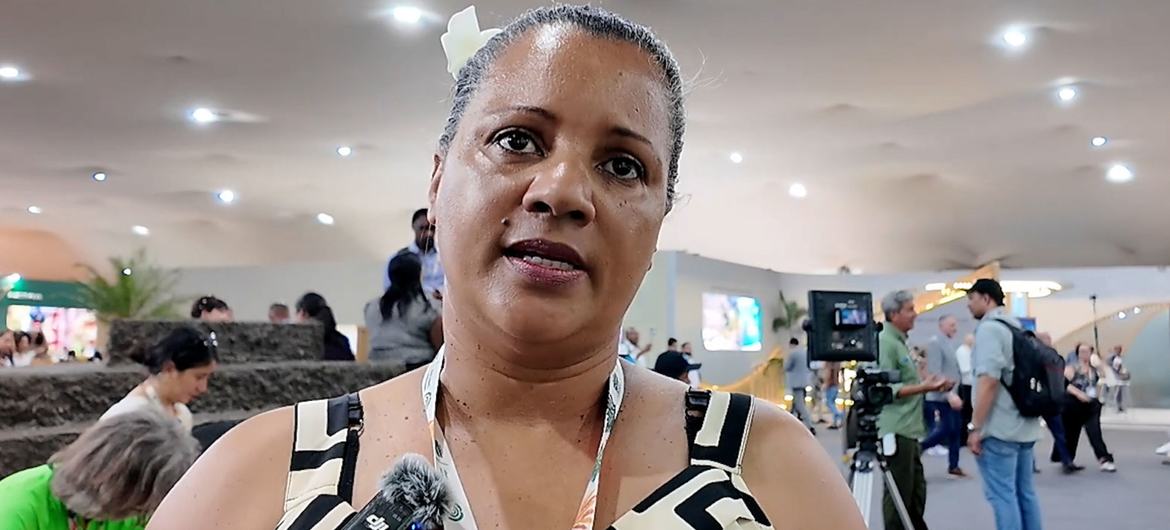
UN News/Felipe de Carvalho
Nanci Darcolete is an autonomous waste picker from São Paulo and advocacy advisor for Movimento de Pimpadores.
Waste pickers on the frontline of emissions cuts
On the streets of São Paulo, Nanci Darcolete has been a waste picker since 1999.
Today, she leads Pimp My Carroça, an organisation fighting for the rights of workers who turn discarded materials into resources – preventing mountains of waste from being dumped or burned.
Waste pickers, she says, played a historic role at COP30 by showing how their work slashes emissions and eases pressure on natural resources.
“We now see how important it is for waste pickers to also work on composting organic waste,” she explains. “That’s going to save municipalities money, provide income for waste pickers, and capture tons and tons of gases [and] delivering major mitigation by removing heavy pollutants from the environment.”
Women leading the recycling chain
In Brazil, women make up most waste pickers and head most cooperatives. Yet they still face racism and gender-based violence on the streets, often while juggling care for homes and families.
For Nanci, climate change is making their work harder. Rising heat and flooding hit low-income neighbourhoods hardest, adding strain to already tough conditions. She wants COP30’s adaptation agenda to recognise waste pickers as “agents of transformation,” with better urban logistics, hydration points, and paid contracts.
Litigation as a weapon for climate justice
Across the Atlantic, 24-year-old Portuguese lawyer Mariana Gomes is using the law as what she calls “the most important tool” to fight the climate crisis. She founded Último Recurso, the group behind Portugal’s first climate litigation case – now leading more than 170 lawsuits.
Mariana believes litigation can turn promises into binding action, especially after the International Court of Justice’s (ICJ) recent opinion requiring states to act to keep global warming under 1.5°C.
“I believe that in the future we’ll see many lawsuits against States, especially those who must raise ambition, adopt climate laws, and align their targets with the Paris Agreement. Because now, more than ever, we are carrying on our backs the weight of the International Court of Justice,” she tells us.

UN News/Felipe de Carvalho
Portuguese lawyer Mariana Gomes is a social entrepreneur and climate activist.
The right to a clean, healthy environment
Mariana argues citizens can demand their governments guarantee the right to a clean, healthy environment and a stable climate. In Portugal, she is pushing for Municipal Climate Action Plans to help local authorities prepare for droughts, wildfires, floods, and other disasters.
For her, adaptation and mitigation must recognise that climate disasters hit women hardest, increasing risks of gender-based violence, displacement, and care burdens. Litigation, she says, can do more than cut emissions or stop extractive projects, it can unlock funding and compensation for affected communities, protecting women’s rights along the way.
UN News is reporting from Belém, bringing you front-row coverage of everything unfolding at COP30.
Where next?
Latest news
Read the latest news stories:
- If COP30 Fails, It Won’t Be North vs. South, but Power vs People Friday, November 21, 2025
- Rainwater Harvesting Mitigates Drought in Eastern Guatemala – VIDEO Friday, November 21, 2025
- The Rising Threat of Digital Abuse: Women’s Vulnerability in the Age of AI and Online Harassment Friday, November 21, 2025
- The UN General Assembly, Over Burdened with Repetitive Resolutions, Aims at Revitalization Friday, November 21, 2025
- Evaluation Finds Food Systems Programs Deliver Results but Warns of Missed Transformation Chances Friday, November 21, 2025
- School Days Lost, but Non-Economic Loss and Damage Not Part of Global Talks Friday, November 21, 2025
- UN decries ‘truly horrific’ massacres in DR Congo Friday, November 21, 2025
- From waste pickers to courtrooms: Women demand a gender focus at COP30 Friday, November 21, 2025
- It’s time for leadership and vision, Guterres tells G20 in South Africa Friday, November 21, 2025
- Can industrial growth and climate action go hand in hand? Friday, November 21, 2025
Link to this page from your site/blog
Add the following HTML code to your page:
<p><a href="https://www.globalissues.org/news/2025/11/21/41713">From waste pickers to courtrooms: Women demand a gender focus at COP30</a>, <cite>Inter Press Service</cite>, Friday, November 21, 2025 (posted by Global Issues)</p>… to produce this:
From waste pickers to courtrooms: Women demand a gender focus at COP30, Inter Press Service, Friday, November 21, 2025 (posted by Global Issues)









 English (US) ·