
 1 month ago
15
1 month ago
15
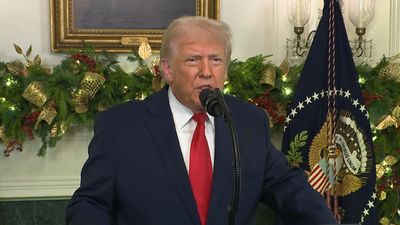
US President Donald Trump has signed an executive order directing the withdrawal of Washington from 66 international organisations, conventions and treaties. The White House said continued participation in these bodies was deemed “contrary to the interests” of the country.The order, signed on Wednesday, covers 35 non-UN organisations and 31 United Nations entities, marking one of the largest rollbacks of US engagement with multilateral institutions in recent years.Announcing the decision, the White House said the move was guided by the administration’s “America First” policy. In a post on X, it said, “Today, President Donald J Trump signed a Presidential Memorandum directing the withdrawal of the United States from 66 international organizations that no longer serve American interests”.
According to the executive order, Trump instructed all executive departments and agencies to take immediate steps to put into effect the withdrawals as soon as possible. For UN entities, withdrawal would involve ending participation or funding, to the extent permitted under US law.The memorandum said the decision was taken after reviewing a report submitted by the Secretary of State and after consultations with Cabinet members.
It concluded that US participation or financial support for these organisations was redundant, wasteful, mismanaged or misaligned with national priorities and in some cases posed a threat to US sovereignty and prosperity.“The Trump Administration has found these institutions to be redundant in their scope, mismanaged, unnecessary, wasteful, poorly run, captured by the interests of actors advancing their own agendas contrary to our own, or a threat to our nation’s sovereignty, freedoms, and general prosperity,” the State Department said in a statement.
Climate, energy and UN agencies among key exits
Among the non-UN organisations, the US will exit several major climate, environment and energy-related bodies. This includes the India- and France-led International Solar Alliance, the Intergovernmental Panel on Climate Change (IPCC) and the International Union for Conservation of Nature (IUCN).Other bodies include the International Renewable Energy Agency, International Energy Forum, Global Counterterrorism Forum, Partnership for Atlantic Cooperation and several regional and development-focused institutions.On the UN side, the withdrawals include agencies dealing with economic development, climate change, gender equality, population, peacebuilding and water. This includes organizations such as the UN Framework Convention on Climate Change (UNFCCC), UN Population Fund, UN Women, UN Energy and UN Water.The decision comes nearly a year after the Trump administration withdrew the United States from the World Health Organization (WHO) in January 2025, citing the agency’s handling of the Covid-19 pandemic.
The US also exited Unesco in July 2025, arguing that continued membership was not in the country’s national interest.The administration had also suspended support for the UN agency for Palestinian refugees (Unrwa). These moves reflected Washington’s increasingly selective, a-la-carte approach to multilateral engagement, under which the administration chose to fund and participate only in institutions it believed aligned with President Trump’s agenda and US interests.
Critics warn of global impact
Experts and former officials have warned that the decision could weaken global cooperation on climate change, public health and development. Scientists said that the US withdrawal from climate-focused bodies may slow international efforts to curb greenhouse gas emissions and address extreme weather events.“The US withdrawal could hinder global efforts to curb greenhouse gases because it gives other nations the excuse to delay their own actions and commitments,” said Stanford University climate scientist Rob Jackson.The UN Population Fund, another key exit, has long faced opposition from Republican leaders. Trump previously cut its funding during his first term, alleging involvement in coercive abortion practices. However, the claims were later rejected by a US State Department review.Analysts said that the move reflects a broader shift in Washington’s approach to multilateralism. “I think what we’re seeing is the crystallization of the US approach to multilateralism, which is ‘my way or the highway.
It's a very clear vision of wanting international cooperation on Washington’s own terms,” said Daniel Forti of the International Crisis Group.Despite the withdrawals, US officials have said that Washington will continue to engage selectively in global institutions where it sees strategic competition with China, such as in telecommunications, maritime and labour-related bodies.
Organisations from which the US is withdrawing
Non-UN organisations (35)These include bodies focused on climate, energy, democracy, culture and regional cooperation, such as:
- 24/7 Carbon-Free Energy Compact
- Colombo Plan Council
- Commission for Environmental Cooperation
- Education Cannot Wait
- European Centre of Excellence for Countering Hybrid Threats
- Forum of European National Highway Research Laboratories
- Freedom Online Coalition
- Global Community Engagement and Resilience Fund
- Global Counterterrorism Forum
- Global Forum on Cyber Expertise
- Global Forum on Migration and Development
- Inter-American Institute for Global Change Research
- Intergovernmental Forum on Mining, Minerals, Metals, and Sustainable Development
- Intergovernmental Panel on Climate Change
- Intergovernmental Science-Policy Platform on Biodiversity and Ecosystem Services
- International Centre for the Study of the Preservation and Restoration of Cultural Property
- International Cotton Advisory Committee
- International Development Law Organization
- International Energy Forum
- International Federation of Arts Councils and Culture Agencies
- International Institute for Democracy and Electoral Assistance
- International Institute for Justice and the Rule of Law
- International Lead and Zinc Study Group
- International Renewable Energy Agency
- International Solar Alliance
- International Tropical Timber Organization
- International Union for Conservation of Nature
- Pan American Institute of Geography and History
- Partnership for Atlantic Cooperation
- Regional Cooperation Agreement on Combating Piracy and Armed Robbery against Ships in Asia
- Regional Cooperation Council
- Renewable Energy Policy Network for the 21st Century
- Science and Technology Center in Ukraine
- Secretariat of the Pacific Regional Environment Programme
- Venice Commission of the Council of Europe
United Nations entities (31)
- Department of Economic and Social Affairs
- UN Economic and Social Council, or ECOSOC — Economic Commission for Africa
- ECOSOC — Economic Commission for Latin America and the Caribbean
- ECOSOC — Economic and Social Commission for Asia and the Pacific
- ECOSOC — Economic and Social Commission for Western Asia
- International Law Commission
- International Residual Mechanism for Criminal Tribunals
- International Trade Centre
- Office of the Special Adviser on Africa
- Office of the Special Representative of the secretary-general for Children in Armed Conflict
- Office of the Special Representative of the Secretary-General on Sexual Violence in Conflict
- Office of the Special Representative of the Secretary-General on Violence Against Children
- Peacebuilding Commission
- Peacebuilding Fund
- Permanent Forum on People of African Descent
- UN Alliance of Civilizations
- UN Collaborative Programme on Reducing Emissions from Deforestation and Forest Degradation in Developing Countries
- UN Conference on Trade and Development
- UN Democracy Fund
- UN Energy
- UN Entity for Gender Equality and the Empowerment of Women
- UN Framework Convention on Climate Change
- UN Human Settlements Programme
- UN Institute for Training and Research
- UN Oceans
- UN Population Fund
- UN Register of Conventional Arms
- UN System Chief Executives Board for Coordination
- UN System Staff College
- UN Water
- UN University







 English (US) ·