
Every year in France, as elsewhere, people excitedly prepare well in advance for the Christmas and New Year’s festivities. As early as November the avenues are garlanded with lights and the streets are packed with holiday shoppers.
Many traiteurs (delicatessens) and butchers have been busy for weeks taking orders for delicacies that will soon be set out on dinner tables, with people splurging on expensive treats for the end-of-year holidays.
Historically, Christmas Eve dinner was the big, traditional meal served after a nighttime church service that worshippers sat through on a nearly empty stomach. Since the Middle Ages, midnight Mass has been preceded by a meagre meal; it was customary to eat only a little bread, fish or vegetable broth and drink a glass of water.
Though fewer people now attend midnight Mass, the tradition of a big Christmas Eve and New Year’s meal has survived.
Foie gras
Throughout the holiday season, supermarket shelves are stacked to the ceiling with cans and jars of foie gras, a French specialty of fattened duck or goose liver, with pâté often served as a starter on warm toast alongside some jam – or chutney – often made from onion or fig.
Though many have stopped eating foie gras because of the way the birds’ livers are artificially fattened through force-feeding (known as gavage), it remains one of the most popular food items for a Christmas meal and France remains its largest producer by far.
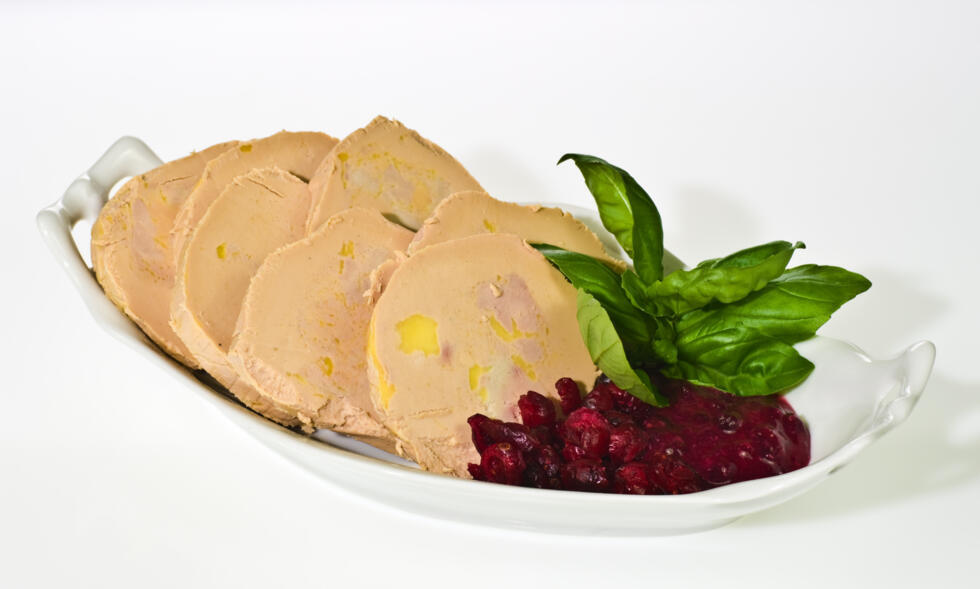 Slices of foie gras arranged on a plate with jam. © Nikodem Nijaki, Wikimedia Commons
Literally translated as “fat liver”, foie gras originated in ancient Egypt some 4,500 years ago before it spread throughout the Mediterranean and was adopted by the Greeks and then the Romans. In the Middle Ages, the tradition of gavage was continued by the Jewish population, since goose meat was viewed as a good source of nutrition and its cooking fat conformed to religious dietary restrictions.
The popularity of foie gras grew during the Renaissance, when it became associated with the kings of France. The term “foyes gras” was coined during the reign of Louis XIV and it was served at royal banquets under Louis XV, but it was Louis XVI who declared it the “dish of kings".
Foie gras is also often served pan roasted, sliced over a cut of meat or as a sauce. It is produced in winter, and its high price makes it a luxurious holiday product for year-end festivities.
For those who do not eat foie gras, other common starters at a French Christmas or New Year’s dinner are smoked salmon, scallops (coquilles Saint-Jacques), shrimp or oysters.
Read moreThe Bright side: French Christmas ad starring vegetarian wolf goes viral
Oysters
The French are among the largest consumers of oysters in the world, eating around 85,000 tonnes each year, a large portion of which are consumed at the Christmas dinner table.
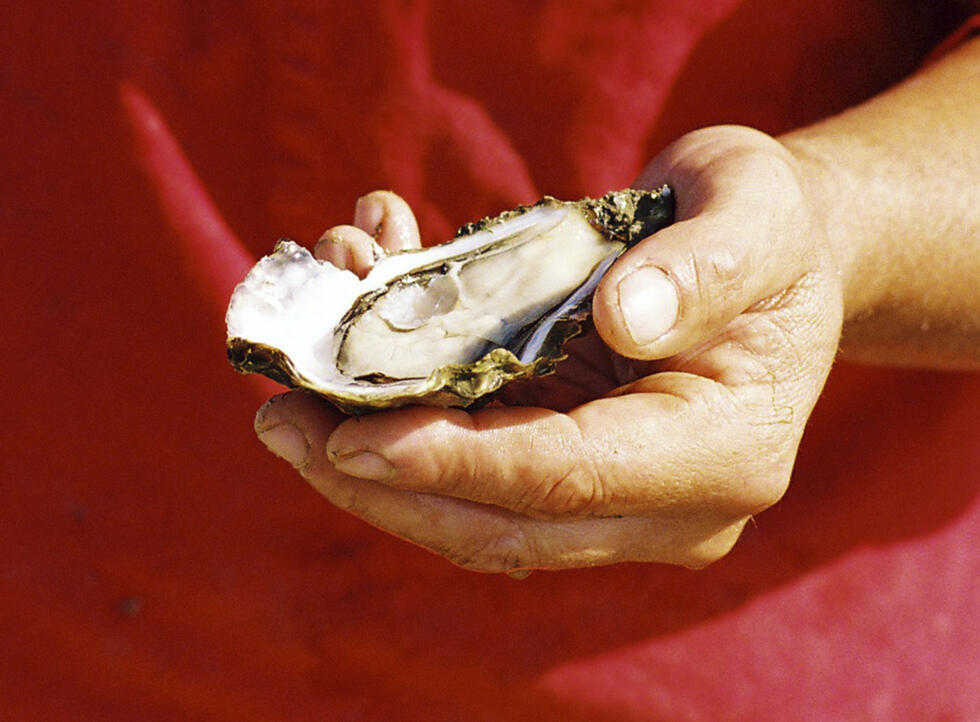 French oyster-farmer Philippe Labrousse shows an oyster in his oyster bed parc in Marennes-Oleron, western France. © Tobias Schmidt, AP
Oysters are easy to find in France, with its long coastline, and are relatively inexpensive for a holiday dish. They are most often served fresh on shaved ice with a red wine and shallot vinaigrette (sometimes known as a mignonette) or simply a wedge of lemon.
It is a French custom to eat oysters only during months that have an "r" in their names – September through April. This is not only because they taste best during this period but due to habit – long before refrigerated transportation methods were invented, oysters could only be shipped inland from the sea during the cold winter months if they were to stay fresh and not spoil before being served.
Salmon, lobster, crayfish and other seafood are also traditionally eaten in winter for the same reason. But unlike oysters, these are relatively expensive.
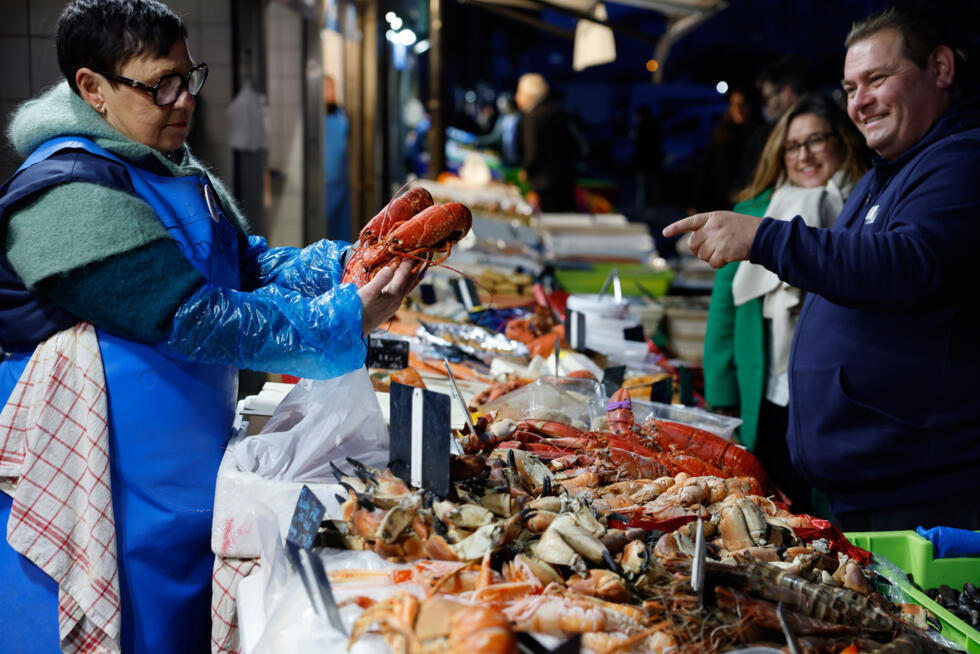 A vendor sells lobsters for a traditional Christmas Eve dinner on December 23, 2025 in the port of Boulogne-sur-Mer, northern France. © Jean-Francois Badias, AP
Turkey and stuffing
Much like in the United States or Great Britain, a traditional staple of a French Christmas dinner is stuffed poultry.
Before the turkey arrived in Europe from the Americas in the 17th century, the French ate stuffed goose. But the turkey has mostly replaced the goose as the holiday bird of choice because it is less expensive, yet larger and meatier than a plain old chicken.
The turkey’s main advantage is its size (one can weigh up to 18 kilogrammes) for big family feasts.
A smaller but succulent fowl that is very popular in France during the holidays is the capon (chapon in French), a cockerel that was neutered to render its meat fattier and usually weighing 3-4 kilogrammes, or else the even smaller guinea fowl (pintade).
Whatever bird is chosen, it is generally roasted and served with a special Christmas stuffing that traditionally includes chestnuts and mushrooms.
Other holiday main dishes in France include roasted meats, such as lamb or beef, and also game such as doe, wild boar, venison or pheasant, which are not usually eaten year-round by French people who are not hunters.
Bûche de Noël
No Christmas meal in France is complete without a bûche de Noël, otherwise known as the Yule log cake.
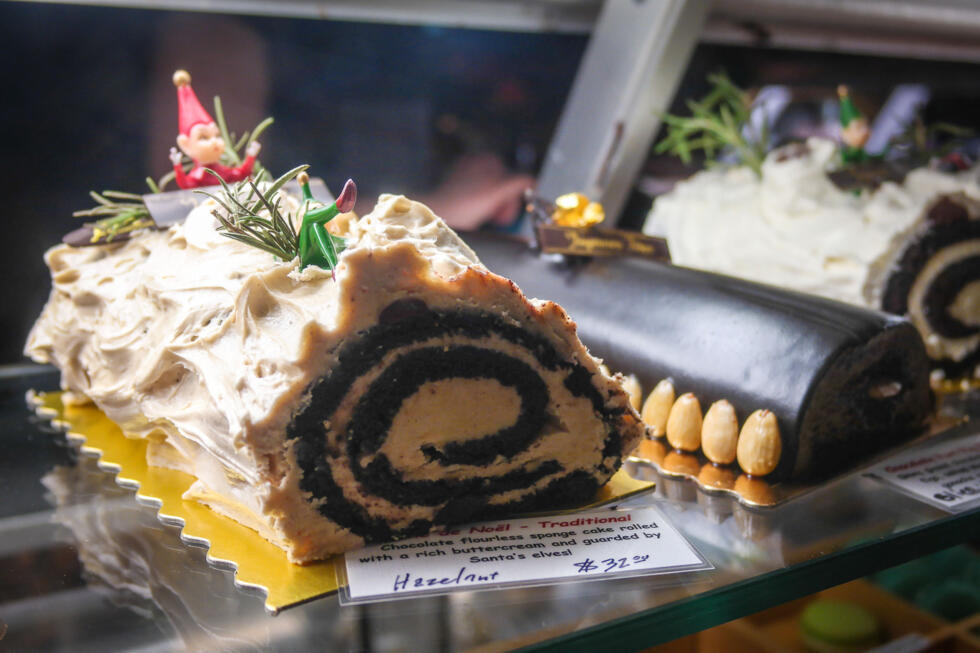 A traditional French bûche de Noël on sale at a bakery. © Visitor7 via Wikimedia commons
The bûche is an elaborate creation made of a rolled sponge cake filled with cream – or ice cream – and frosted to look like tree bark on a log.
It is a reminder of an earlier tradition, dating back to the Iron Age, when people in Europe would gather to welcome the winter solstice on December 21, the longest night of the year. Families would burn large logs, usually from fruit trees, anointed with wine and salt and decorated with pine cones, holly or ivy. The log kept the house warm, and its ashes were said to have medicinal benefits and to guard against evil.
Read moreAll you need to know about bûche de Noël, the traditional French Christmas dessert
Pain d’épices
Other Christmas desserts in France include gingerbread, served in the form of a spiced loaf cake or soft biscuit called pain d’épices, as well as chocolate. Traditionally, well-behaved children were given chocolate and other sweets on December 6, the day of Saint Nicholas, the patron saint of children.
Gradually, the tradition of Saint Nicholas disappeared in most French regions except for the east, and the ritual giving of chocolate and pain d’épices was incorporated into Christmas.
 A gingerbread heart for sale at a Christmas market. © Lisa Leutner, AP
Vin Chaud
While the traditional festive feasts are normally enjoyed at home, there are other treats to enjoy outside at Christmas markets. Chief among them is mulled wine, simply known as vin chaud or "hot wine".
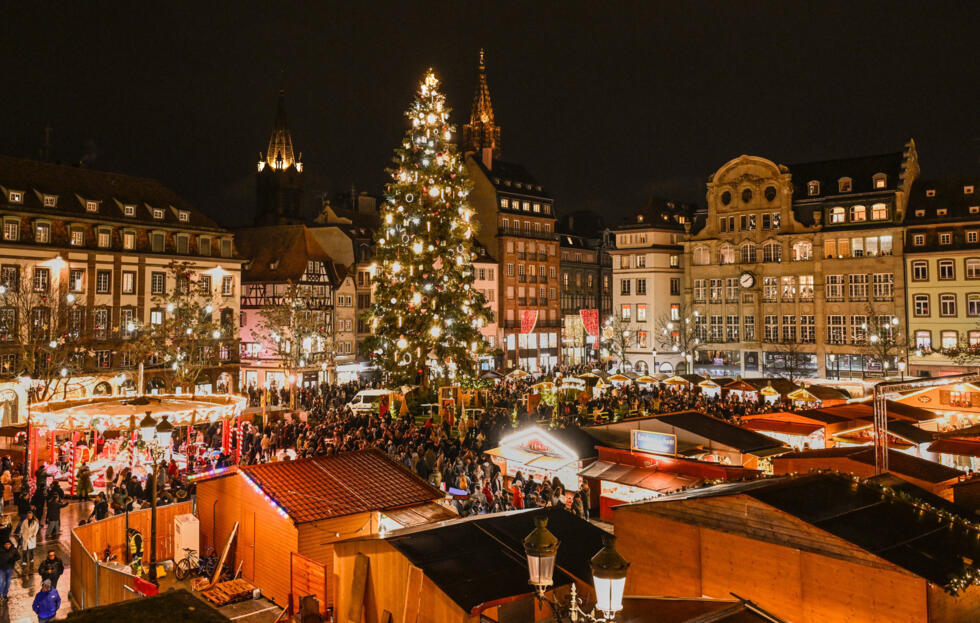 People stroll at a Christmas market in Strasbourg, eastern France, on November 26, 2025. © Pascal Bastien, AP
Vin chaud is popular across Europe and was historically the only alcoholic drink served at the Christmas markets in France's eastern Alsace region. It is made with red or white wine gently heated with sugar and spices including cinnamon, cloves and star anise. A non-alcoholic version made with apple juice is also popular.
As the best way to see Christmas decorations that light up French towns and cities is after dark when temperatures drop, a piping hot mug of vin chaud is a great way to stay warm while enjoying the festive atmosphere.
A previous version of this story was originally published on December 17, 2020.










 English (US) ·