
LONDON — European equities rebounded on Tuesday, as investors await key data on the economic impact of the U.S.-Iran war.
Shortly after the opening bell, the pan-European Stoxx 600 was seen 0.7% higher. The U.K's FTSE 100 opened up 0.4% while those tied to France's CAC 40 and Germany's DAX gained 0.9% and 1%, respectively.
The Stoxx 600 had fallen to a one-week low on Monday as hopes for an end to the war in Iran were dampened, before Tuesday's recovery.
In corporate news, shares in Abivax tumbled 28% early Tuesday as the French biotech firm reported that several patients in its ulcerative colitis trial had developed cancer.
″[The] cancer signal complicates matters," a Jefferies analyst said. "Even if unrelated noise, we think the overhang will be real, especially considering absence of other value-inflecting data events over the next [year]."
Investors are also awaiting flash inflation data for the euro zone, due 10 a.m. U.K. time. The print will shed light on the impact the conflict in the Middle East — and the consequential surge in oil and gas prices — had on prices in May.
Inflation in the euro zone jumped to 3% in April, up from 2.6% in March and well above the European Central Bank's 2% target. Europe is particularly vulnerable to energy shocks as a major net energy importer.
Markets are currently pricing in a 94% chance of the ECB hiking its key interest rate by 25 basis points at its meeting later this month, according to LSEG data.
On Monday, U.S. President Donald Trump told CNBC he did not care if peace talks with Iran had collapsed.
"I really don't care. I couldn't care less," he said, adding that the long drawn-out negotiations had "started to get very boring."
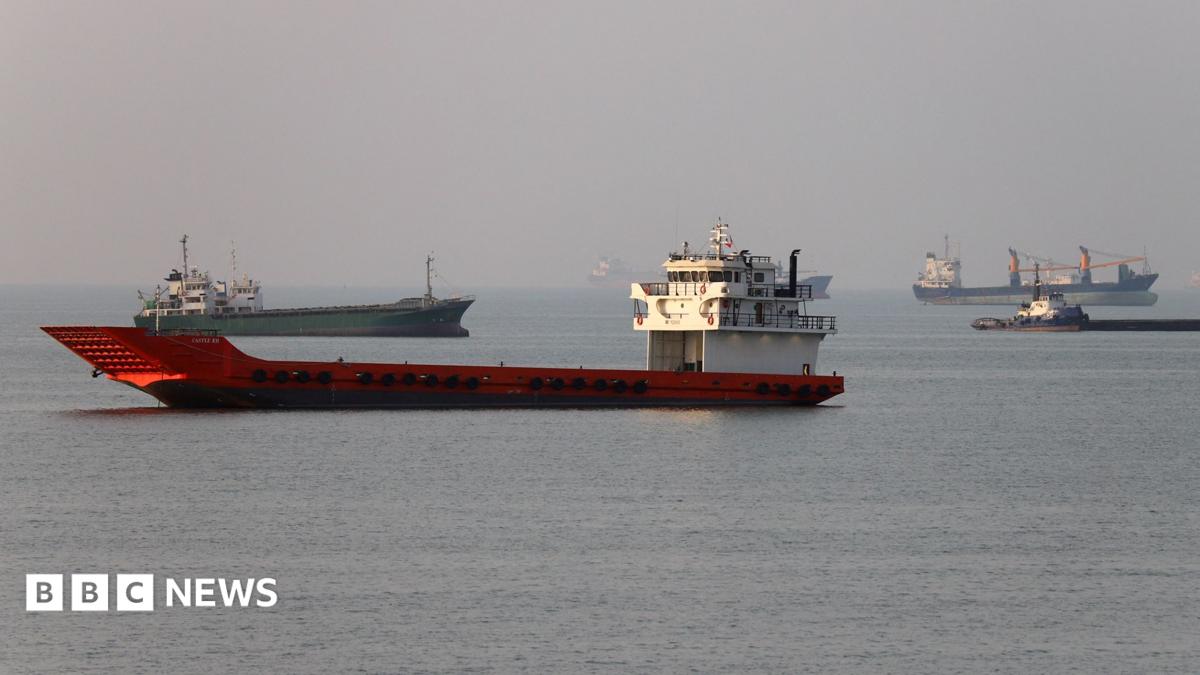
Talks between the two sides have stalled in recent weeks, with the Strait of Hormuz — a critical oil shipping route — effectively remaining closed.
Hannah Neumann, the European Parliament's chair of delegations for relations with Iran, told CNBC's "Europe Early Edition" on Tuesday that the Iranian regime "has a lot to win from a situation of ambiguity."
"I'm afraid the continuous tactic of the Iranian regime will just be to … continue dragging on with this," she said. "What happens right now... is that Donald Trump gets bored, walks away, and [the regime] gets away with massive repressions inside the country, but also with holding the whole world hostage on the Strait of Hormuz."
Neumann added that the EU remains skeptical about "whether this war makes sense or not."
"I think three months into this war we can clearly see that it didn't bring us any improvements, neither in the region nor for the world as a whole," she said. "At the same time, the European Union, same as the Gulf countries and the African and Southeast Asian countries, are heavily impacted by the fallout of this war, mainly the blockade of the Strait of Hormuz, but we also see transnational repression and state-sponsored terrorism of the Iranians growing inside the European Union. So we want this war to end, but we also want the Iranian regime to go."
She also called for the EU to have a place at the negotiating table, saying that the current negotiation dynamic "doesn't make us sleep very comfortably here in the European Union."
European investors are also monitoring developments in the Russia-Ukraine war, after Moscow launched a major air assault on cities across Ukraine early on Tuesday.
Last week, NATO and EU officials condemned Russia after one of its drones accidentally struck an apartment building in Romania near the country's border with Ukraine.
The EU is currently preparing its 21st package of sanctions against Moscow.
Other data out of Europe on Tuesday includes balance of trade figures from Switzerland, Spanish unemployment and British mortgage lending figures.
— CNBC's Elsa Ohlen also contributed to this report.







 English (US) ·