
Top officials from the EU and the South American bloc Mercosur signed a free trade agreement on Saturday in Paraguay, paving the way for the European Union's largest ever trade accord after 25 years of negotiations.
The agreement, designed to lower tariffs and boost trade between the two regions, must now gain the consent of the European Parliament and be ratified by legislatures of Mercosur members Argentina, Brazil, Paraguay and Uruguay.
European Commission President Ursula von der Leyen and European Council President Antonio Costa joined the presidents of Mercosur countries at Saturday's ceremony, with the exception of Brazilian President Luiz Inacio Lula da Silva, who sent his foreign minister.
EU-Mercosur trade pact agreed: Is it the end for opponents of the deal?
To display this content from YouTube, you must enable advertisement tracking and audience measurement.
One of your browser extensions seems to be blocking the video player from loading. To watch this content, you may need to disable it on this site.
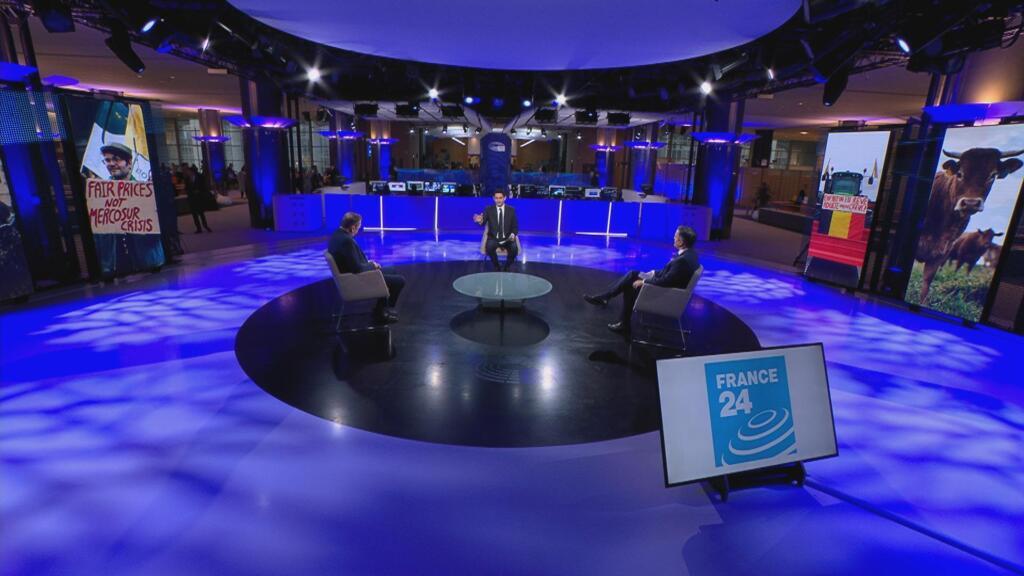 TALKING EUROPE © FRANCE 24
12:43
The deal was signed after receiving the green light from most European nations last week, despite concerns from farmer and environmental groups, who fear a surge of inexpensive South American imports and increased deforestation.
Von der Leyen, who met with Lula before heading to Asuncion for the signing, said the deal would create the largest free trade zone in the world.
"This agreement sends a very strong message to the world. It reflects a clear and deliberate choice. We choose fair trade over tariffs. We choose a productive, long-term partnership over isolation," she said on Saturday.
European Union exports mainly consist of machinery, chemical products, and transport equipment, whereas Mercosur's exports are concentrated in agricultural goods, minerals, wood pulp, and paper.
Is the EU-Mercosur trade agreement more than a 'cows for cars' deal?
To display this content from YouTube, you must enable advertisement tracking and audience measurement.
One of your browser extensions seems to be blocking the video player from loading. To watch this content, you may need to disable it on this site.
 PEOPLE & PROFIT © FRANCE 24
12:28
Although the accord eliminates more than 90 percent of tariffs on goods and services between the European and Mercosur markets, some tariffs will progressively be cut over 10-15 years and key farm products such as beef will be limited by strict quotas in a bid to assuage European farmers’ fears.
Those quotas, as well as safeguard measures and generous EU subsidies to cash-strapped farmers, pushed agricultural powerhouse Italy across the line earlier this month. France, however, remains opposed to the accord.
In creating one of the world’s largest free trade zones, the accord – pushed by South America's renowned cattle-raising countries and Europe's industrial sectors craving new markets for cars and machines – brings together a market of more than 700 million consumers that accounts for a quarter of global gross domestic product.
Trade between the two blocs reached a value of 111 billion euros in 2024.
(FRANCE 24 with Reuters and AP)






 English (US) ·