
 1 month ago
38
1 month ago
38
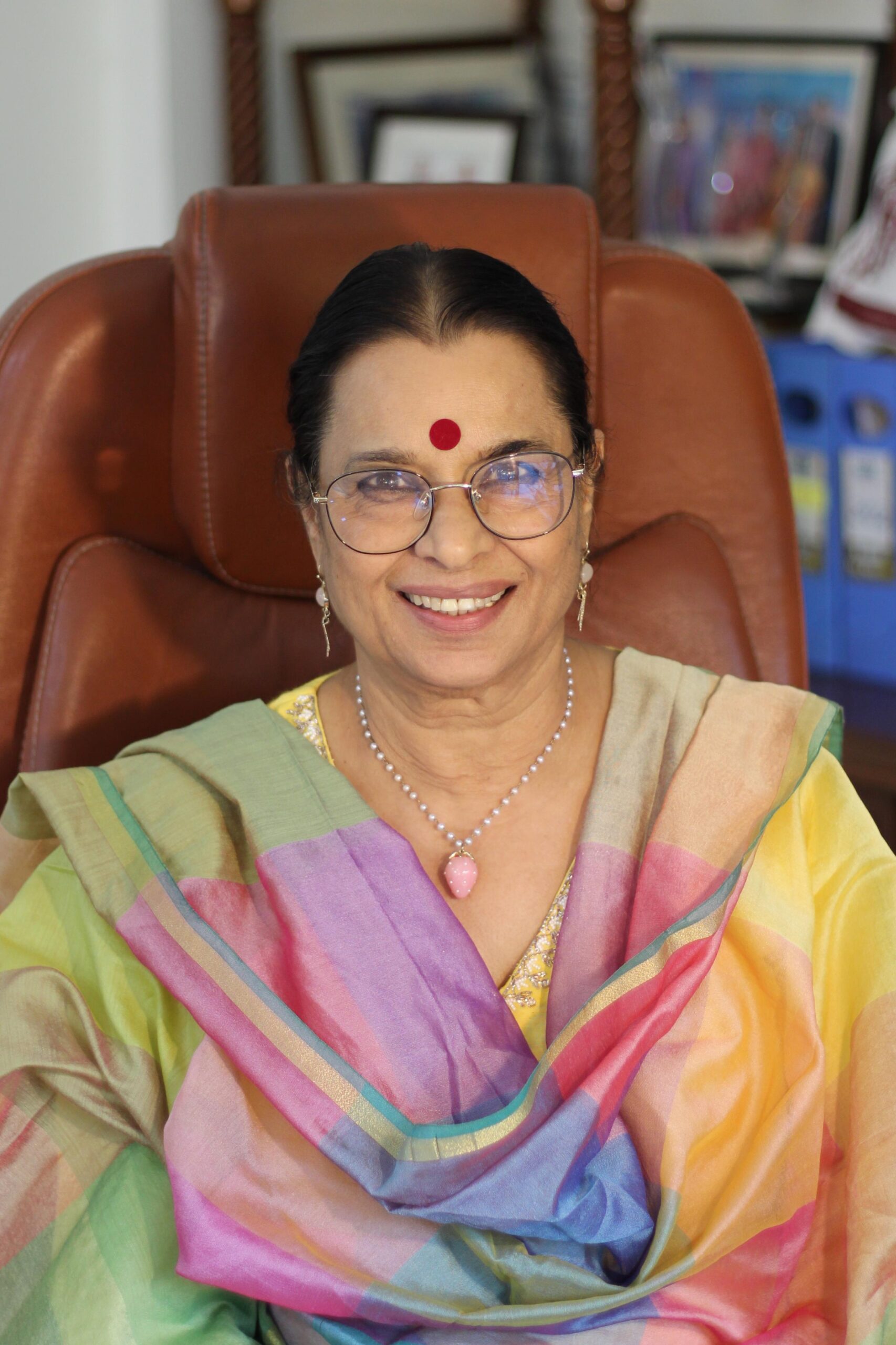 Ranjana Kumari, activist.
 NEW DELHI, July 13 (IPS) - To say that the men scored over women yet again would be an understatement. To say that the women lost and men have won would be an oversimplification and to say that political manoeuvring, intrigue and deceit outdid half of India’s population would be stating the obvious.
So, what is the story? Or the plot with its twists and turns? Or the game that women lost even before they started playing?
Rewind to three decades when the women of India woke up to what today is branded as political empowerment.
In this context the one name that stands out is that of Parliamentarian Geeta Mukherjee, who chaired the Joint Parliamentary Committee to examine a Bill seeking reservation of seats for women in Parliament and state legislatures: 33 percent to be precise.
It was in 1996 that a legislation for this was tabled in the Lower House of the Indian Parliament
We are into 2026, and the women of India are still fighting for legitimacy in political power, relentlessly demanding what is their due.
The Women’s Reservation Bill has been tabled in Parliament several times – five times, to be precise.
Its history and the twists and turns that come with it are telling. Add to the mix the interesting questions that its tumultuous journey has thrown up. But more importantly, what has this unfulfilled dream done to the dignity of women of the world’s largest democracy? Simply put, it has left them hanging, staring in the dark with a ‘will it? will it not?’ question. As things have panned out, the future holds little hope.
Rewind to the Constituent Assembly that adopted the Constitution of India in 1949. Of its 389 members, only 15 were women. There were questions even then, but they were different.
If a woman member feared that reservation would mean restriction and, hence, exclusion of women from general seats, another member asked quite pointedly: “Were women not led by the heart, and was politics not a matter of the mind? Even as the heart versus the head debate dogged minds, the issue remained unresolved.
Some fifty years later, in 1996 to be exact, it was Sushma Swaraj, then a Parliament Member and later India’s foreign minister, who resurrected the issue. She told Parliament that only 6.5 of the 543 members in the Lower House of Parliament were women. Without saying it in so many words, she indicated that the situation was dismal and the future bleak.
Swaraj’s words were prophetic. The future was indeed bleak because three decades on, the women continue to fight for what should rightfully be theirs.
When the Bill was introduced in Parliament in 1996 and later in 1998 and 1999, the men kind of ganged up to ensure that a smooth passage was thwarted. On all three occasions, the Bill lapsed upon the dissolution of the Lower House in Parliament.
However, in 2008 another route was adopted and this time around it was introduced in the Upper House of Parliament.
This obviated the possibility of a lapse given that the Indian Parliament is structured in such a way that the Lower House has a fixed five-year term while the Upper House is a permanent chamber which is not subject to dissolution. Unlike the Lower House of Parliament, Bills tabled in the Upper House do not lapse.
That notwithstanding, the smooth passage of the Bill in the Lower House still remains a question mark, and that too a big one, staring at women in the face.
All through this rigmarole what stood out and continues to is the contempt and disregard men have for women in this part of the world. And these are no ordinary men but those who have been elected to work for the welfare of the people, men and women alike. Therefore, when they speak of women in disparaging terms, one stops to ask: have we actually progressed or do we continue to be a regressive and male-dominated society – one where men outside and fathers, brothers and husbands at home continue to call the shots?
Even as the answer is obvious, one’s soul may cringe at the manner in which lawmakers inside Parliament have targeted women during the several debates on reserving 33 percent of seats in Parliament and state legislatures.
Sample this: During a 1997 parliamentary debate, two leaders, both from the backward castes, opposed reservation even as they demanded what was termed a “quota within quota” for women. Decode this and it means that within the 33 percent reservation ensure a certain representation for the other backward castes, Dalits and Muslim women.
In the Indian context, the untouchables are called Dalits, while the Other Backward Castes, or OBCs as they are popularly known, represent the marginalised. The Muslims comprise the minorities in India.
But back to the debate in Parliament when these two leaders spearheaded the anti-reservation campaign under the garb of protection for women from the marginalised and backward castes.
They use “choicest phrases”, if one can use the term, to denigrate women segregating the elite and educated from the rural and the unversed.
Calling them par-kati mahilayen, roughly translated as ‘short-haired and elite’, a former Union Minister, Sharad Yadav, from the state of Bihar, threatened to consume poison if a Bill was passed without proper caste representation. His take: women who are privileged, urban and elite do not understand the struggle of their counterparts living in far-flung rural areas.
To quote him: “Like Socrates, who died consuming poison fighting for principles, I am also willing to die fighting for principles.” Given the male mind-set, such a statement may well be interpreted as if it is women’s reservation, and it will be “over my dead body”.
A former Chief Minister, Mulayam Singh Yadav, from the state of Uttar Pradesh, had another fear. Way back in 2010 he had told his constituents: “The kind of women who will enter Parliament… The wives and daughters of officers and businessmen, who invite whistles from boys…” He also said that rural women would be left out because they are “not that attractive”.
Another leader, a former Union Minister and Chief Minister, Lalu Prasad Yadav from the state of Bihar, said that India being a “male-dominated society”, to use his exact words, women vote according to the political diktat of the family. In other words, they are incapable of thinking and choosing independently and are a rubber stamp of their husbands: “My own wife votes according to my diktat,” the former Chief Minister had then said.
In later years, Yadav anointed his wife to succeed him when he was jailed in a fodder scam.
For the record, Lalu Prasad Yadav, who has served as Chief Minister of India’s populous state of Bihar and also as Union Minister, was convicted in a fodder scam and charged with syphoning off huge amounts from the animal husbandry department. This followed his resignation. Not the one to cede political space to anyone outside the family, Yadav named his wife, Rabri Devi, as his successor. That Devi was uneducated and could not even sign her name did not matter considering she was her husband’s proxy.
The first woman to head the state of Bihar, Devi ruled the state not once but three times over.
That notwithstanding, it is true that in India men dictate where and how their wives, mothers and sisters, or rather all the women in the family, should vote. This is one of the reasons why En bloc voting is a rule rather than an exception among women in rural areas.
However, by 2023 the power of the women’s vote dawned on political parties, particularly under Prime Minister Narendra Modi, who has launched several welfare schemes for women while heading the Government in India.
Unwilling to lose the momentum of emerging as a votary for women’s rights, the Modi Government brought in the Reservation Bill, which was passed in the Lower House of the Indian Parliament, both grudgingly and willingly.
With this, history took a half-turn: a half-turn because even while the Bill mandated a 33 per cent reservation, it was tied to a distant future, namely the upcoming census and subsequent redrawing of electoral constituencies or delimitation as it is better known and understood.
Ostensibly, it was a step forward, but in reality, it was an idea stuck in time. Linking reservation to the Census and delimitation that would follow was talking of a distant future because there is neither clarity on when the Census will take place nor a clear date, rather year, when the delimitation will take effect. Hence, the passing of the Bill remains a cosmetic measure and one on paper.
The truth of the matter is that men are reluctant to cede political space to women. Yet for any political party to oppose a reform like political empowerment for women is clearly counter-productive. No party can be seen as being a roadblock to women’s progress and risk being perceived as anti-women.
Therefore, while each party professes support for the issue and the cause, the real story is that they do not want to see reservation being a reality. The answer is simple: if 33 percent reservation for women becomes a law, then it is the men who will have to give up their seats to make way for women. In a patriarchal society like India, this seems like a pipe dream.
Having said that, it is ironic that every political party has committed to providing reservation in their political manifestos but no party has budged an inch to work towards this welfare measure. If anything, they have consistently worked against the Bill becoming a reality.
Fast forward to 2026 when the Government brought in the Women Reservation Bill in Parliament yet again through a special session of Parliament. But, this time around, the motive was suspect. The move was sudden and came at a time when the state elections were underway. Therefore, there was more politics than good intent that was attributed to what the Government wanted to showcase as women’s welfare.
What made it worse was that the Government tagged another bill with the women’s reservation bill: delimitation.
For the uninitiated, delimitation is the process of redrawing the boundaries of electoral constituencies. By this principle, seats for Parliament and states would be reallocated on the basis of the latest census, which is yet incomplete.
The Government’s bid to club delimitation with the reservation bill was decried. Opposition parties slammed the Government for making women a scapegoat and “using women” for a political end.
To quote an Opposition MP, Mahua Moitra, the Government’s move was “delimitation wrapped in a saree”. What she meant was that the Government is firing from the shoulders of women to push through legislation which otherwise would be opposed tooth and nail.
It is pertinent to mention that the opposition-ruled states are against delimitation, as it erodes the political power of those states that have fewer numbers in terms of population. With the voting numbers stacked against the Government, the Delimitation Bill would have hit a roadblock in Parliament. Hence, the Government linked the two Bills. The logic: delimitation would ride piggyback on the Women’s Reservation Bill. The women’s vote being very important in elections, no party would like to be seen as opposing women’s reservation.
However, the Government’s calculations went haywire and the Opposition unitedly voted against the Bill. The result: What seemed achievable fell through.
As an opposition member of Parliament, Sushmita Dev explained, “We are not against women’s reservation. But what is a betrayal is the Government riding on the shoulders of women to push delimitation. Why link delimitation with women’s reservation? Why bring in politics? Why push an agenda? Why not given women the dignity they deserve?” is what she asks.
Politics apart, women who have been fighting for women’s empowerment for decades see this slugfest between the Government and the Opposition as “a lost opportunity”. To quote activist Ranjana Kumari, Founder of the Centre for Social Research: “The defeat of the Women Bill in Parliament compels deeper reflection on the state of India’s democracy. There is a gap between intent and action. The political parties must take responsibility and move beyond tokenism. Globally, gender quotas have demonstrated that change is possible when backed by political commitment and clear design. India stands at a similar crossroads.”
Kumari has been in the forefront of the women’s reservation movement in India.
It is at this juncture that one needs to stop and ask: For how long will the women of India keep knocking doors? For how long will political parties and politicians continue making them scapegoats to achieve their political goals? Why is their due being denied to them time and again? Why do they continue to be victims at the hands of men who are politically powerful?
Why does politics get the better of women? Why is their future being linked to complicated legislative processes? Why are they being subjected to political juggernauts?
Too many questions but one straight and simple answer: The men of India, as in many other parts of the world, want women to continue being subservient and remain second class in a world where half the sky is theirs.
IPS UN Bureau Report
© Inter Press Service (20260713084316) — All Rights Reserved. Original source: Inter Press Service








 English (US) ·