
 1 month ago
28
1 month ago
28
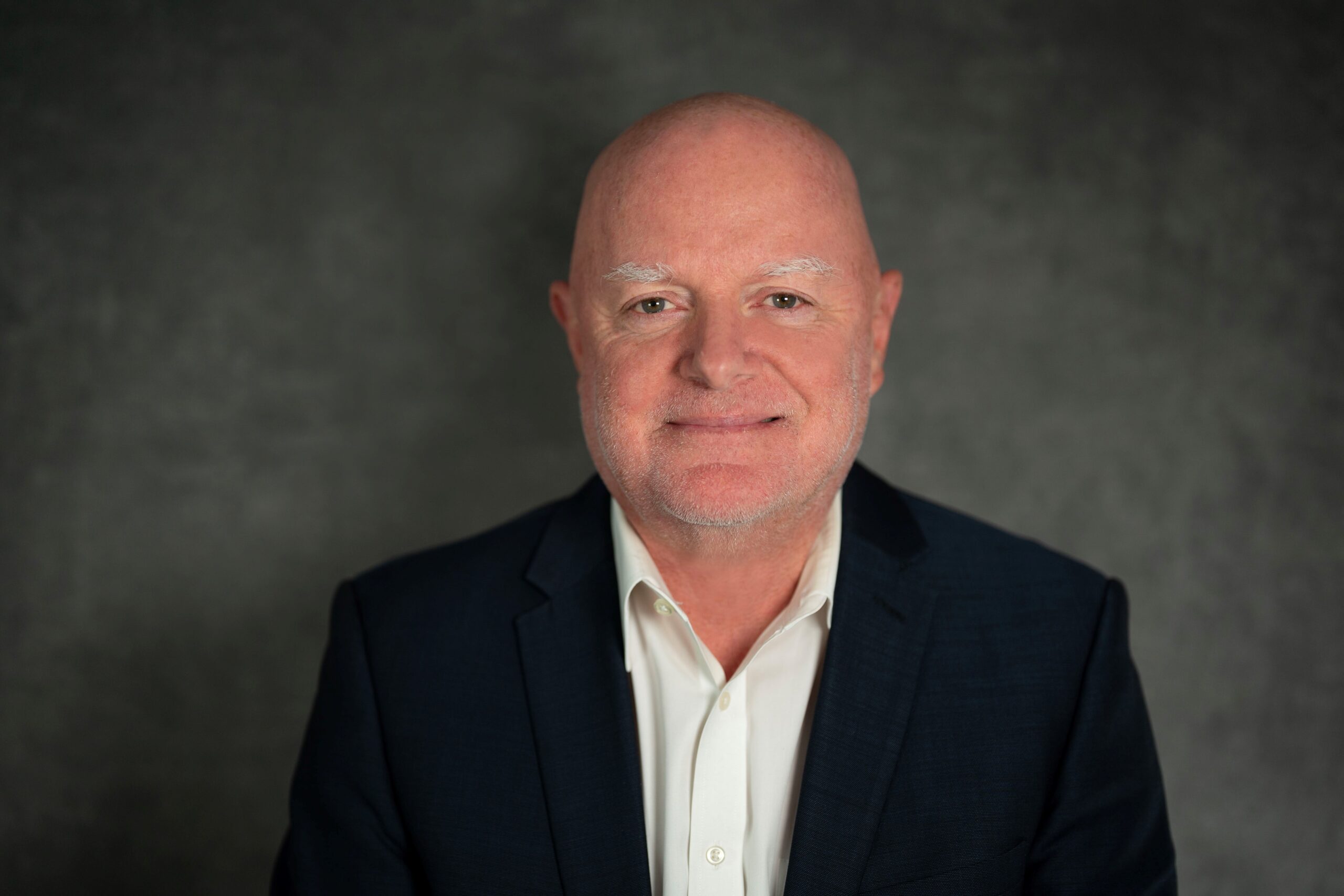 Claude Gascon, Interim CEO and Director of Strategy and Operations at the Global Environment Facility. Credit: The GEF
WASHINGTON D.C. & HYDERABAD, India, May 19 (IPS) - As governments prepare for the Eighth Assembly of the Global Environment Facility (GEF) – scheduled to be held from May 30 to June 6 in Samarkand, Uzbekistan – the stakes are unusually high.
Climate change, biodiversity collapse, pollution, debt distress and geopolitical fragmentation are converging at a moment when environmental finance is under growing scrutiny. For many countries in the Global South, the challenge is no longer only about ambition but also about whether global systems can deliver fast enough and fairly enough.
For Claude Gascon – Interim CEO and Director of Strategy and Operations at the GEF – the question facing the organisation is how to turn urgency into action while operating in an increasingly volatile world.
“A meaningful outcome is turning urgency into action,” Gascon says in an exclusive interview with IPS, describing what success at the upcoming Assembly would look like. That includes public confirmation of country pledges to the GEF and final approval of a strong GEF9 package that will guide investments for the next four years. He also points to endorsement of several priorities that the institution sees as central to its future direction: integrated programming, blended finance, whole-of-government approaches, and stronger support for Least Developed Countries (LDCs), Small Island Developing States (SIDS), and Indigenous Peoples and local communities (IPLCs).
“All this signals that multilateralism is delivering and positions us to accelerate impact in the final sprint toward the 2030 global environmental goals,” he says.
Gascon stepped into the role of Interim CEO during a period of overlapping crises and mounting pressure on international institutions. While many governments continue to demand bigger environmental outcomes, donor fatigue, economic instability and competing geopolitical priorities are tightening the availability of public finance.
“We need to do more with less, and to accomplish that, we chose disciplined ambition,” he says.
The full interview follows:
IPS: The Eighth GEF Assembly comes at a time of overlapping crises – climate change, biodiversity loss, and pollution. What, in your view, would define a meaningful outcome from this Assembly?
Claude Gascon: A meaningful outcome is turning urgency into action. This includes public confirmation of country pledges to the GEF and final approval of a strong GEF-9 package that will guide our investments for the next four years. The Assembly is also an opportunity for clear endorsement of the ambitious priorities we’ve agreed on: a focus on integration and integrated programs, mainstreaming blended finance to mobilise private capital, whole-of-government and whole-of-society approaches, and strengthened support for Least Developed Countries (LDCs), Small Island Developing States (SIDS), and Indigenous People and local communities (IPCLs). All this signals that multilateralism is delivering and positions us to accelerate impact in the final sprint toward the 2030 global environmental goals.
IPS: As the Interim CEO, you are navigating a volatile global context. What difficult trade-offs have you had to make between ambition and feasibility?
Gascon: We need to do more with less, and to accomplish that, we chose disciplined ambition. For example, we are channelling resources through integrated programs in nature, food, urban, energy, and health systems and setting a target of programming 25 percent of our resources to mobilise private capital and stretch scarce public funds. We are also simplifying access and speeding decisions, so countries see real progress sooner. And finally, we are working to expand our partnerships with new stakeholders such as private philanthropies to collaborate on joining our public investments with the private investments of foundations so that together we can scale up the outcomes that are critical to achieving the 2030 goals.
IPS: Countries facing debt and instability say targets feel out of reach. Should expectations be recalibrated or should financing mechanisms evolve?
Claude Gascon: We need to acknowledge these difficulties, but our response must be by evolving financing and delivery instead of lowering the goals. The GEF-9 opens more space for innovation and expands tracking of socio-economic co-benefits and transformational outcomes. There will also be a full review of the resource allocation model during the GEF-9 investment cycle to inform comprehensive changes in the GEF-10 cycle (from 2030 to 2034). The aim is faster, more flexible access that mobilises private and domestic finance alongside official development assistance (ODA). We must also work to support countries in their efforts to align national policies and eliminate perverse subsidies that could help in achieving global environmental goals.
IPS: With climate finance increasingly tied to geopolitical priorities, is there a risk of weakening multilateral funds like the GEF?
Claude Gascon: The opposite signal is coming through this replenishment. Even amid competing priorities, contributors have pledged an initial US$3.9 billion, with final approval due at the end of May from the GEF Council and public country announcements at the Assembly. The GEF’s family of funds and role across six international environmental conventions uniquely positions us to align diverse finance streams with agreed-upon global goals. That provides coherence and stability countries can count on.
IPS: Several Global South governments argue the GEF cycles are still too slow. What concrete changes can countries expect in speed and flexibility?
Gascon: I can give you three examples of practical shifts. First, the GEF is expanding the successful model of the Global Biodiversity Framework Fund’s one-step project approval process where appropriate. Second, we are increasing multi-trust-fund programming so countries can access multiple windows through a single operation. And finally, we have a cap on allocation of resources per GEF Implementing Agency that increases competition and a target to increase disbursements through Multilateral Development Banks. All these measures are designed to move from pledge to project to results faster.
IPS: The GEF is a connector across CBD, UNFCCC, and UNCCD. How can it strengthen this role without overstretching?
Gascon: By doing what only the GEF can: translate multiple international environmental conventions’ mandates into integrated programs while fostering policy coherence. We operate a family of funds under a shared architecture, coordinating smarter, sharing what works, and aligning with 2030 milestones. This means that one GEF dollar invested can deliver multiple benefits across several of the Conventions.
IPS: Private finance is key to closing gaps, but investors avoid fragile contexts. How realistic is this approach – and what lessons has the GEF learned so far about both its potential and its risks?
Claude Gascon: It’s realistic when structured well. From GEF-6 to GEF-8, US$369.5 million in GEF blended finance mobilised US$6.4 billion in co-financing. That is 17 dollars for each GEF dollar, with more than US$3.5 billion coming from private sources. The GEF also has deep experience with fragile contexts: over the last 35 years, 45 percent of our investments have included at least one conflict-affected country and 88 percent of country-level projects were in fragile situations. The main lesson we learned is to pair risk-sharing instruments and strong local partners around projects that fit local realities.
IPS: How is the GEF improving tracking and communication of real-world impact, especially at the community level?
Claude Gascon: The GEF-9’s results framework strengthens environmental outcome tracking and explicitly expands measurement of socio-economic co-benefits and contributions to transformational change. A Council-approved Knowledge Management & Learning strategy aligns data, learning, and communications, and we will continue spotlighting community-level results through platforms like the Small Grants Program and the Inclusive Conservation Initiative, with expanded inclusion under the whole-of-society approach.
IPS: Critics say global environmental finance reflects donor priorities more than recipient needs. How is the GEF addressing equity, voice, and decision-making for the Global South?
Claude Gascon: Equity is built into GEF-9. We have a goal of allocating 35% of total programming to benefit LDCs and SIDS; and an aspirational target of 20% of GEF-9 financing directed to support IPLCs. These targets are supported by updated guidance and a policy to strengthen IPLC engagement. It is also important to note that all funding decisions are made by recipient countries as to the use of GEF resources. This means that recipient country priorities are well supported in the GEF model.
IPS: How will the GEF remain relevant in an increasingly crowded and complex landscape?
The GEF will stay relevant by being more catalytic, coherent, and faster to impact. We will deepen systems-focused integrated programs; mainstream blended finance, maintain a high but disciplined innovation risk appetite, and streamline access and delivery so countries can deliver once and meet several global goals at the same time.
Note: This feature is published with the support of the GEF. IPS is solely responsible for the editorial content, and it does not necessarily reflect the views of the GEF.
IPS UN Bureau Report
© Inter Press Service (20260519095421) — All Rights Reserved. Original source: Inter Press Service




 English (US) ·