
Robina Aminian, 23, was a textile design student at a prestigious Tehran university, passionate about her field and the opportunity it provided to inject beauty into her world. “Robina was full of life, she made us very happy, she was unique,” recounted her aunt, Hali Noori.
From Norway, where she currently lives, Noori agreed to talk about her niece, who was killed on Thursday, January 8, in the Iranian capital by security forces. "What is happening in Iran is a crime against humanity. To remain silent is to be complicit in it. Close the Iranian embassies, stand with the Iranian people, not with the Islamic Republic," she said, addressing the international community.
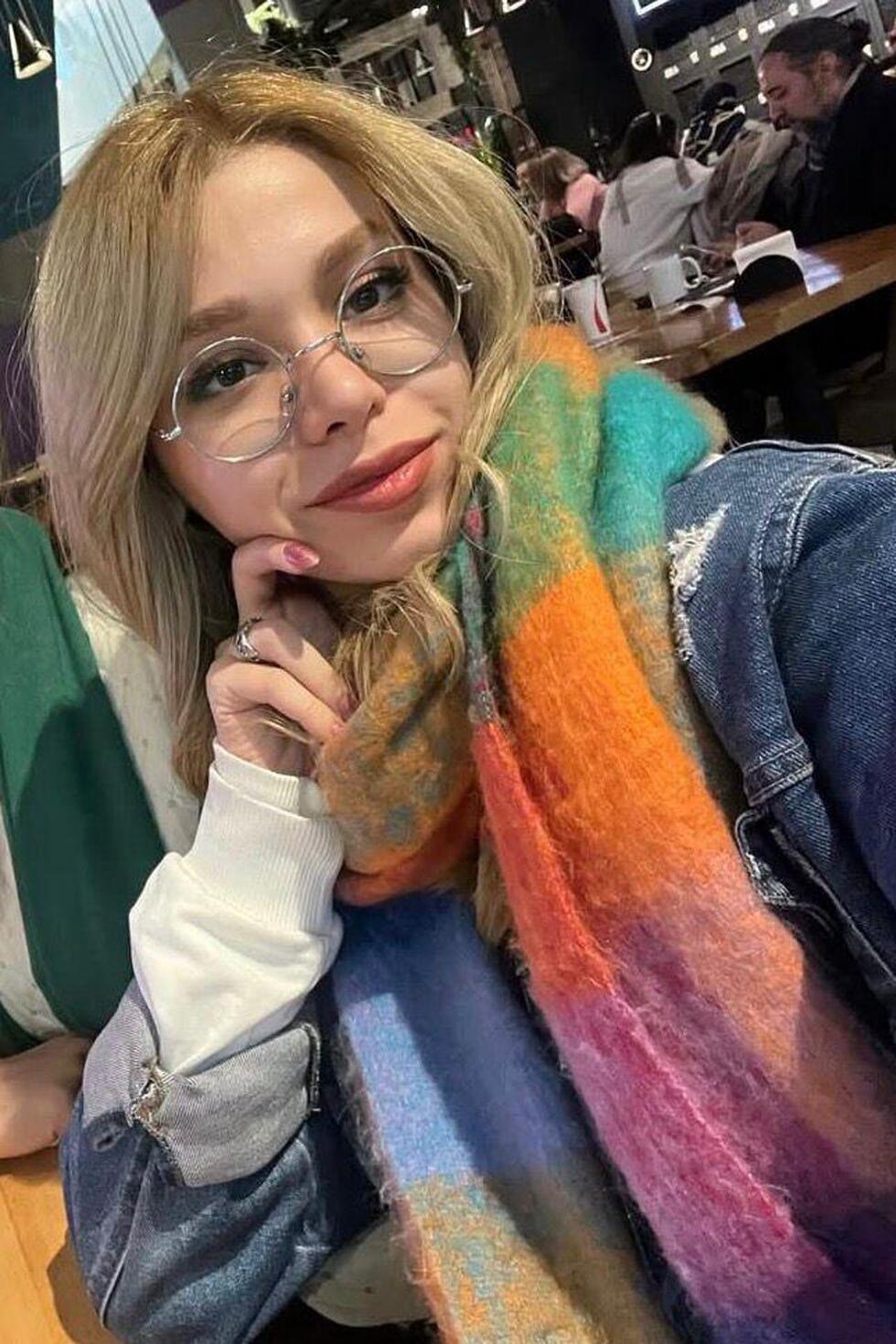 Photo released by Robina Aminian's family shows her taking a selfie at a cafe in Tehran, Iran, February 14, 2025. AP
Aminian, a student at Tehran’s Shariati Technical and Vocational College, talked a lot about the future, explained her aunt. “She was determined and creative, she dreamed of living in Milan.”
To display this content from Instagram, you must enable advertisement tracking and audience measurement.
On January 8, the young Iranian woman was working on her fabrics, along with other students, in a university studio when an anti-regime demonstration erupted. She joined the crowd gathered on the outskirts of the campus. That evening, her family received a call from her friends to tell them that Aminian had been shot.
Her parents, who live in Kermanshah, a predominantly Kurdish city in northwestern Iran, immediately got in their car in the middle of the night and drove to Tehran, nearly 300 miles away. Unfortunately, they arrived too late. The body of their daughter, who had been shot in the back of the head, had already been taken to a large morgue.
“The officers who were there did not allow my sister to see Robina. She begged them, ‘I just want to find my child, please, I want to see my child.’ To put an end to the commotion, they let her in,” Noori recounted.
'Robina's blood was everywhere’
Aminian’s mother searched for her daughter among hundreds of “beautiful faces” wrapped in black plastic body bags.
Read moreIran’s youth on the front lines of protests face crackdown
“The family told me that the bodies were piled on top of each other, that the smell of blood was everywhere, and that when she recognised the face of her sweet Robina, she took her in her arms and could not let go,” said Noori.
“She held her so tightly that the officers couldn't tear her away from her [daughter’s body]. They tried many times to separate them, but no one could.” The distraught mother then asked to be allowed to show the body to the family waiting outside. “She took her, put her child in the car, and they fled,” Noori explained.
“I can't imagine what my sister was going through at that moment,” said the aunt, her voice trembling. "She drove hundreds of miles to Kermanshah, sitting in the back seat with her child's body on her lap. My family says Robina's blood was everywhere: on her clothes and on her mother. My family said she [the mother] didn't want to take off her clothes; she wanted to keep her daughter’s blood on her."
After a long journey, the family arrived in Kermanshah, where the authorities refused permission to bury the young student, to prevent any protest gatherings at her funeral. The family then traveled to several towns in the region, but local authorities also refused to allow a burial.
Dreams and hopes ‘thrown into black bags’ in morgues
The parents finally found “a little place” to bury their daughter, after digging a grave themselves, in a location unknown to the aunt in Norway. “They just wanted to bury their child so that no one would take her away from them,” Noori explained.
Read moreUnderstanding Iran’s protest chants: What are demonstrators’ demands?
The family was denied an opportunity to even mourn the deceased. None of the mosques in Kermanshah or Marivan, the family hometown near the border with Iraqi Kurdistan, would give them permission to hold a memorial service.
The young woman’s family was then ensnared in a security-surveillance trap. In Kermanshah, the entrance to the family home was under surveillance. “An officer was stationed at their door and wouldn't let anyone in,” recounted Noori.
In Marivan, around 200 km north of Kermanshah, where Noori's mother – the deceased’s grandmother – lives, agents were also stationed outside the family home. They prevented relatives from offering their condolences. “They said they had orders to shoot and didn't even let my cousin in. I've never seen such cruelty,” said Noori, her voice breaking with grief and anxiety.
Since then, Noori has been plunged into total darkness. From Norway, she’s had no news from her family in Iran. The widespread shutdown of the internet and international communications has prevented any information from leaving the country, especially in the country’s Kurdish regions. Noori is very worried, particularly about her mother's health, as the ageing woman has a heart condition and recently suffered two strokes.
"The authorities want us to remain silent. But I have decided to be the voice of Robina and the thousands of young people we have lost. I grieve for them, for all those precious lives, those dreams and hopes that have been thrown into black bags in Kahrizak," she said, referring to a morgue near Tehran that was overwhelmed with bodies after several days of protests – and has become a symbol of the regime’s brutality.
This is a translation of the original in French.






 English (US) ·