
 1 month ago
22
1 month ago
22
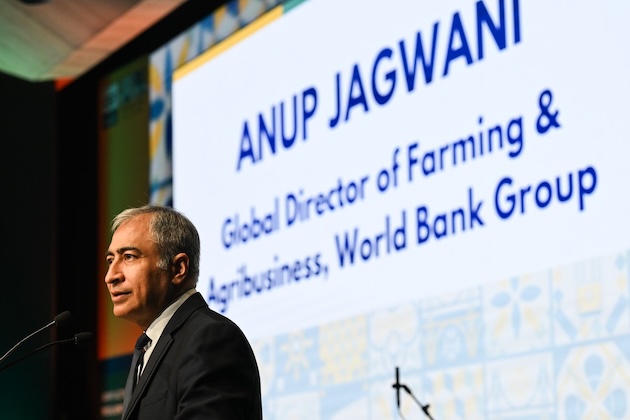 Anup Jagwani, Global Director for Farming and Agribusiness at the World Bank Group, addresses the World Seed Congress. Credit: Supplied
LISBON, May 26 (IPS) - It is often said that the quality of seed determines the quality of the produce and, consequently, the sustainability of the entire agricultural value chain, influencing everything from crop yields to nutritional value.
The United Nations Food and Agricultural Organisation (FAO) emphasises that “we cannot have good crops if we do not have quality seeds”, a principle that underpins global efforts to improve food and nutritional security. It may thus be safe to conclude that seed is the foundation of good health.
The week of 18 to 23 May 2026 witnessed two related but parallel global events: one on global health, the 79th World Health Assembly in Geneva by the World Health Organisation (WHO) and the other on the importance of seeds to global agriculture and food security, the World Seed Congress, organised by the International Seed Federation (ISF).
With a record attendance of more than 1,700 delegates and guests representing over 900 companies and organisations in Lisbon and held under the theme “Joint Actions, Resilient Futures”, the seed congress called for a collective commitment and action at a moment when the multilateral frameworks underpinning global food and nutritional security are under unprecedented strain.
The Congress took place amid mounting pressure on global agri-food systems, sparked by conflicts and worsened by climate change. In 2025, two famines were declared in a single year for the first time. This year, recent geopolitical tensions continue to threaten global trade and economic stability, while an estimated 700 million people worldwide, primarily in Africa and Western Asia, still face hunger each year.
And experts have warned that climate change, including a predicted El Niño event in mid-2026, could push an additional 132 million people in vulnerable contexts into food and nutrition insecurity within five years due to rising temperatures’ impacts on crop yields.
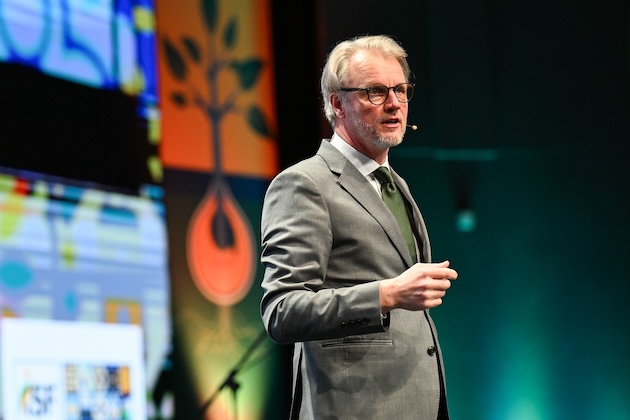 Michael Keller, Secretary General of the International Seed Federation. Credit: Supplied
“It would be easy to look at the state of the world and conclude that international cooperation is in retreat. But the seed industry tells a different story,” says Michael Keller, Secretary General of ISF. “We are here in Lisbon in record numbers in this critical year because we know that collaboration, innovation, and joint actions are practical and appropriate responses to the scale of the truly global challenges we face now and in the future. Unfortunately, in Africa, non-flexible legal and regulatory frameworks still hamper innovation by private seed companies.
And about 2,000 km away in Geneva, WHO Director General Dr Tedros Adhanom Ghebreyesus delivered a similar message, focused on the theme “Reshaping global health: a shared responsibility”, strongly reinforcing the interconnected nature of global health and climate change resilience with several important social determinants of health, including food systems and nutrition.
Ghebreyesus highlighted the importance of not treating health as a standalone sector but rather ensuring that all social determinants of health are well-functioning in support of resilience, sovereignty, and protection of communities from crises.
The chain is simple: climate change threatens agricultural production, food systems, and access to nutritious food, leading to malnutrition, and malnutrition in turn increases vulnerability to infectious diseases and public health emergencies.
Role of Seed Breeding Innovations for Health
Seed innovations alone account for 74 percent of the yield gains observed in crops in the European Union, according to S&P Global Commodity Insights. However, the global system of crop variety development depends heavily on cross-border trade, with the typical novel varieties bred, tested, produced, and distributed across multiple countries before they reach a farmer’s hands.
“Seed companies invest up to 30 percent of their turnover in research and development because we believe that innovation is key to solving problems at scale and for generations to come,” said Arthur Santosh Attavar, ISF President and Managing Chair of the international seed company Indo-American Hybrid Seeds. “ISF continues to work with national and regional seed associations, as well as governments, to create enabling policy environments that help ensure innovations reach farmers quickly and without unnecessary delays or restrictions.”
In the wake of increased climate-induced extreme weather events, one of the key innovations in seed breeding has been ‘climate-resilient seed’ to withstand not only intensified droughts but also the increased prevalence of pests and diseases related to drought conditions.
But the World Bank believes breeding seed that could go beyond being drought tolerant to high nutritional value could be a game changer.
“Until now, we have been dealing with climate resilience largely from the drought and sometimes excess rainfall perspective, but can we also start looking at developing seed varieties by building in additional nutritional aspects such as high protein content? At the World Bank, we are looking at different ways of how to build food systems resilience in a holistic way—covering the entire value chain from seed, infrastructure, markets and all the in-between, with a clear focus on sustainability,” said Anup Jangwani, Global Director of Farming and Agribusiness at the World Bank Group.
Sustained Awareness is Key for Sustainability
Environmental sustainability has, in recent years, become a buzzword in the wake of increasing climate impacts. Unfortunately, there have been some cases of greenwashing linked to environmental sustainability – the promotion of false solutions to the climate crisis that distract from and delay concrete and credible action.
However, at Companhia das Lezírias the largest agricultural and forestry holding in Portugal, “environmental sustainability is a lived reality,” says Sandra Alcobia, who serves as a biologist and is responsible for tourism and visitation.
“Here we live and practice environmental sustainability in reality; our production is organic in every sense. In 2015, the drought conditions that we suffered provided us with an awakening to make a drastic change, and we have not looked back. We are proud to be a certified carbon-neutral establishment.”
Established in 1836, the farm boasts 20,000 hectares of land for crop farming, animal rearing and forestry – all premised on the principles of sustainability, emphasising organic practices.
But Antonio Farrim, Veterinarian and Director of Agriculture Production at Companhia das Lezírias, believes public awareness is key to the climate-resilient and sustainable agenda.
“Governments must take full responsibility for sensitising the public on the health benefits of sustainably grown food,” he says. “For example, in beef production, the colour of meat produced organically is not usually appealing to the eye; it is slightly dark with yellow fat. In terms of nutrition, however, this is the most healthy beef one can get, and yet most consumers don’t understand this fact. It is, therefore, incumbent upon governments to undertake sustained awareness for both environmental sustainability and good health. For us here at Companihia, we don’t only produce for sustainability but also for the good health of the consumers.”
Head of External Communication at Syngenta, one of the world’s biggest agricultural innovation companies, Dimitri Houtart agrees with the importance of the public awareness narrative.
Houtart says the growing global population poses a challenge as the global community races to produce enough for everyone, sustainably, with limited land. This, he states, can only be achieved through innovation and sustained public awareness for uptake of innovative technologies that support high productivity.
However, he notes, “misinformation on catalytic research and innovations to improve productivity while preserving environmental integrity is one of the drawbacks.”
“The need for a well-informed cadre of agricultural journalists cannot be over-emphasised. For me, Agricultural journalism is the most important branch of this profession because the agricultural information needs of the public, especially in this era of social media, are immense.”
Breeding Innovations for Africa’s Unique Challenges
A quick search on post‑harvest losses in Africa reveals that it ranges between 20 and 40%, especially in crops such as maize, cassava, cowpea, and bananas, some of the continent’s stable crops
Losses are largely attributed to pests, diseases, poor storage and climate stress. While technological advancement is a critical means of enhancing agricultural productivity and improving food and nutrition security in many low- and middle-income countries, it has been slow to gain traction in Africa.
Thus, one of the innovations being tried is to breed crops that resist the noted stresses and reduce losses before they happen.
Professor Mohammed Ishiyaku of the Institute for Agricultural Research in Nigeria is one of the lead scientists behind Pod Borer Resistant cowpea – a variety developed by Nigerian scientists over three decades, now approved and growing commercially in Nigeria, with regulatory approvals advancing across the region.
“Legume Pod Borer (Maruca vitrata) is one of the most damaging insect pests limiting cowpea production,” says Prof. Ishiyaku. “The damage caused by the pod borer to cowpea plants reduces the size and quality of the cowpea harvest. It can reduce grain yield by up to 80%. Farmers typically spray pesticides up to 6 – 10 times within a planting season in an attempt to control this insect pest, but this is often not effective because the chemicals do not reach the pest larvae inside the plant tissues. The chemicals are also expensive, their availability to farmers is limited, and inadequate training in their use often leads to unintended dangerous human health and safety impacts. Therefore, a Cowpea product that can protect itself from Legume Pod borer damage makes it easier and cheaper for farmers to produce cowpeas in areas where this pest is a problem.”
An international public-private partnership, managed and coordinated by the African Agricultural Technology Foundation (AATF), is developing Pod-Borer Resistant Cowpeas.
Sticking with innovation, Bruce Knight of Legume Technology, based in the United Kingdom, has been conducting trials on how to support smallholder farmers in Africa with affordable means of accessing inoculants for legume seeds.
With limited resources, most smallholder farmers on the continent still use untreated seeds, usually kept from the previous harvest. To help boost productivity, Dr Bruce Knight has, through support from the Gates Agricultural Innovations, developed an affordable and tailor-made small-packaged inoculant solution that is able to treat at least a hectare of legume seeds.
“After 10 years of trials, we have finally got it right; we have developed an affordable inoculant solution for smallholder farmers in Africa,” says Knight. “So far, our product has outperformed other inoculant producers on the continent, and we are geared to roll out and support smallholder farmers with this tailor-made solution.”
A well-known health phrase, “You are what you eat”, implies that food is the foundation of good health. What you eat dictates your general well-being. Seed, from which most food is cultivated, is therefore the foundation of optimal health.
The author is the Climate Change and Health Advocacy Lead at Amref Health Africa.
IPS UN Bureau Report
© Inter Press Service (20260526113007) — All Rights Reserved. Original source: Inter Press Service








 English (US) ·