
We’ve been ringing the death knell for Hollywood for so long—decades, really—that now, well into the age of the big, moneygrubbing streamers, it’s become a tinny clink most of us can barely hear. But whether we care to heed it or not, the 79th edition of the Cannes Film Festival, which wrapped up on May 23, hit that sucker with a louder, mightier clang than the J. Arthur Rank strongman ever got out of his gong. Hollywood used to be the place where stars are made—we’d then send them out, almost as gifts, to the rest of the world. But this past spring, when prognosticators began predicting what Hollywood tentpoles might premiere on the Croisette, the pickings were slim. Would Steven Spielberg’s Disclosure Day make a showing? How about Christopher Nolan’s The Odyssey? In the end, the closest the festival came to hosting a big Hollywood premiere was its presentation of John Travolta’s directorial debut, the 61-minute film he’d adapted from his 1997 children’s book Propeller One-Way Night Coach. There were traditional Hollywood stars on the red carpet, including Julianne Moore and Kristen Stewart, but they were present as guests, not as part of any film delegation. Perhaps it’s time to reframe Hollywood’s traditional—and certainly its recent—relationship with Cannes. At least as far as starmaking goes, Cannes is building a Hollywood of its own—and in an era when established American stars are clamoring to appear on the White Lotus rather than in movies, that’s probably a good thing.
Hollywood’s hold on the Cannes Film Festival used to anger some film critics and journalists. Cannes was the place, they argued, to discover great films and filmmakers from other countries, not celebrate Tom Cruise or Harrison Ford on the red carpet. (In recent years, both of those stars appeared in Cannes to support films like Top Gun: Maverick, Mission: Impossible—The Final Reckoning, and Indiana Jones and the Dial of Destiny.) Cannes has always loved its Hollywood movie stars, but perhaps out of necessity more than anything, it’s now helping to make them rather than just import them. This is the age of the new international movie star, and Cannes is one of the major launchpads.
Two years ago, plenty of Americans knew Wagner Moura’s face and name: he’d appeared in films like Alex Garland’s Civil War, though most probably knew him from his portrayal of drug lord Pablo Escobar in Netflix’s Spanish-language series Narcos. Moura had long been considered a movie star in his home country of Brazil. But it was Kleber Mendonça Filho’s 2025 film The Secret Agent, which premiered in Cannes and later made a showing in the Oscar race, including a Best Actor nomination for Moura, that opened our eyes to the idea of Moura as a modern Hollywood movie star. Maybe even more significantly, Danish-Norwegian filmmaker Joachim Trier’s multigenerational family drama Sentimental Value, also part of the Cannes competition last year, not only won the Academy’s Best International Feature award. It also flooded the Oscar pool in the acting categories: Stellan Skarsgård, Elle Fanning, and Inga Ibsdotter Lilleaas were all nominated as supporting performers, and Renate Reinsve received a nod for Best Actress. Now, when Americans see her on a red carpet, they immediately recognize her face—and that’s how stars are born.
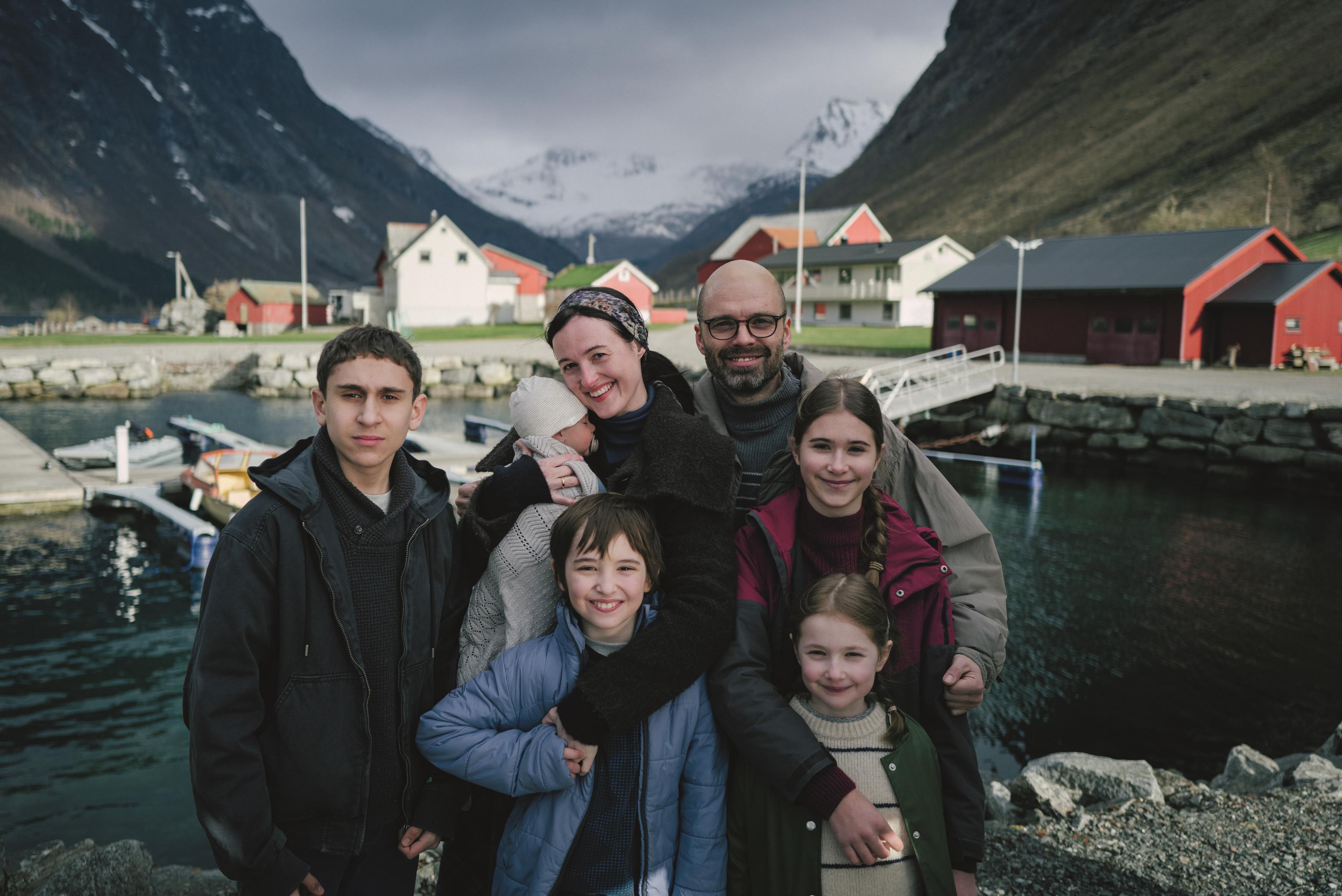
Reinsve and Stan, top left and right, in Fjord Courtesy of Cannes Film Festival
Reinsve may make another showing in the Oscar nominations this year: She’s one of the stars of Cristian Mungiu’s Fjord, which won the festival’s top prize, the Palme d’Or. But the movie may prove to be a better showcase for her co-star Sebastian Stan, a Romanian-born actor who has already starred in several Marvel movies (as Bucky Barnes, or the Winter Soldier) and will appear in the forthcoming Batman II. Even more significantly, he gave a terrific, nuanced performance as the young Donald Trump in Ali Abbasi’s 2024 Cannes competition film The Apprentice. Stan is an actor who takes chances. Fjord is a somber movie about an ultra-religious couple who move with their family of five from Romania to Norway, only to have the citizens of their new town accuse them of child abuse. It’s an intentionally incendiary “issues movie,” and even as it purports to be even-handed, it may be a little too eagerly embraced in the States by the noisy contingent who believe that Christians are an oppressed minority.
But for now, that’s beside the point. In Fjord, as a father fighting to keep his family together, Stan is barely recognizable: with his partly shaven head, his generic-looking specs, his slightly stooped yet proud carriage, he could be any anonymous-to-Americans European actor. (He speaks Romanian in the film, as well as English.) It’s a good performance, and we know that the Academy has a fondness for actors who are willing to downplay their Hollywood-caliber good looks. In that regard, Stan fits the bill.
Another international yet non-Hollywood star who may get a boost from this edition of Cannes is the French-Belgian actor Virginie Efira, terrific in Ryusuke Hamaguchi’s All of a Sudden, playing a burned-out care-home administrator who builds a new framework for her life, and her life’s work, when she bonds with a terminally ill experimental playwright, played by Tao Okamoto. The two shared the festival’s prize for Best Actress, but there were no shortage of wonderful performances, particularly from women: Léa Seydoux plays an individual bewildered to find herself trapped in another person’s body in Arthur Harari’s haunting horror drama The Unknown. Adèle Exarchopoulos is a standout as a functional alcoholic in Jeanne Herry’s Another Day. And Sandra Hüller gives a superb performance in Pawel Pawlikowski’s astonishing, compact film Fatherland, as the daughter of, and assistant to, Hanns Zischler’s Thomas Mann, though the performance is probably too muted to draw Oscar attention.
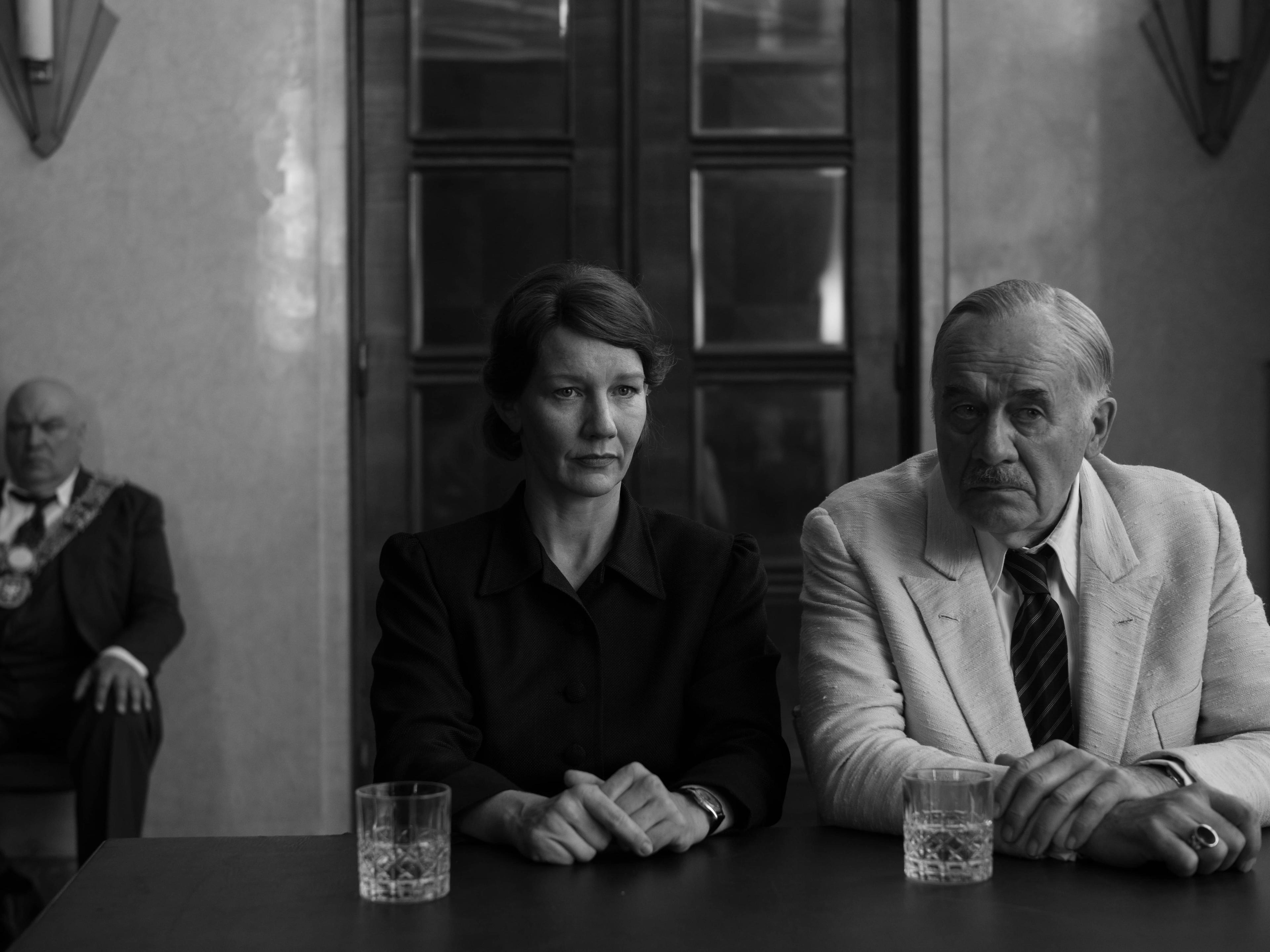
Sandra Hüller, left, in Fatherland Courtesy of Cannes Film Festival
Still, for Hüller, Seydoux, and Exarchopoulos, there’s always next year, or the year after. And who knows what new faces may emerge in this new global landscape? It’s true that Cannes has always been something of a Europe-to-Hollywood pipeline: Mads Mikkelson, Christoph Waltz, and Javier Bardem (who gives a fine performance in the Cannes competition entry The Beloved, from Spanish filmmaker Rodrigo Sorogoyen) have all at some point won Best Actor prizes in Cannes, an accolade that helped boost their careers. But the movie landscape has changed so drastically, just in the past five or six years, that that route may become even more pronounced. What’s more, the Academy of Motion Picture Arts and Science’s recent overhauling of its eligibility rules in the International Feature Film category—stating that a film no longer needs to be put forward officially by its country of origin, but is instead deemed eligible if it wins a prize at any of the top international film festivals—will surely change the way certain international films are promoted in America.
In the end, this year only two American films, James Gray’s Paper Tiger (starring Adam Driver, Miles Teller, and Scarlett Johansson) and Ira Sachs’ The Man I Love (with Rami Malek and Rebecca Hall) earned slots in the official Cannes competition. Apparently, the festival’s selection committee didn’t see many American films it deemed worthy. Maybe the potentially great films of 2026 just weren’t ready in time—or maybe they’re not being made at all.
The focus these days is, after all, on streaming. The upcoming season of The White Lotus is being filmed in Cannes, with the festival as its backdrop, though you wouldn’t have seen its stars—among them Laura Dern and French actor Vincent Cassel—just walking around the Croisette. (Dern did walk the red carpet with her father, Bruce Dern, the subject of a documentary that played in the festival.) Yet their invisible presence was a reminder that Hollywood still craves, and needs, Cannes glamour, and vice-versa. The Cannes Film Festival is many sometimes conflicting things at once: a symbol of glamour, a showcase for that nebulous thing we call quality, and, most important of all, a place where the movies refuse to be shrunk down to fit our increasingly compartmentalized lives. And as for stars: If Cannes can’t get them the old-fashioned way, by bringing them over from Hollywood—well, it will just make some new ones, on its own terms. The French and American film industries have always been symbiotic, if also a little antagonistic. And so, even if Hollywood as we knew it is dead, it’s not over. Cannes is on standby with the electrodes, ready to jolt the corpse back to life, even if we’ve neglected it ourselves.







 English (US) ·