
 1 month ago
27
1 month ago
27
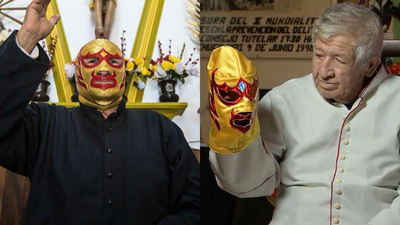
Inside crowded Mexican wrestling arenas filled with roaring fans, flashing masks, and flying body slams, one masked fighter carried a secret far more unusual than his opponents realised.
Known in the ring as Fray Tormenta, the man behind the red-and-yellow mask was actually a Catholic priest. During the day, he preached sermons and cared for vulnerable children. At night, he stepped into brutal lucha libre wrestling matches to earn money for an orphanage he struggled to keep running. His extraordinary double life eventually turned him into one of Mexico’s most unlikely folk heroes, blending faith, charity, and professional wrestling in a story that later inspired films, documentaries, and international fascination.
The priest behind the wrestling mask
Long before he became Fray Tormenta, Sergio Gutiérrez Benítez lived a difficult and unstable life. Born in 1945 in Mexico, he reportedly struggled with poverty and crime during his youth and spent time involved with gangs and theft before eventually changing direction.According to interviews and biographical accounts, a spiritual transformation led him toward religious studies and eventually the Catholic priesthood.
He was ordained in the 1970s and began working in some of Mexico’s poorer communities, where he encountered large numbers of abandoned and vulnerable children.The experience deeply affected him. Many children lacked stable homes, education, or even regular meals. Determined to help, he established shelters and orphanage programmes near Mexico City. But running them soon became financially overwhelming.At the time, the orphanage depended heavily on donations, and resources were often scarce.
Food, school supplies, clothing, medical care, and housing costs kept increasing. Looking for a way to generate income quickly, Gutiérrez turned to one of Mexico’s most popular forms of entertainment: lucha libre wrestling.Lucha libre had long been a cultural phenomenon in Mexico. Unlike American wrestling, Mexican lucha libre is especially famous for its masked wrestlers, fast-paced acrobatics, and dramatic characters inspired by folklore, heroes, and villains.Because masks already played such an important role in wrestling culture, Gutiérrez realised he could compete anonymously while continuing his work as a priest.He adopted the name “Fray Tormenta,” meaning “Friar Storm,” and began training as a wrestler despite having little professional experience.
Living two completely different lives
Fray Tormenta’s routine became extraordinary even by wrestling standards. During the day, he performed religious duties, celebrated Mass, and worked with children at the orphanage.
At night, he travelled to wrestling venues where he fought in physically punishing matches before cheering crowds.The contrast between the two worlds made his story remarkable. In one setting, he wore priestly robes and delivered sermons. In the other, he wore a brightly coloured mask and exchanged punches, slams, and flying attacks inside wrestling rings.For years, he kept his wrestling identity hidden from many people connected to the church.
The mask gave him privacy and protected him from criticism while he continued supporting the orphanage through wrestling income.Eventually, however, his identity became widely known, turning him into a national curiosity and later an international symbol of unconventional charity work.
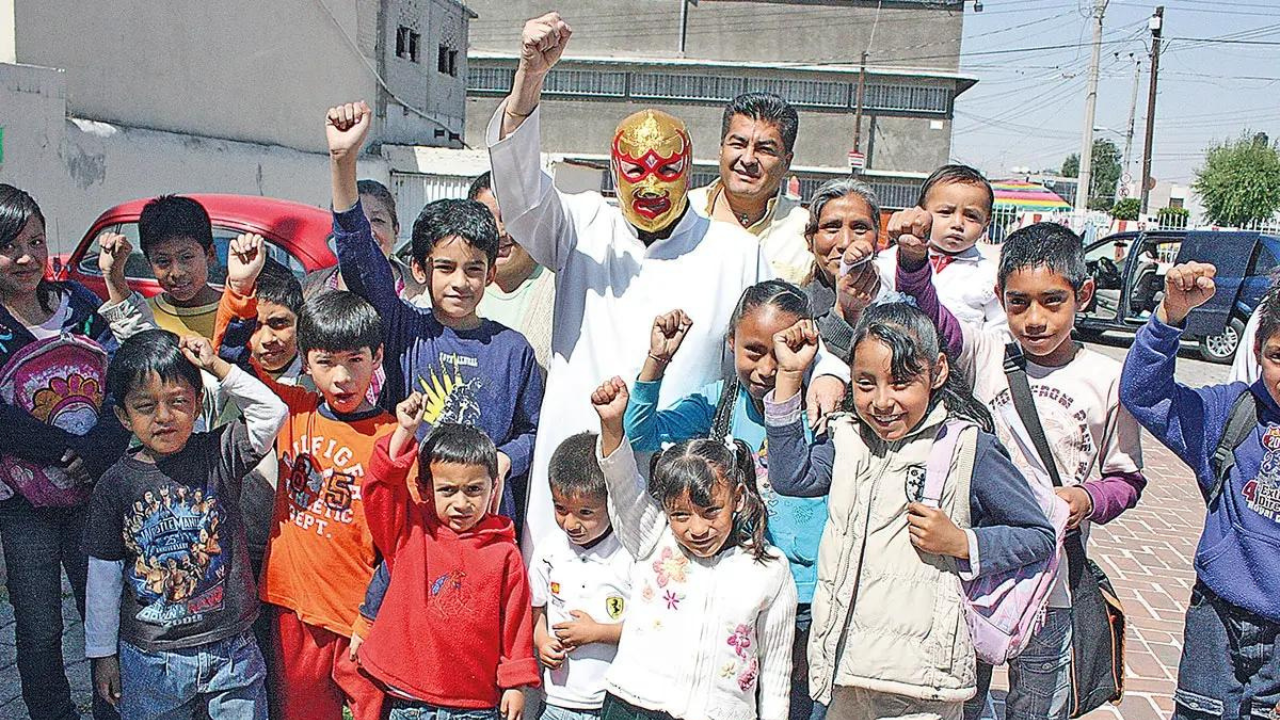
The orphanage that became his life’s mission
Fray Tormenta has said in interviews that helping children remained the true purpose behind his wrestling career. Reports differ on exact numbers, but many accounts state that he helped support and educate hundreds of children over several decades.The shelters associated with his work became homes for children facing abandonment, domestic violence, addiction within families, and extreme poverty. Some former residents later described him as a strict but deeply committed father figure.The money earned through wrestling helped cover food, clothing, school tuition, books, medical treatment, accommodation, and the expansion of orphanage facilities.
Wrestling was never simply entertainment for him. Every match became a way to keep the shelter functioning and ensure the children had access to safety and education.Even when injuries accumulated from years of wrestling, he reportedly continued competing because the orphanage still needed financial support.
The significance of the wrestling mask
In Mexican lucha libre, masks carry enormous cultural meaning. They often represent identity, mystery, and honour.
Wrestlers traditionally protect their masked identities fiercely, and losing a mask in a special match can be considered deeply humiliating.Fray Tormenta’s red-and-yellow mask eventually became iconic within Mexican pop culture. Beyond symbolism, it also served a practical purpose in the beginning by helping separate his religious life from his wrestling career.As his fame grew, the mask transformed into a symbol of sacrifice and resilience rather than secrecy alone.Today, replicas of his mask are sold in wrestling markets and tourist areas across Mexico.
How real was the ‘Nacho Libre’ connection?
Fray Tormenta’s unusual story eventually attracted global media attention and inspired documentaries, books, and comic adaptations. His life also helped inspire the 2006 comedy film Nacho Libre starring Jack Black.The movie fictionalised most details for humour and entertainment, but the central idea of a Catholic priest secretly becoming a wrestler to support children came directly from Fray Tormenta’s real-life experiences.Unlike the exaggerated comedy version, the real story was rooted in poverty, social work, and decades of commitment to helping disadvantaged children.
Becoming a folk hero beyond wrestling
Although Fray Tormenta eventually retired from active competition, he remained a respected figure within both wrestling and charitable circles. His life story stood out because it crossed boundaries rarely seen together: religion, sport, violence, social work, and entertainment.In Mexico, where lucha libre wrestlers often become larger-than-life cultural icons, Fray Tormenta occupied a unique place. He was not simply performing for fame or titles. He fought because wrestling became a financial lifeline for children who depended on him.Over time, the masked priest evolved into something larger than a wrestler. He became a symbol of how unconventional paths can sometimes emerge from desperation, compassion, and the determination to protect others.







 English (US) ·