
 1 month ago
23
1 month ago
23
Bangladesh will go to the polls for the first time since its government collapsed in 2024 during a bloody crackdown on protesters.
More than 127 million people are eligible to vote in the country's first general election since Prime Minister Sheikh Hasina was toppled after weeks of protests.
The unrest, sometimes dubbed the Gen Z uprising because of its young supporters, caused Hasina to flee the country for India, clearing the way for an interim government led by Muhammad Yunus.
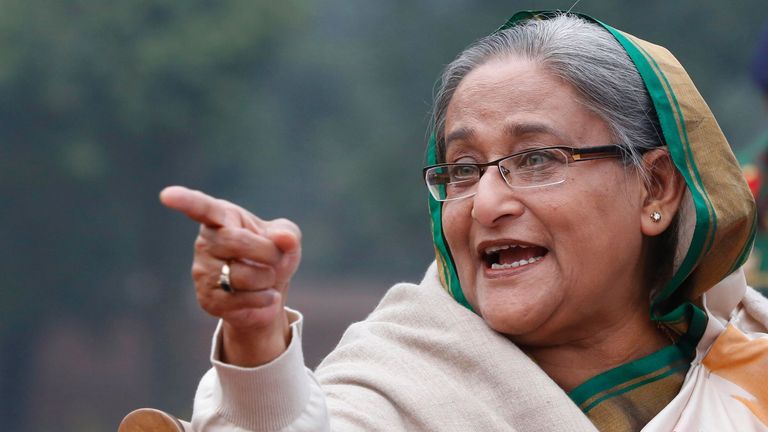
Bangladeshi courts have since sentenced Hasina to death for alleged crimes against humanity during the uprising. Her Awami League party is banned from running in the election.
Hasina's niece, Labour MP Tulip Siddiq, has also been sentenced to jail - by a Bangladesh court in her absence - over corruption allegations, in a controversial judgement not recognised by the UK government.
Siddiq has condemned the conviction, saying she is "absolutely baffled by the whole thing".
Tarique Rahman, son of former prime minister Khaleda Zia and leader of the Bangladesh Nationalist Party, is favourite to become his country's next PM.
He returned to Bangladesh in December after 17 years of exile in London, and has pledged to rebuild democratic institutions, restore the rule of law, and revive the nation's ailing economy.
Opposing him is an 11-party alliance led by the country's largest Islamist party, Jamaat-e-Islami.
Jamaat-e-Islami was banned under Hasina's rule, but Bangladesh is more than 90% Muslim, and the group has regained prominence since her removal.
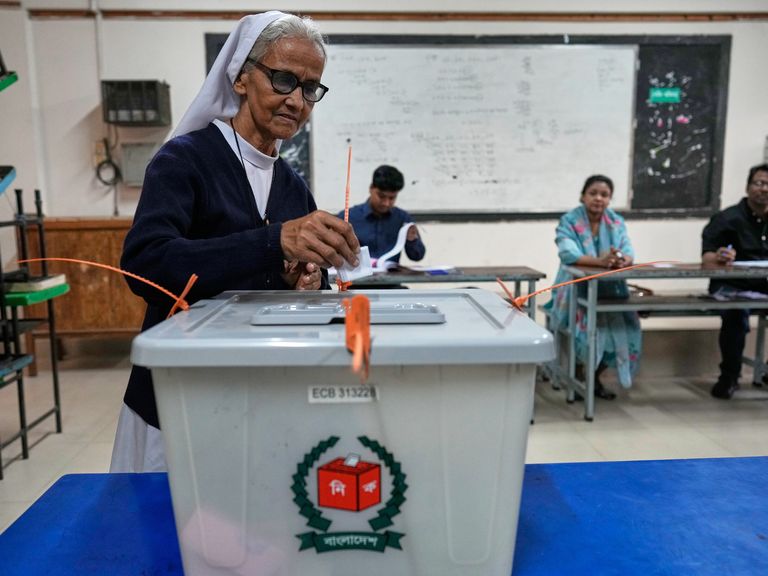
However, the party's conservative religious views have sparked concerns, especially among women and minority communities, that social freedoms could be eroded.
The interim government of Yunus, a Nobel Peace Prize laureate, says it is committed to delivering a credible and transparent election.
Some 500 international observers and foreign journalists will therefore be present, including delegations from the Commonwealth, to which Bangladesh belongs, and the EU.
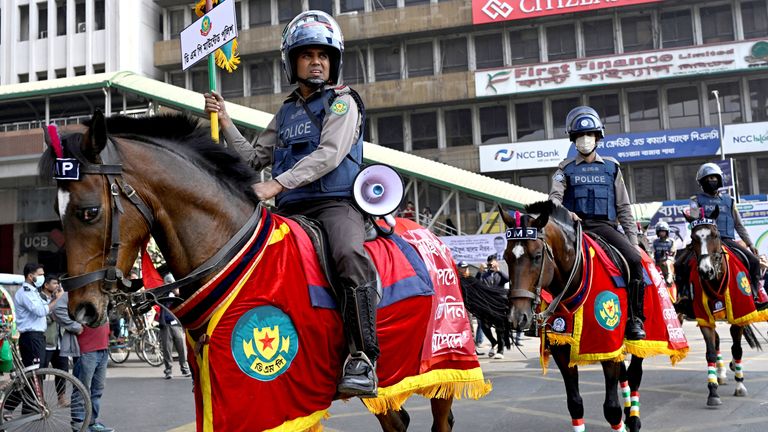
Outside a polling booth in Dhaka, mounted police were seen with saddle blankets proclaiming: "Police are here, vote without fear".
Major reform proposals are also on the ballot in a referendum, including plans to add a second house to the Bangladeshi parliament or Jatiya Sangsad.
Presently it comprises one chamber of 350 seats, with members elected to five-year terms. 300 seats represent constituencies, while 50 are reserved for women.
Read more:
Bangladesh's first female prime minister dies
India walks tightrope harbouring deposed Bangladeshi PM
"I think it is a very crucial election because this is the first time we can show our opinion with freedom," said 28-year-old voter Ikram ul Haque.
"We are celebrating the election. It is like a festival here. I hope Bangladesh will have exponential change."
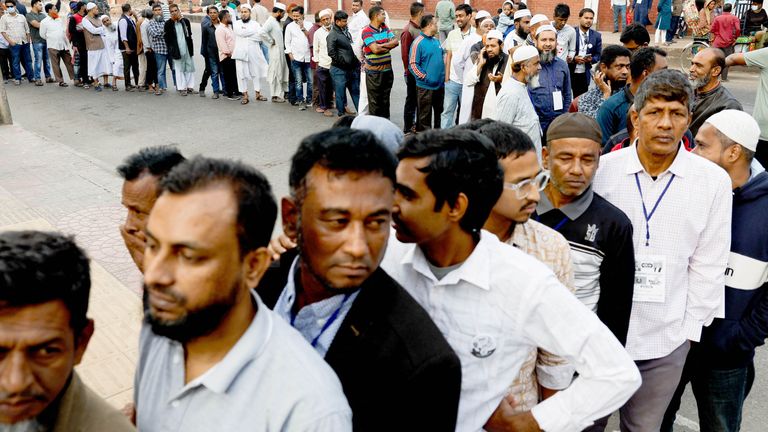
Mohammed Jobair Hossain, 39, said he hadn't voted since 2008.
"I am feeling excited because we are voting in a free manner after 17 years," he said as he waited in line.
"Our votes will matter and have meaning," he added.
Thomas Kean, a senior consultant with the International Crisis Group, described what was at stake.
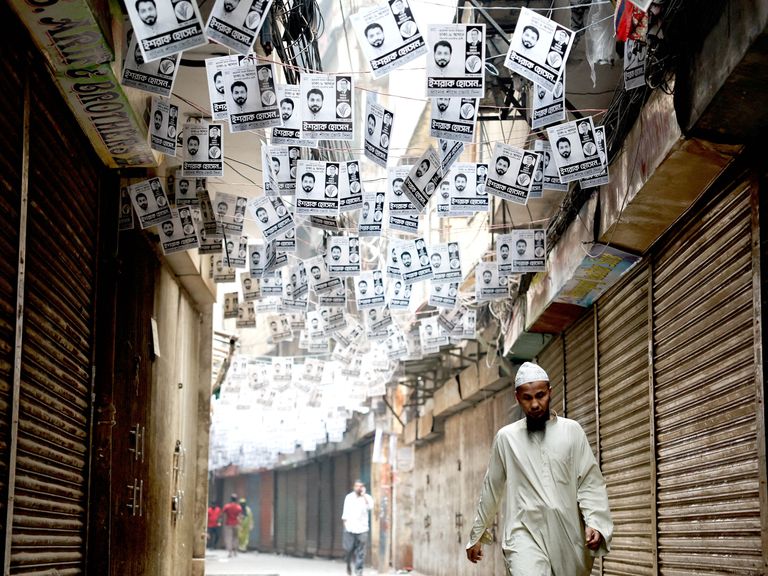
He said: "The crucial test for Bangladesh now will be to ensure the election is conducted fairly and impartially, and for all parties to then accept the result.
"If that happens, it will be the strongest evidence yet that Bangladesh has indeed embarked on a period of democratic renewal."
The results are expected on Friday.





 English (US) ·