
 3 weeks ago
34
3 weeks ago
34
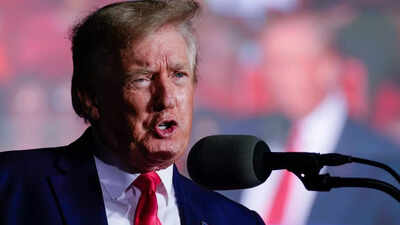
US President Donald Trump turned 80 on June 14, becoming only the second sitting US president to reach the milestone while in office, after Joe Biden celebrated his 80th birthday in November 2022 .
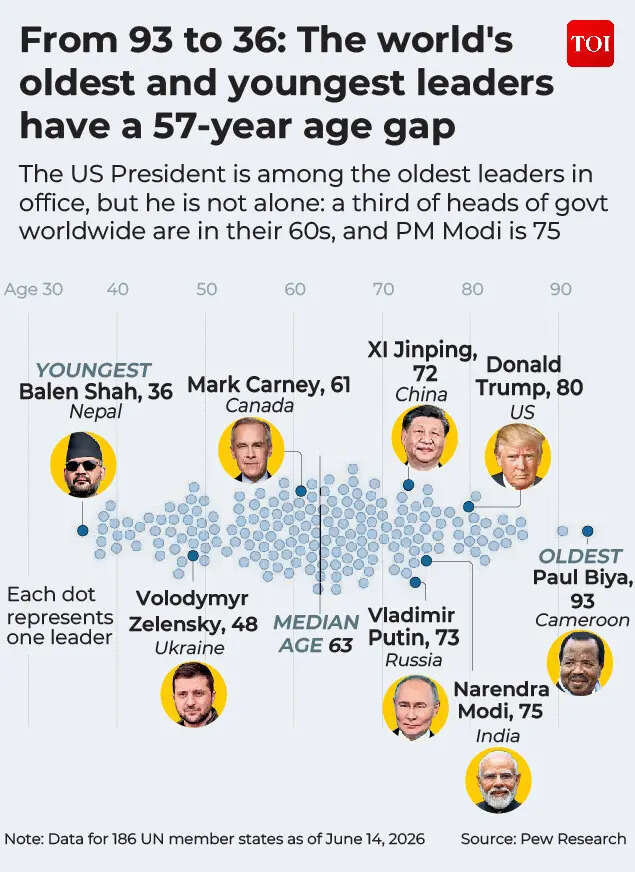
Trump is also the oldest person ever inaugurated as president, having returned to the White House in January 2025 at age 78.According to a Pew Research Center analysis of leaders across 186 United Nations member states, 16 serving national leaders are older than Trump, making him older than approximately 91 percent of his counterparts worldwide . The median age of national leaders globally stands at 63.
Who are the world's oldest leaders?
The world's oldest serving leader is Cameroon's President Paul Biya, who is 93 and has held power since 1982, longer than 13 current national leaders have been alive.
Saudi Arabia's King Salman bin Abdulaziz Al Saud is second at 90, having served as monarch since 2015 .Many of the world's oldest leaders are concentrated in Africa. In addition to Biya, the leaders of Malawi, Ivory Coast, Equatorial Guinea, Zimbabwe, the Republic of the Congo and Uganda are all among the 10 oldest heads of government . Uganda's Yoweri Museveni is now 82 and has remained in power for four decades, while Equatorial Guinea's President Teodoro Obiang Nguema Mbasogo has ruled since 1979.
Seven of the world's 10 oldest leaders govern countries that Freedom House categorises as "not free" based on political rights and civil liberties, according to Pew's analysis.
The youngest leaders and a generational contrast
On the opposite end of the spectrum, the youngest national leader is Nepal's Prime Minister Balen Shah, who is just 36. Shah, also a rapper, was elected after youth-led protests ousted the previous government. Iceland's Prime Minister Kristrún Frostadóttir, 38, is the second-youngest.The data points to a clear hierarchy: the average parliamentarian globally is around 50, cabinet members roughly 55, and heads of government slightly above 60.This hierarchy reflects what scholars describe as a "nomination hierarchy," where politicians must accumulate years of experience, party capital and network connections to advance to the highest office.Younger leaders remain rare, only about 2 percent of country-years since 1945 have had a leader aged 35 or under.An academic research also pointed out that leaders who gain power through a coup are on average 7 years younger than those who come to power through elections, and dynastic leaders are on average 6.5 years younger as they can shortcut the normal seniority progression.





 English (US) ·