
 3 weeks ago
22
3 weeks ago
22
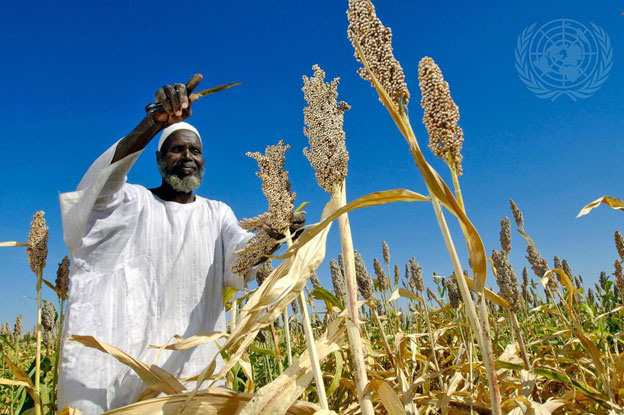 A local farmer harvests sorghum produced from seeds donated by the Food and Agriculture Organization (FAO) through the “Improving Seeds” project. Credit: FAO/Fred Noy
UNITED NATIONS, June 23 (IPS) - Armed conflict, economic shocks, and climate pressures are driving worsening food insecurity across many of the world’s most vulnerable regions, according to the latest Hunger Hotspots report outlook for June-November 2026, jointly released by the World Food Programme (WFP) and the Food and Agriculture Organization (FAO).
The report analyzes 13 hunger hotspots where acute food insecurity is expected to worsen through 2026, with Yemen, Palestine, Sudan, South Sudan, Somalia, Nigeria and Haiti among the areas of highest concern. Conflict remains the primary driver of food insecurity in 12 of the 13 hotspots identified in the report.
The report found that in the past five years conflict levels have doubled, with one in six people worldwide being exposed to armed violence in 2025. It identified 117.3 million people as being forcibly displaced as of 2025, severely overwhelming host communities and deepening food insecurity.
The report also warns that famine risks are persisting in multiple locations. Sudan was identified as facing one of the world’s most severe food crises, while famine risks were also identified in Yemen, Gaza, South Sudan, and Somalia. The report also elevated Nigeria and Somalia to the highest point of concern due to deterioration of projections that large parts of their populations could face catastrophic levels of food insecurity through the outlook period. Nigeria is projected to have the largest number of people facing high levels of acute food insecurity among all the identified hotspots, at approximately 34.8 million people affected.
Beyond conflict the main driver of food insecurity, economic and supply chain pressures are compounding, developing new vulnerabilities. At the report’s launch on June 18, representatives from WFP and FAO warned that disruptions to global trade routes can further worsen food insecurity. According to FAO officials, nearly one-quarter of global oil supplies and one-third of the global fertilizer trade pass through the Strait of Hormuz, meaning disruptions can hike fuel prices, transportation and insurance costs, and fertilizer. The FAO says these cascading effects can increase cost of humanitarian operations, raise food prices, and delay delivery of assistance to those who are already undergoing acute food insecurity. For households with already extremely low purchasing power, and humanitarian organizations with a continuously stressed budget, an increase in these factors can have severe consequences.
WFP and FAO warn the climate risks are also mounting, mentioning El Nino’s capabilities of producing uneven rainfall patterns, which could disrupt local agricultural production across multiple vulnerable regions.
While this happens, humanitarian organizations are being further constricted with fewer resources to respond with. According to WFP and FAO, funding to humanitarian groups declined by an estimated 59 percent between 2022 and 2025, which are levels seen last in 2016-2017. During the same period, the share of the population facing high levels of acute food insecurity has doubled, meaning with less than half the funding, humanitarian groups have to deal with double the amount of people in need, as compared to funding and food insecurity levels in 2016-2017. This combination of shrinking aid and rising food insecurity forces humanitarian groups to scale back assistance, despite growing needs.
Responding to a question from Inter Press Service regarding supply chain disruptions, and risk prevention, Rein Paulsen, FAO Director of the Office of Emergencies and Resilience argued that strengthening local food production is part of the solution, also adding that an investment of USD 17.7 million resulted in “the production of some 515 million US dollars’ worth of food in Sudan.” He added that in some contexts, millet production has helped hundreds of thousands of households, despite conflict and disruptions to supply chains. “Greater emphasis on local production is part of the answer,” Paulsen said.
According to FAO figures cited by Paulsen, the millet production program generated roughly USD 29 worth of food production for every dollar invested. The WFP and FAO have stressed that many modern famines are preventable and foreseeable, warning that sustained funding, humanitarian access and early intervention remain critical to preventing food insecurity from escalating into catastrophe.
IPS UN Bureau Report
© Inter Press Service (20260623064408) — All Rights Reserved. Original source: Inter Press Service



 English (US) ·