
 3 weeks ago
30
3 weeks ago
30
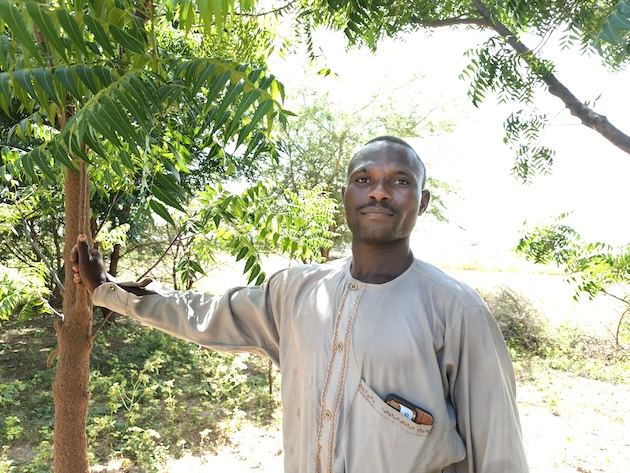 Jabiru Muhammed stands beside a tree planted as part of the Great Green Wall project in his village in Jigawa State. Credit: Promise Eze/IPS
GARABADU VILLAGE, Nigeria, May 12 (IPS) - In 2021, Gadeja Shehu and about a hundred farmers in Garbadu village, Zamfara State in northwestern Nigeria, were invited by officials of the National Agency for the Great Green Wall to plant trees across a large stretch of land in their community.
Shehu remembers how fierce, dust-laden winds from the Sahara Desert often tore off the roof of his home and damaged his farmland. For him, taking part in the tree-planting exercise was a way to confront this challenge, especially after seeing the impact of similar interventions in other northern states such as Kaduna, Bauchi, and Jigawa, where desertification has degraded once fertile land.
The Sahara is advancing relentlessly across the Sahel, expanding by nearly 10 per cent since the 1920s. In Nigeria, around 35,000 hectares of land are lost each year as the desert continues to encroach southwards.
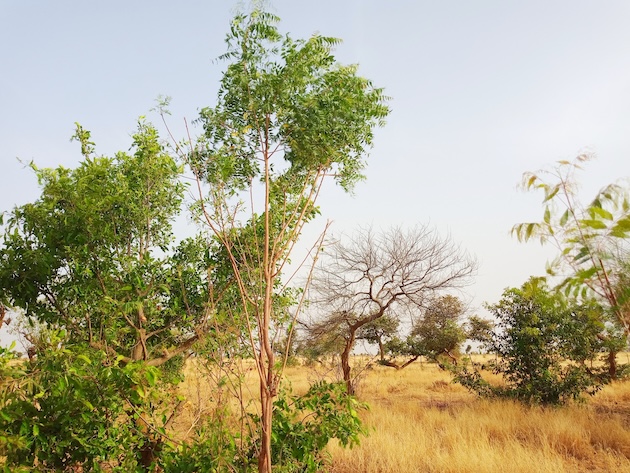 Trees planted in Garbadu village, Zamfura State. Credit: Promise Eze/IPS
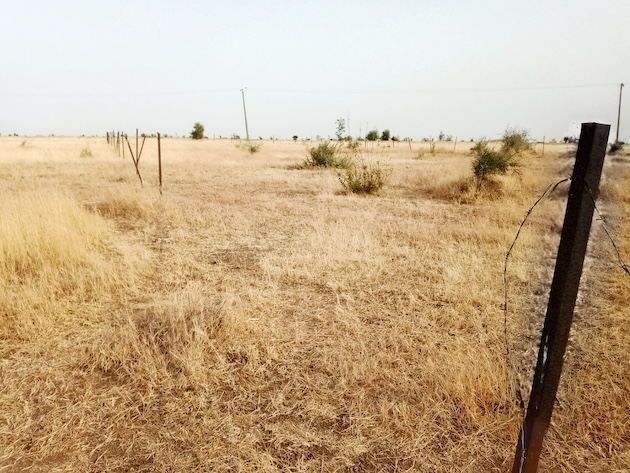 Desertification is causing land degradation in the Sahel. Credit: Promise Eze/IPS
In Garbadu, a community of roughly 6,000 people who rely on farming, many had abandoned their fields, resulting in falling incomes and growing food shortages. However, the tree-planting initiative is beginning to reverse this trend. It is part of the Great Green Wall Initiative, an ambitious plan to create an 8,000-kilometre-long and 15-kilometre-wide belt of vegetation across Africa.
Launched by the African Union in 2007, the initiative spans 11 countries in the Sahel, including Mauritania, Senegal, Mali, Burkina Faso, Niger, Nigeria, Chad, Sudan, Ethiopia, Eritrea, and Djibouti. It aims to restore 100 million hectares of degraded land, generate 10 million jobs, and capture 250 million tonnes of carbon dioxide by 2030.
Nigeria’s section stretches roughly 1,500 kilometres, focusing on a 15-kilometre-wide belt of drought-resistant trees across vulnerable northern states.
Initially conceived as a plant barrier, the initiative has since expanded its goals. It now focuses on restoring degraded lands, halting desert expansion, improving soil and water conservation, supporting agriculture and livestock, creating green jobs, and helping communities adapt to climate change.
“The project has been really impactful here. Previously strong winds would rip off our roofs, but now it is no longer frequent. Before the plantation, the soil of the areas where the trees are now barely held water, but now it does have moisture and I’m happy the area is slowly turning green again,” said Shehu, who added that he continues to care for the trees.
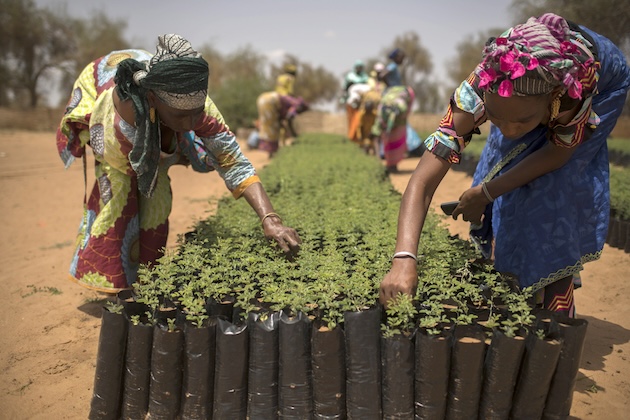 Senegalese villagers working in a tree nursery forming part of the Great Green Wall. Photo: FAO/Benedicte Kurzen/NOOR
Family of Funds
The Great Green Wall has attracted significant funding over the years. The Global Environment Facility (GEF), a key partner, has provided more than $1 billion in grants. These funds have helped leverage an additional $6 billion from governments, development partners, and multilateral institutions. The investments have strengthened landscapes, improved livelihoods, reduced poverty, and enhanced food and water security.
Jonky Tenou, Africa Regional Coordinator at the GEF, said the GEF has supported the Great Green Wall Initiative through strategic, programmatic investments over successive replenishment cycles, leveraging its family of funds to build momentum and coherence.
These efforts include the GEF 4 Strategic Investment Program for Sustainable Land Management in Sub-Saharan Africa (SIP), the GEF 5 Sahel and West Africa Program (SAWAP), the GEF 6 Integrated Approach Pilot on Food Security (IAP Food Security), the GEF 7 Food, Land-Use and Restoration Impact Program (FOLUR), and, under GEF 8, the Transformational Approach to Large-Scale Investment in Support of the Implementation of the Great Green Wall Initiative (TALSISI GGWI).
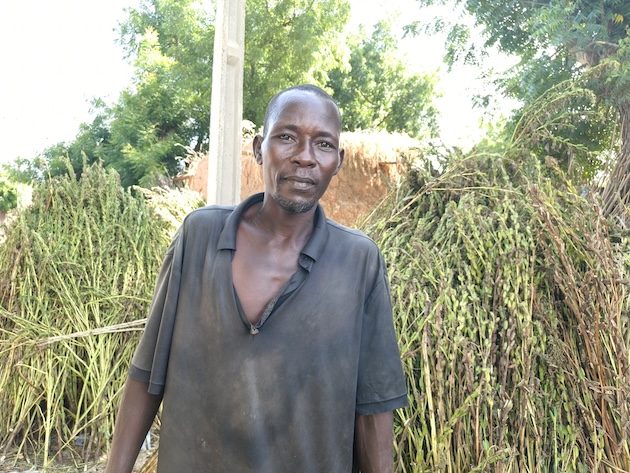 Tela Jubrin, a farmer, planted trees for the Great Green Wall in Jigawa State, Nigeria. Credit: Promise Eze/IPS
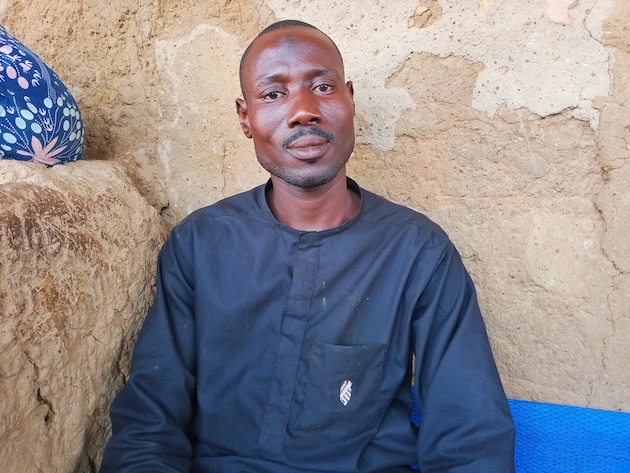 Shafi’u Ladan, one of the farmers who participated in the tree planting project in Garbadu, Zamfara state. Credit: Promise Eze/IPS
Sustainable Impact
The TALSISI GGWI, Tenou explained, is designed as a truly programmatic, multi-country platform that builds on lessons learned over the past decade.
“Compared to earlier approaches, TALSISI places stronger emphasis on regional coordination, deeper integration across GEF focal areas, and a clear focus on scalability, learning, and adaptive management. Crucially, the programme also gives greater attention to the institutional, financial, and security constraints that have previously limited effectiveness, helping to create the conditions needed for sustained and transformative impact at scale,” he said.
Observers have noted that the Great Green Wall Initiative has often been criticised for being highly ambitious but slow in delivery — a concern acknowledged by the GEF and its partners. They stress, however, that the programme is not designed as a quick fix, but rather as a long-term intervention aimed at delivering sustained impact over time.
“Progress on the Great Green Wall is assessed through a transformational, system-level lens rather than through isolated output metrics. In Nigeria and across the Sahel, GEF investments have contributed to advancing land degradation neutrality objectives by strengthening sustainable land management practices, restoring ecosystem functionality, and improving livelihoods in highly vulnerable areas,” said Tenou.
Emmanuel Diagbouga, a natural resources planning and management expert based in Burkina Faso, said the effectiveness of the Great Green Wall Initiative depends on a clear and operational multi-level governance framework that connects regional coordination, national planning, and community-level implementation.
Community Ownership Drives Tree Protection
Murtala Bado, the village head of Garbadu, said one sign of the Great Green Wall Initiative’s progress is the behavioural change among community members in a region where deforestation is a serious problem.
He told IPS that people are now aware of the benefits of trees and no longer cut them in the Great Green Wall Initiative project sites. Defaulters who are caught are reported to village leaders and security agencies for disciplinary measures.
“The project has even provided employment opportunities for people here. Farmers who are part of it receive allowances from the government. This project cannot work if there are no people to take care of it. And for people to actually show up and take interest means that it is going to be sustainable in the long term,” he said.
Rising Above the Challenges
The Great Green Wall Initiative has achieved only 30 per cent of its planned execution in participating countries. In Nigeria, progress is higher, at about 50 per cent, but insecurity has slowed the project and remains one of its greatest challenges.
Insurgency in northern states such as Zamfara, Katsina, and Borno, where the project is implemented, has been a major obstacle. For decades, insurgents have imposed taxes, killed villagers, and kidnapped for ransom, targeting anything linked to the state, including environmental projects.
“Insecurity has emerged as one of the most critical risks to the long-term sustainability of the Great Green Wall, particularly in countries such as Burkina Faso, Mali and Niger. Direct operational constraints include armed conflict and the presence of non-state armed groups, which restrict access to restoration sites, force the suspension of field activities, and expose environmental staff and local partners to security threats. Several restored areas have been abandoned due to population displacement and the lack of institutional presence,” said Diagbouga, and the impact is that the budget is diverted toward defence spending.
Tenou said that despite the challenges, the GEF and its partners have responded by adopting flexible and adaptive implementation approaches, including working through local institutions, adjusting geographic focus when necessary, and integrating conflict-sensitive design.
“These approaches help sustain progress while safeguarding communities and ensure that investments remain aligned with GEF’s broader objectives on durability, inclusion, and risk-informed programming,” he said.
Addressing the Funding Gap
Another major challenge facing the initiative is financing. In 2021, $19 billion was pledged at the One Planet Summit to support the Great Green Wall. However, the United Nations Convention to Combat Desertification estimates that at least $33 billion is needed to meet its targets, leaving a significant funding gap. Experts say that even where funds exist, their impact has yet to be fully felt.
“The Great Green Wall project has been observed to be hindered by a massive gap between pledged and disbursed funds, with only a fraction of promised international funding, often less than 10% in some areas, reaching local implementers. It has also been observed that severe bureaucratic delays, lack of local capacity to manage funds, and high regional insecurity are some of the reasons stalling progress,” said Yusuf Maina-Bukar, a former Director-General/Chief Executive Officer of the National Agency for the Great Green Wall, which has been implementing the initiative in Nigeria since 2015.
The GEF acknowledged that coordination across diverse national contexts remains a central challenge of the Great Green Wall initiative but noted that this is addressed through regional frameworks, shared results architectures, and close collaboration with regional institutions such as the Pan-African Agency of the Great Green Wall, while maintaining flexibility to accommodate country-specific priorities.
Maina-Bukar told IPS that collaborating effectively to ensure that funding for the initiative translates into lasting impact requires shifting from a top-down, tree-planting approach to a community-driven, integrated landscape management model. This, he said, should be supported by harmonised, multi-level funding, such as that promoted by the UNCCD, which allows partners to measure, report, and verify implementation using a common framework.
He added that other measures include empowering local ownership, establishing transparent monitoring systems, fostering public-private partnerships, and using tools such as the Regreening Africa App to track and evaluate restoration efforts on the ground.
Despite the challenges, Diagbouga believes that “the Great Green Wall has the potential to become one of the most impactful climate resilience and land restoration initiatives globally.”
Great Green Wall: Achievements
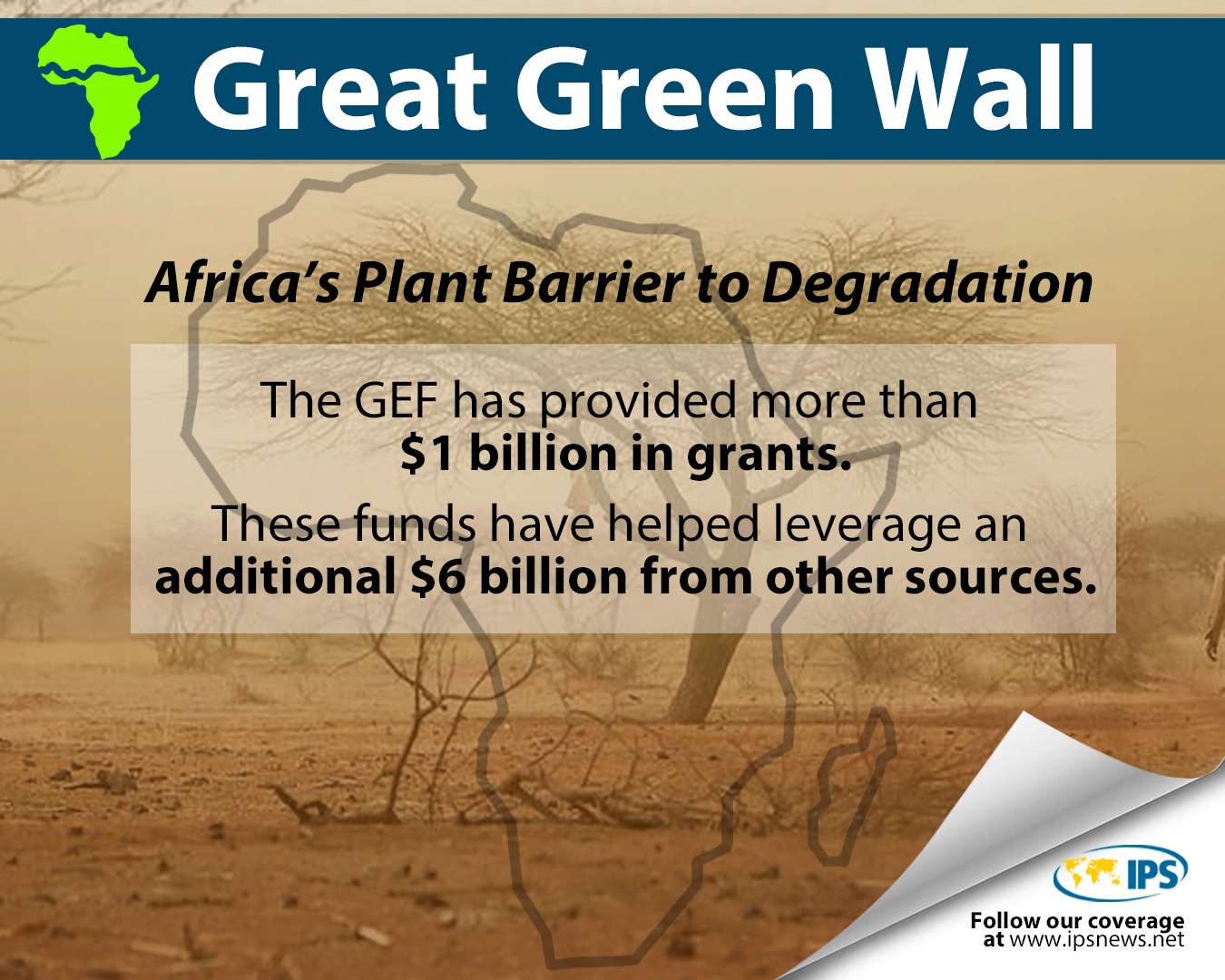 Graphic: Wilson Mgobhozi/IPS
Burkina Faso
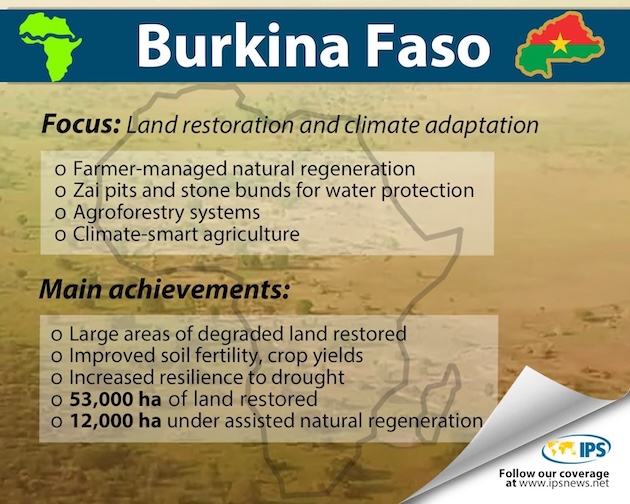 Graphic: Wilson Mgobhozi/IPS
Ethiopia
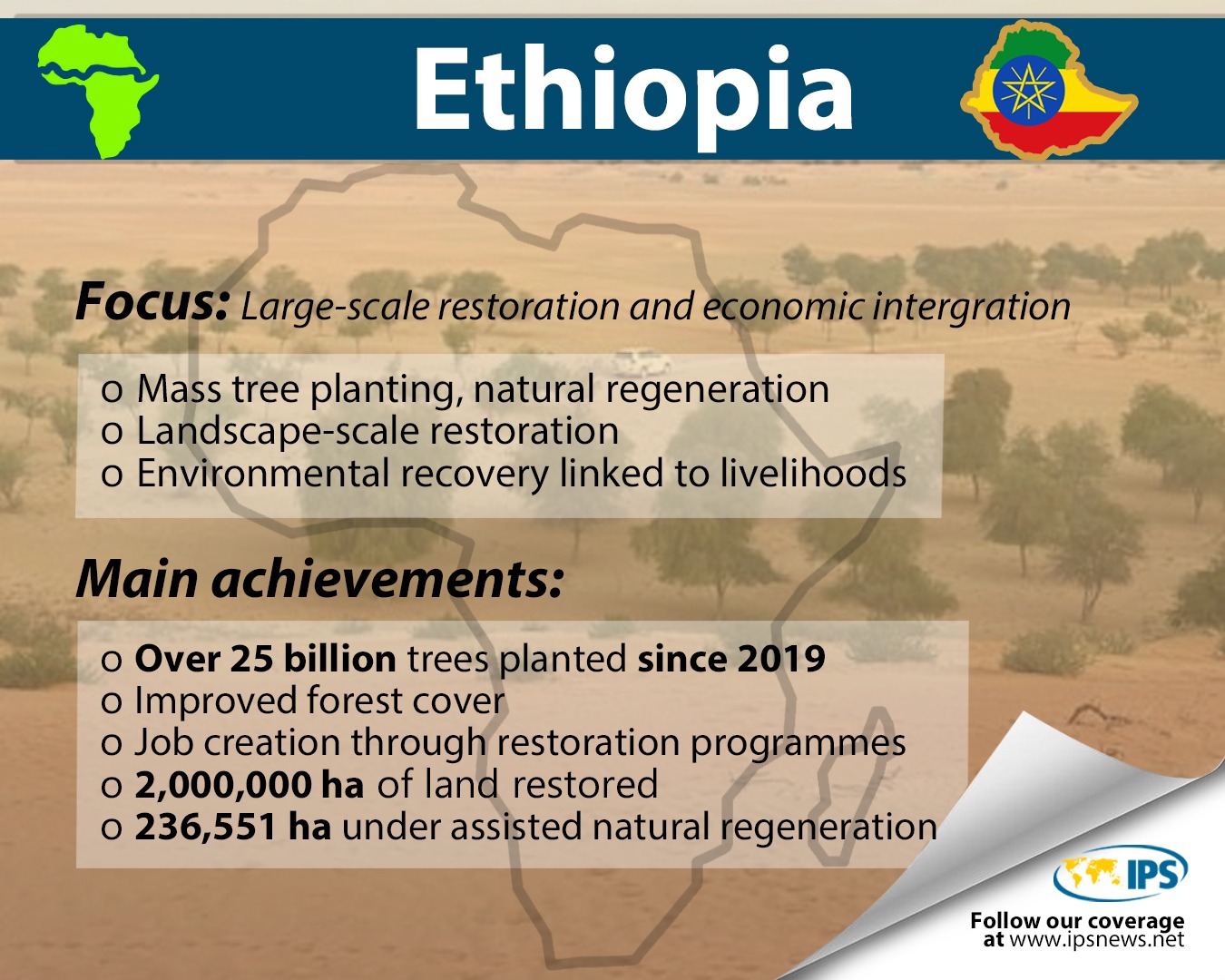 Graphic: Wilson Mgobhozi/IPS
Nigeria
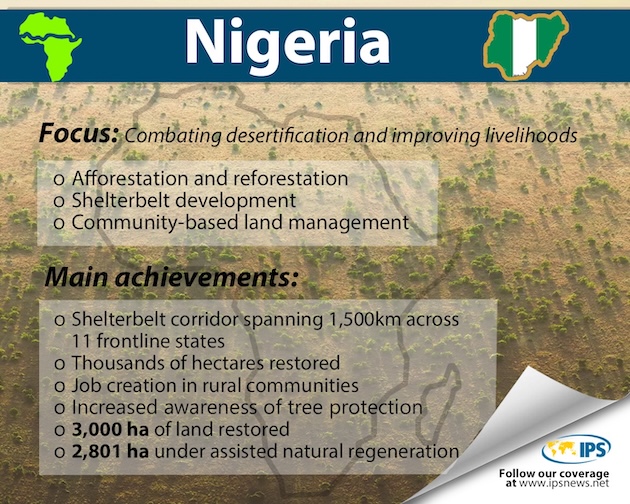 Graphic: Wilson Mgobhozi/IPS
Niger
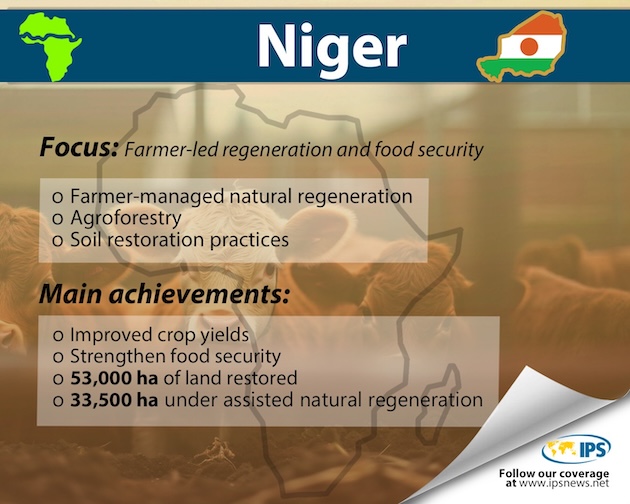 Graphic: Wilson Mgobhozi/IPS
Senegal
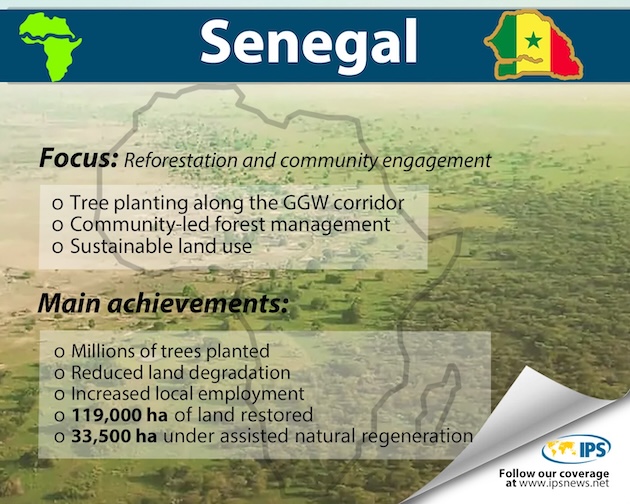 Graphic: Wilson Mgobhozi/IPS
Mali
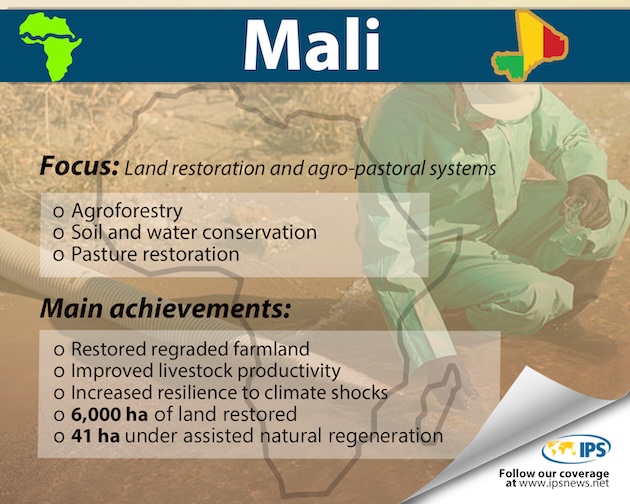 Graphic: Wilson Mgobhozi/IPS
Chad
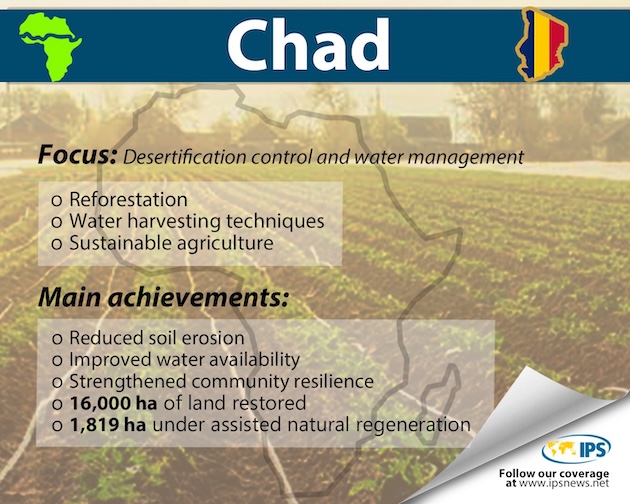 Graphic: Wilson Mgobhozi/IPS
Sudan
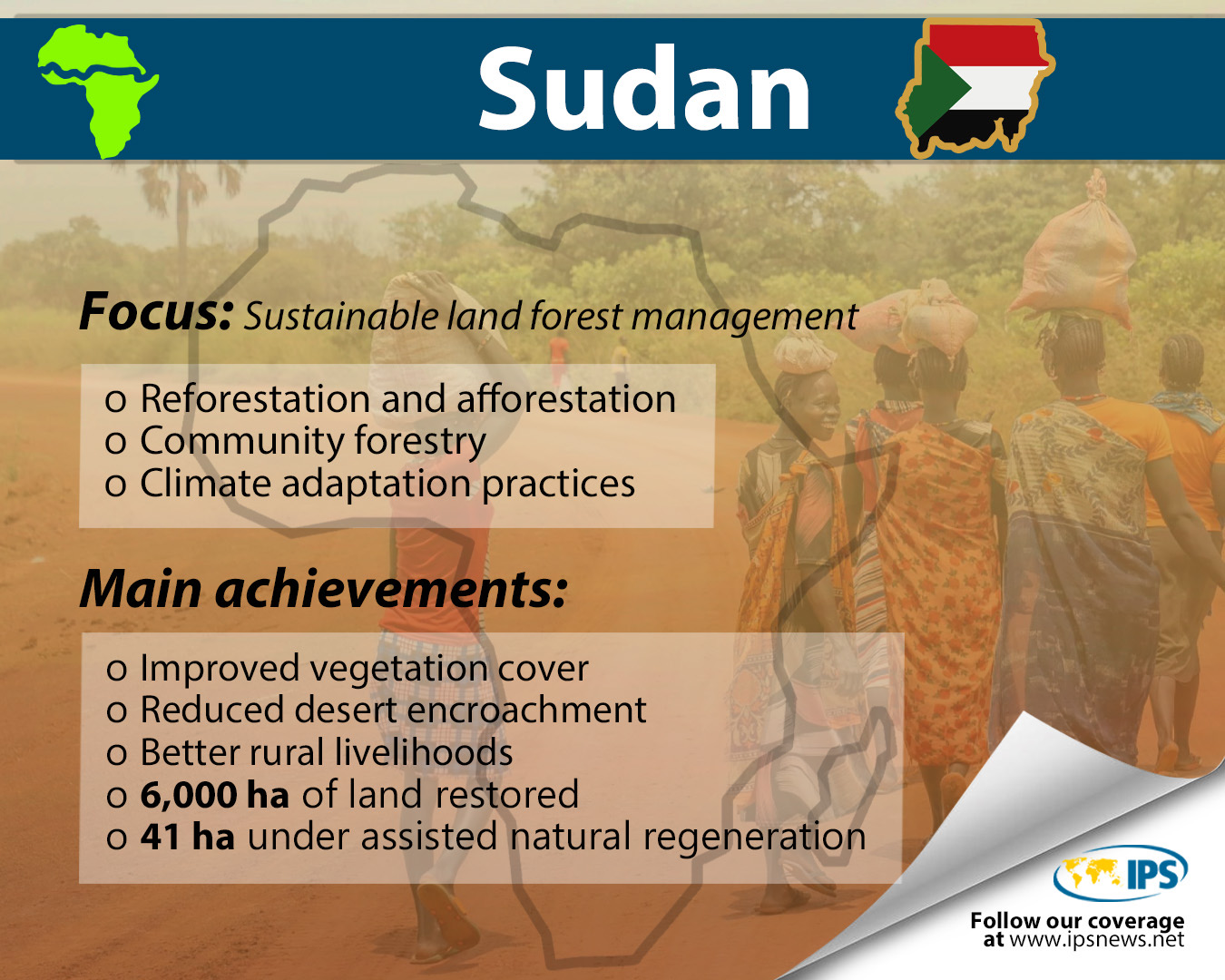 Credit: Wilson Mgobhozi/IPS
Mauritania
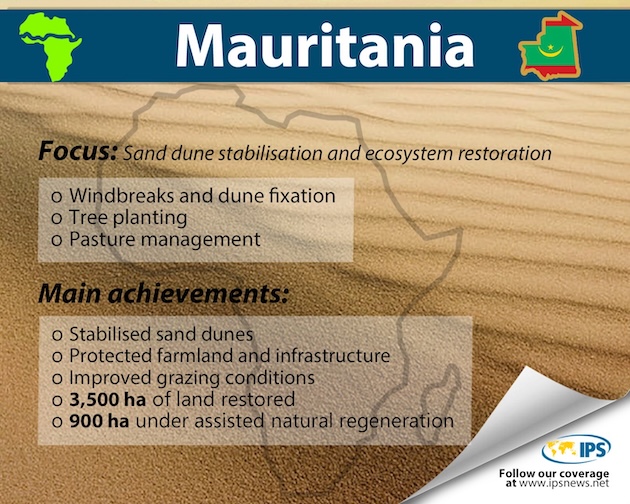 Graphic: Wilson Mgobhozi/IPS
Eritrea
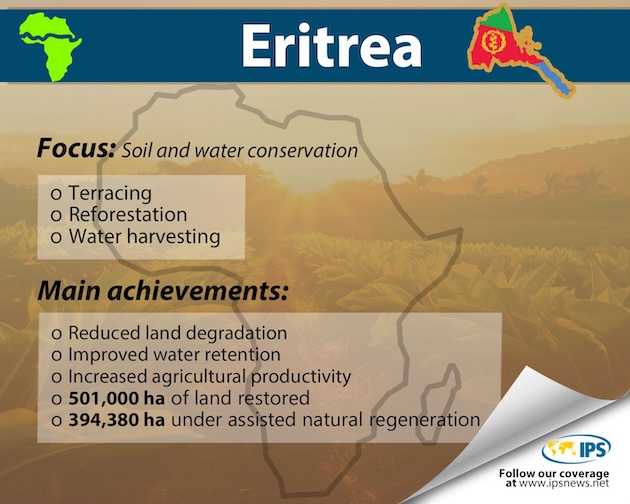 Graphic: Wilson Mgobhozi/IPS
Djibouti
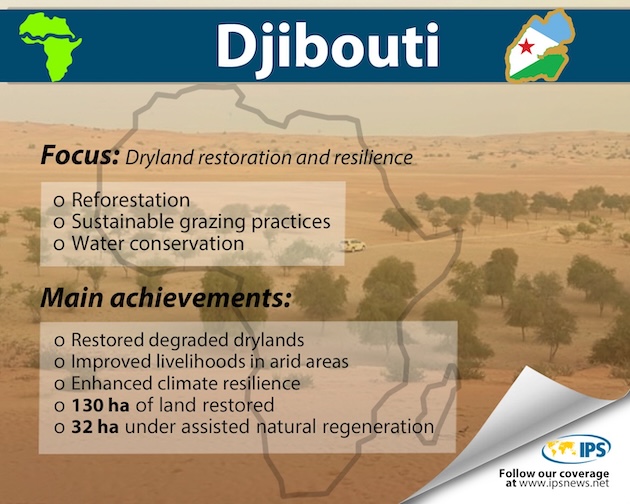 Graphic: Wilson Mgobhozi/IPS
Note: The Eighth Global Environment Facility Assembly will be held from May 30 to June 6, 2026, in Samarkand, Uzbekistan.
This feature is published with the support of the GEF. IPS is solely responsible for the editorial content, and it does not necessarily reflect the views of the GEF.
IPS UN Bureau Report
© Inter Press Service (20260512111835) — All Rights Reserved. Original source: Inter Press Service




 English (US) ·