
 1 month ago
46
1 month ago
46
PHILADELPHIA, July 14 (IPS) - Ask why so many Indian classrooms struggle, and the answers arrive in the language of audit: Too few trained teachers, too many vacancies, weak colleges of education and low accountability. Each of these is real, and each matters. Yet none of them explains a quiet confession a veteran teacher made to me, years into her career, holding a teacher training degree all the while. “Only this program”, she said, “made me realize what my prior training had left out”. The program she was referring to is a small teaching preparation program in Gurugram, North India called I Am A Teacher, or IAAT.
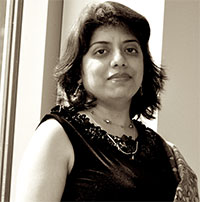 Vani S. Kulkarni
I am a sociologist, and I spent between 2023 and 2025, studying this program by listening to teachers. Not testing them, not scoring them, just listening to how they spoke about becoming teachers. The program has spent a decade training teachers in a humanistic, experiential tradition outside the formal, licensed system. What its teachers told me has stayed with me, because it points at something our national conversation about teacher quality seldom names.
We argue endlessly about whether teachers are qualified. We rarely ask whether they have been formed.
Across hundreds of hours of conversation, a pattern emerged. To become a teacher, these women and men had to become three things at once: a person, an educator, and someone who could earn a living from the work. We obsess, rightly, over the second and third. We build degrees and licenses and salary scales around them. The first we treat as if it takes care of itself. It does not.
Formation as a person sounds soft until you watch what it does in a classroom. One teacher described a child who was being difficult, the kind of child she once would have disciplined and labeled. After her training, she found herself feeling something closer to empathy, sitting with the situation instead of punishing it. A week later, she said, the child was thriving. Another spoke of finally learning to listen to her students, and to her own children, after years of mistaking instruction for relationship. Many said a version of the same thing: that a conventional degree had certified them, but had not made them ready to teach on the first day. This program, they felt, had.
There is a gendered story here too, and it is important. Almost ninety percent of the teachers in the program were women, many returning to work for a second innings, after the corporate world or after years at home. For them, the experience was about identity, confidence and economic independence as much as it was about pedagogy. When we talk about teacher quality in the abstract, we forget that the teaching workforce in this country is overwhelmingly of women, and a certificate, rarely captures that what brings them into a classroom, and keeps them there.
But here is the finding that should trouble policymakers most, and I offer it precisely because it complicates the hopeful story. Over a decade, the meaning of this program changed for the people inside it. Its earliest cohorts spoke of a calling. They used words like temple, transformation, a remaking of the self. Later cohorts, without quite abandoning that language, increasingly described the program more materialistically, in the currency of placements and salaries. The expressive was slowly giving way to the instrumental.
I do not read this as the failure of one program. I read it as the gravitational pull of a system that values teaching only as a credential and a job, and that drags even its idealists toward the transactional. If this is what happens inside a program built expressly to resist that pull, it tells us something about the field as a whole.
As the National Education Policy rebuilds teacher education around new integrated degrees, it has a rare chance to ask a better question than how many teachers we can certify. The harder question is whether we are forming them. And formation cannot be examined into existence. It needs mentoring, time, reflection, and the experience of belonging to a community of fellow teachers. These are exactly the things a metrics-driven system finds hardest to fund, because they do not show up on a dashboard, and because their results appear years later, in a child who was seen rather than sorted.
I want to be honest about the limits of what I studied. One program in one city is not a national blueprint. There were skeptics among the teachers I met, some who found the approach overdone, and circumstances my research could not reach. A small case is not proof. But a small case such as IAAT that for a decade has quietly and against the current, tried to keep the expressive dimension central by focusing on formation of teacher as a person can still hold up a mirror, and what this one reflects is a blind spot we can no longer afford.
India does not have a shortage of people willing to teach. It has a shortage of attention to who they become on the way. A license certifies that a person has met a requirement. It does not certify that a person has been made ready to stand in front of thirty children and actually see them. Until we learn to value that making, and until we are willing to pay for it, we will keep mistaking the certificate for the teacher. Recognising and resourcing teacher-training programs such as IAAT would cost little and benefit teacher quality a great deal.
Vani S. Kulkarni is a sociologist affiliated with the University of Pennsylvania, and has held research and teaching appointments at Harvard and Yale universities. Her research navigates the intricate crossroads of Global Health, Education, Race and Caste, Gender, Sociology of Trust, Development, and Democracy.
IPS UN Bureau
© Inter Press Service (20260714163354) — All Rights Reserved. Original source: Inter Press Service






 English (US) ·