
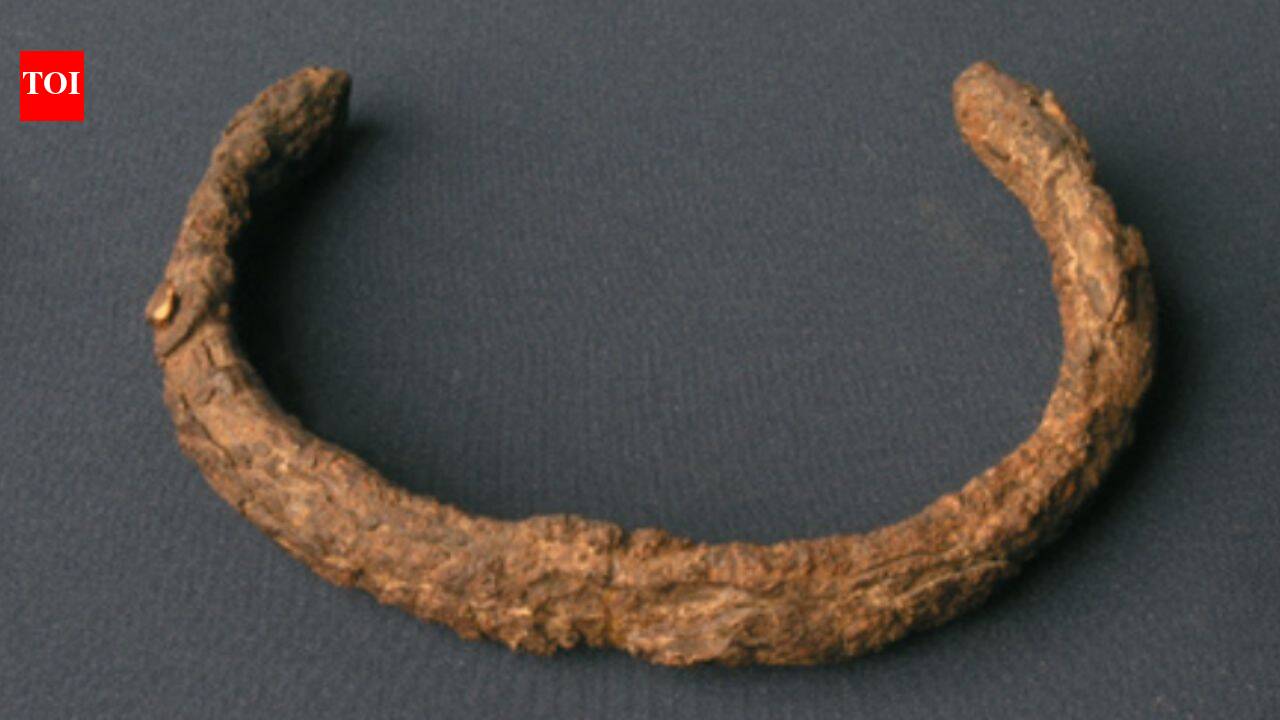
(Image credit: Berezina et al. / Archaeological and Anthropological Sciences) Meeting your daily water intake and not holding back your pee are two things you must have been told to do to avoid developing painful kidney stones. But with access to modern medicines and medical procedures today, it is difficult to imagine what a man suffering from a kidney stone more than five millennia ago might have had to endure. While archaeology has opened gateways to understanding ancient arts, crafts and ways of living, one discovery is now offering researchers a glimpse into a much more painful aspect of the past. A urinary stone, preserved alongside the remains of a Bronze Age man, has prompted researchers to consider the pain and medical challenges he may have endured more than 5,300 years ago.A grape-sized stone, believed to have formed inside the urinary system of a Bronze Age man, has been identified among the remains from his burial in southwestern Russia, near the Black Sea. The size of the stone, however, is only one aspect of this intriguing discovery. What makes the finding particularly remarkable is the rare mineral identified within the stone, which has helped researchers theorise ...
A Bronze Age man buried in a kurgan about 5,300 years ago had a grape-sized stone
 4 hours ago
4
Related




Popular

ICC ignored ‘very well-documented’ NATO crimes – ex-Libyan m...
4 weeks ago
688

Intel, Broadcom CEOs warn capital crunch could become AI's b...
4 weeks ago
672

Meta fined $25 billion in New Mexico over Cambridge Analytic...
2 weeks ago
373

After France, is Italy next? Goldman Sachs flags bond risks ...
1 month ago
352

AI may change the price of your Big Mac and groceries — what...
1 month ago
341
 English (US) ·
© Clint's World News 2026. All rights are reserved
